
France Warns Germany: Long-Range Missiles Could Trigger Nuclear Escalation

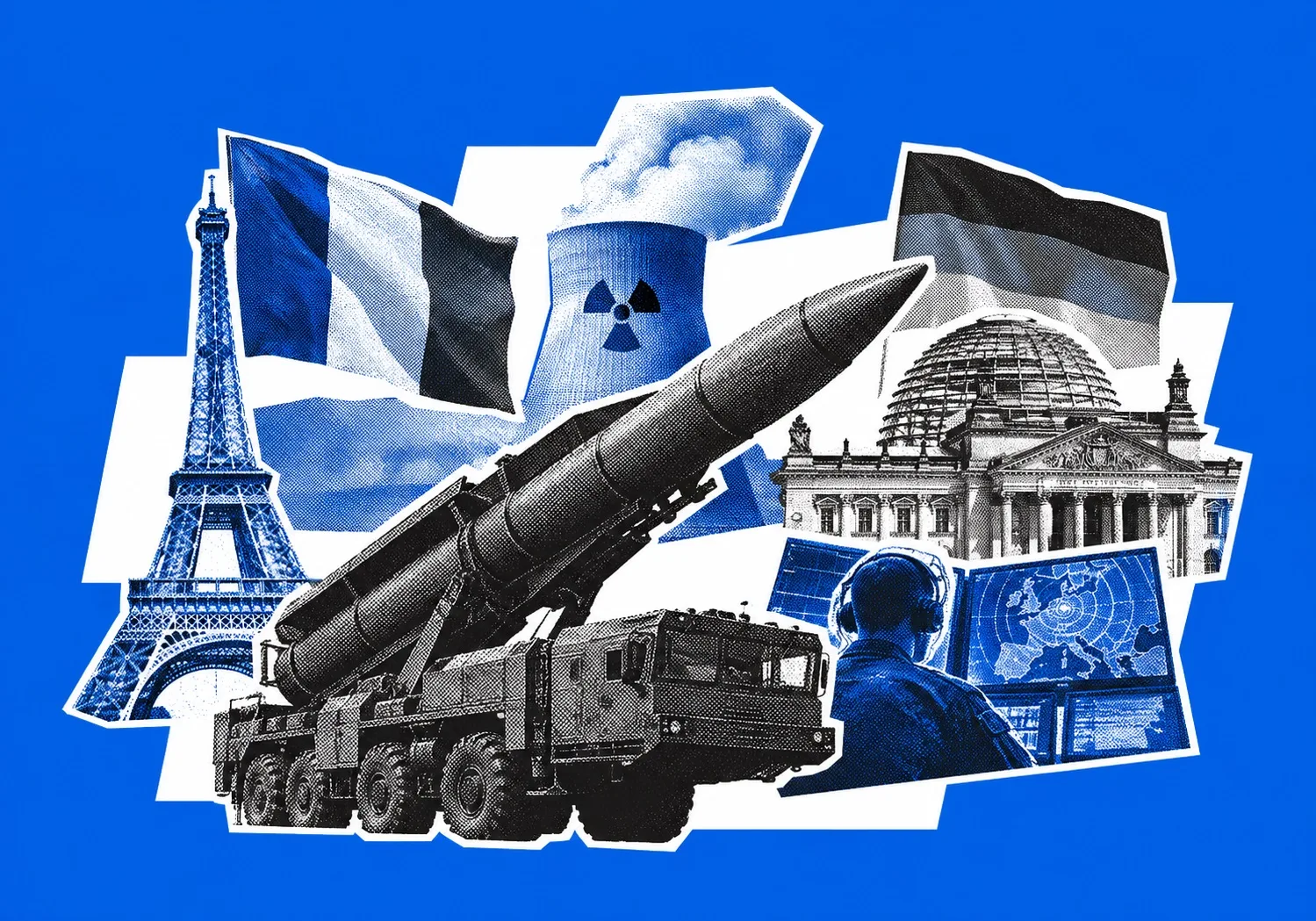
Paris is pushing Berlin to align its new long-range missile programs with French nuclear doctrine. French officials warn that a conventional strike on Russian territory could be misread by Moscow as a nuclear first strike.
According to the Financial Times, Germany and several European partners are developing weapons capable of striking targets more than 2,000 kilometres away. The concern is not that Germany intends to acquire nuclear weapons — its new missile programmes are strictly conventional. The difficulty lies in how Russia might interpret their use during a confrontation, particularly if a strike threatened facilities associated with its strategic military capabilities.
Paris and Berlin have already established a bilateral nuclear steering group to discuss these risks. Yet the negotiations expose an awkward reality for European defence planners: countries are developing increasingly powerful conventional weapons without a common system for deciding how their use might affect nuclear deterrence.
Why Germany’s New Missiles Worry Paris
Germany’s expanding long-range strike ambitions are part of a broader European effort to strengthen conventional military capabilities. Britain, Poland and countries across northern and eastern Europe are also investing in weapons designed to reach targets far beyond the immediate battlefield.
A central element is the Deep Precision Strike programme, developed through British-German defence cooperation.
The Trinity House Agreement, signed on 23 October 2024 by British Defence Secretary John Healey and German Defence Minister Boris Pistorius, established a framework for closer military cooperation.
Among its ambitions is the development of a family of long-range weapons, including stealth cruise missiles and hypersonic systems capable of travelling more than 2,000 kilometres. Their operational deployment is envisaged for the 2030s.

That timetable matters. Europe is planning capabilities whose strategic consequences must be considered well before they enter service.
Long-range precision weapons offer military commanders the ability to attack important targets without moving forces close to heavily defended territory. They could provide European countries with additional options for responding to conventional aggression.
But range also changes the political significance of a weapon.
A missile launched from European territory could potentially reach targets deep inside Russia. Depending on its intended target, Moscow might struggle to determine whether the attack was designed to disrupt conventional military operations or threaten assets central to Russia's nuclear deterrent.
The distinction could become particularly difficult during a rapidly developing military crisis.
French concerns therefore centre on the relationship between the technical capabilities of new weapons and the political decisions governing their use.
A conventional missile does not automatically become a strategic weapon because of its range. Its target, the circumstances of its launch and the adversary's interpretation all influence the danger of escalation.
France’s Nuclear Deterrent Remains Under National Control
France approaches these questions from a different strategic position than Germany.
Its nuclear doctrine is based on maintaining an independent deterrent capable of inflicting unacceptable damage on an aggressor threatening French vital interests. The decision to employ nuclear weapons belongs exclusively to the French president.
Unlike doctrines built around a series of calibrated nuclear responses, the French approach has traditionally resisted treating nuclear weapons as instruments for managing successive stages of battlefield escalation.
Paris has also maintained its independence from NATO's nuclear planning arrangements.
These principles place firm limits on the emerging Franco-German cooperation.
Germany cannot authorise a French nuclear strike, exercise a veto over French nuclear decisions or assume that closer consultations create an automatic French nuclear guarantee.
Equally, the existence of a bilateral nuclear steering group does not establish French command authority over German conventional forces.
The negotiations concern strategic coordination rather than the transfer of sovereign military powers.
Nevertheless, France has a substantial interest in understanding how German long-range weapons might be employed. An independently authorised conventional strike could produce consequences affecting French security, even if Paris had no role in the original decision.
For Berlin, the problem runs in the opposite direction.
Germany is developing conventional capabilities partly to expand Europe's military options. Yet coordinating their use with French nuclear doctrine introduces another consideration into decisions that remain subject to national political authority.
The challenge is to establish meaningful consultation without creating the impression that either government has surrendered control of its armed forces.
A New Framework, but Unclear Operational Rules
The Franco-German declaration of 17 July 2026 provided an institutional basis for bringing these issues together.
It linked discussions of nuclear deterrence with conventional long-range capabilities, deep precision strike systems and missile defence. The objective was to improve coordination across military capabilities that have often been considered separately.
Paris and Berlin subsequently established a nuclear steering group for bilateral doctrinal dialogue.
Germany's participation as an observer in France's strategic nuclear exercise, Exercise Poker, provides another channel for developing familiarity with French deterrence practices.
These arrangements represent practical steps towards greater understanding between the two governments.
They do not, however, resolve the most difficult operational questions.
Publicly available information does not establish whether France would receive advance notification of particular German long-range strike decisions, whether either government has proposed restrictions on target selection, or how disagreements would be handled during an immediate military emergency.
There is also no verified public evidence of a French veto over German targeting decisions.
That distinction is important because consultations conducted during peacetime cannot necessarily reproduce the pressures of a military crisis.
Political leaders might agree on broad principles concerning escalation while disagreeing about whether a particular target falls within them.
The steering group could help identify such disagreements before they become urgent. Whether it can provide effective coordination during a rapidly unfolding confrontation remains uncertain.
Britain and Europe’s Wider Deterrence Problem
The British role adds another dimension to the Franco-German negotiations.
London is Germany's principal partner in the Trinity House framework, which establishes regular defence consultations and supports joint capability development.
Although the agreement is not legally binding, its institutional arrangements provide a continuing basis for cooperation on advanced military technologies and strategic questions.
Britain and Germany are therefore building long-range conventional capabilities through one bilateral relationship, while Germany discusses their nuclear implications with France through another.
The two processes are connected strategically but remain institutionally distinct.
This arrangement illustrates the difficulty of coordinating European defence programmes that operate through overlapping national partnerships.
France possesses an independent nuclear deterrent. Britain is also a nuclear-armed European power, while Germany and other European allies are concentrating on expanding conventional capabilities.
Their military contributions are complementary in some respects, but their decision-making structures are not unified.
For Poland and the Nordic and Baltic states, the implications extend beyond Franco-German diplomacy.
Long-range conventional weapons could strengthen deterrence by increasing the potential costs of military aggression. Yet their credibility also depends on an adversary understanding the circumstances in which they might be used.
A deterrent that is poorly understood may create risks alongside its intended military advantages.
This does not mean European governments must disclose operational plans or targeting procedures. Such information is often necessarily classified.
It does mean that political coordination, military doctrine and strategic communication must develop alongside the weapons themselves.
The broader debate over European strategic autonomy adds pressure to this process. Questions about the future reliability of American security commitments have encouraged European governments to examine how much responsibility they can assume for their own defence.
But stronger European capabilities do not automatically produce a coherent European strategy.
National governments retain different military priorities, institutional responsibilities and approaches to escalation.
The French-German negotiations are an attempt to manage some of those differences without establishing a central European authority over nuclear and conventional operations.
For now, the most consequential uncertainty concerns what happens when consultation and national military decision-making collide.
France and Germany have created channels for discussing the danger before a crisis begins. What remains undisclosed is whether those channels would give either government sufficient information, influence, or time to prevent an allied conventional strike from being interpreted as a nuclear threat.
Sources: FT, Kommersant, Conclusion of the Franco-German Defence and Security Council, RUSI