
Romania Moves to End Six-Month Political Crisis as Fiscal Pressure Mounts

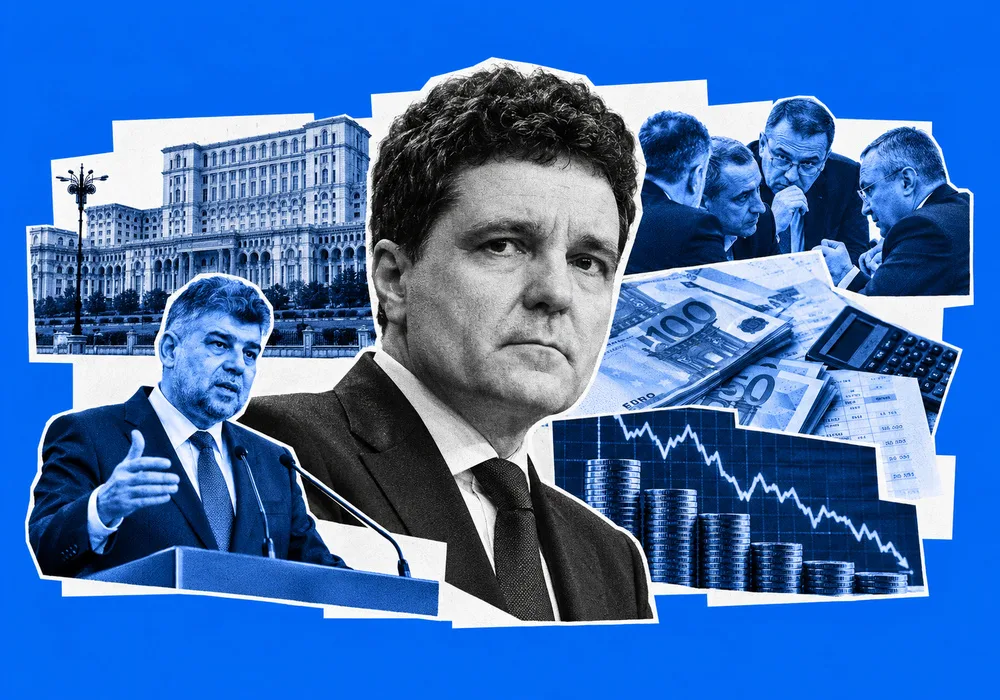
Romania is preparing to emerge from months of political deadlock with a minority government led by diplomat Luca Niculescu. The breakthrough could restore a measure of stability, but the new administration faces difficult budget decisions, fragile parliamentary support and growing pressure from the far right.
Romania is moving towards the formation of a new government after six months of political paralysis, with diplomat Luca Niculescu expected to lead a minority administration. The agreement offers a potential end to a crisis that has weakened confidence in the country’s political institutions, unsettled financial markets and complicated efforts to bring public finances under control.
The deadlock began in May 2026, when Prime Minister Ilie Bolojan’s government was removed through a parliamentary no-confidence motion. The Social Democratic Party (PSD), Romania’s largest parliamentary party, had withdrawn from the governing coalition amid disagreements over austerity measures and economic reforms. It subsequently joined forces with the far-right Alliance for the Union of Romanians (AUR) to bring down the government, despite their differences on broader political questions.
Since then, President Nicușor Dan has struggled to secure parliamentary backing for a replacement administration. Several attempts to form a government failed, exposing the depth of divisions between the country’s mainstream political parties and leaving Romania dependent on an interim executive during a period of mounting economic pressure.
Niculescu, a diplomat and Romania’s representative in efforts to join the Organisation for Economic Co-operation and Development, emerged as the next candidate after previous nominations failed. His selection reflected a search for a figure capable of negotiating across party lines while offering a degree of distance from the political disputes that brought down the previous government.
The emerging arrangement is a compromise rather than a return to a stable coalition. The Social Democrats are expected to hold a dominant position in the cabinet, while centrist and centre-right parties have resisted formally joining the administration. Their willingness to support selected legislation, however, could give Niculescu enough parliamentary backing to begin governing.
Fiscal Consolidation Becomes the Immediate Test
The new administration’s most urgent challenge will be Romania’s public finances. The political crisis has delayed difficult decisions over spending, taxation and budget reform at a time when the government needs to demonstrate that it can bring the deficit under control.
Romania has faced one of the European Union’s largest budget deficits, driven by high public spending and the difficulty of implementing politically unpopular adjustments. The government must balance pressure to reduce expenditure with demands to protect household incomes and maintain public services. Previous attempts to impose austerity contributed to the coalition breakdown, making further reforms politically sensitive.
The consequences extend beyond domestic budget negotiations. Prolonged uncertainty has placed pressure on Romania’s currency and government borrowing costs, while concerns about the sustainability of public finances have raised questions about the country’s credit outlook. A prolonged failure to deliver credible fiscal measures could increase financing costs further and reduce the government’s room for manoeuvre.
Niculescu’s administration will therefore have to demonstrate that it can move from political agreement to practical implementation. Investors and European institutions will be looking for a credible budget framework, predictable fiscal policy and evidence that promised adjustments can survive parliamentary negotiations.
The challenge is particularly acute because fiscal consolidation cannot be separated from economic growth. Abrupt spending cuts or tax increases could weaken consumption and deepen public dissatisfaction, while postponing reforms would leave the state exposed to higher debt-servicing costs. The government will need to convince both markets and voters that its approach is sustainable.
European Union Obligations Add to the Pressure
Romania’s political stability has direct implications for its relationship with the European Union. As a member state, it must reconcile domestic budget priorities with the bloc’s fiscal framework and maintain confidence that its public finances can be placed on a sustainable path.
The government’s ability to implement reforms will also affect Romania’s capacity to make effective use of European funding and maintain its standing with international investors. Political uncertainty can complicate long-term planning, delay administrative decisions and weaken the credibility of commitments made to European partners.
Bucharest’s predicament illustrates a wider problem facing the EU: governments are being asked to restore fiscal discipline while dealing with voter frustration over living costs, public services and the distribution of economic burdens. When reform programmes become associated with declining living standards or political infighting, mainstream parties risk losing support to movements that promise a more radical break with existing policy.
For Romania, the stakes are particularly high because its fiscal difficulties coincide with a wider debate over the country’s political direction. A government unable to deliver results could find itself trapped between European expectations for budget discipline and domestic opposition to the measures required to achieve it.
A functioning administration would at least provide a framework for negotiations with Brussels and a clearer basis for economic planning. It would not, however, guarantee that Romania can meet its commitments without further political confrontation.
The Far Right Remains a Political Risk
The crisis has also exposed the vulnerability of Romania’s mainstream political establishment. The collapse of the previous government and repeated failures to form a replacement have reinforced the perception that established parties are struggling to resolve fundamental disagreements even when the country faces urgent economic challenges.
AUR has been among the political forces positioned to benefit from public frustration. Its involvement in the parliamentary effort to remove Bolojan demonstrated how opposition to austerity can create temporary alignments between parties that otherwise occupy very different positions. Such cooperation does not necessarily imply a lasting alliance, but it can weaken the political boundaries that have traditionally separated mainstream parties from the far right.
The formation of a minority government could reduce the immediate risk of an institutional vacuum, but it leaves the underlying problem unresolved. Without a durable parliamentary majority, the administration will have to negotiate support for individual measures, exposing every major reform to political bargaining.
That arrangement could also make the government vulnerable to shifting party strategies. Parties that agree to support Niculescu’s appointment may oppose subsequent spending cuts, tax decisions or other politically costly legislation. The administration’s survival will consequently depend not only on its initial parliamentary backing but also on its ability to maintain cooperation when concrete decisions begin to affect voters.
The approach of the 2027 political cycle adds another layer of uncertainty. Parties may be reluctant to endorse unpopular reforms if they believe doing so will damage their electoral prospects, creating incentives to delay decisions or shift responsibility to coalition partners.
Strategic Stability on NATO’s Eastern Flank
Romania’s domestic crisis also matters in the context of European security. The country occupies a strategically important position on NATO’s eastern flank, borders Ukraine and plays a significant role in Black Sea security and regional support for Ukraine.
Russia’s war against Ukraine has increased the importance of Romania’s defence infrastructure, transport routes and regional coordination. Recent security incidents in the Black Sea region have further underlined the need for sustained attention to air defence, maritime security and cooperation with NATO allies.
Political instability does not automatically translate into a weakening of Romania’s security commitments. Nevertheless, a government preoccupied with its survival and budget disputes may have less political capacity to sustain long-term planning, communicate clear priorities and make difficult decisions about public spending.
Fiscal policy and defence planning are closely connected. Romania must manage its deficit while meeting security requirements, maintaining infrastructure and supporting its role within European and transatlantic institutions. A prolonged political stalemate makes these competing priorities harder to reconcile.
A functioning government would provide greater continuity for these decisions, even if it lacks a broad coalition. The key question will be whether Niculescu’s administration can maintain a consistent strategic direction while negotiating the domestic compromises needed to pass its budget and reform programme.
For European partners, Romania’s political reliability is important not only because of its position on NATO’s eastern flank but also because regional security depends on governments being able to sustain commitments over time.
A Breakthrough Without a Guarantee of Stability
The emergence of a government under Niculescu would mark a significant step towards ending Romania’s political paralysis, but it should not be confused with a definitive resolution of the crisis. The proposed arrangement rests on a fragile balance between parties that disagree over the country’s economic direction and the political costs of reform.
The administration will be judged by whether it can produce a credible budget, restore confidence in public finances and secure sufficient parliamentary support to govern effectively. Its ability to meet those objectives will shape both Romania’s economic outlook and the standing of mainstream political forces.
For the European Union, the immediate benefit would be the return of a functioning counterpart in Bucharest. The longer-term outcome will depend on whether that government can turn a temporary political compromise into sustained policy implementation.
Romania’s experience highlights the limits of resolving a political crisis through the appointment of a new prime minister alone. Without agreement on fiscal priorities, a workable parliamentary arrangement and public acceptance of difficult reforms, the same tensions that paralysed the country for six months could quickly re-emerge.
Sources: Financial Times, Radio Romania International