
Poland Reinforces Russian Border After Suspected Provocation Near Kaliningrad

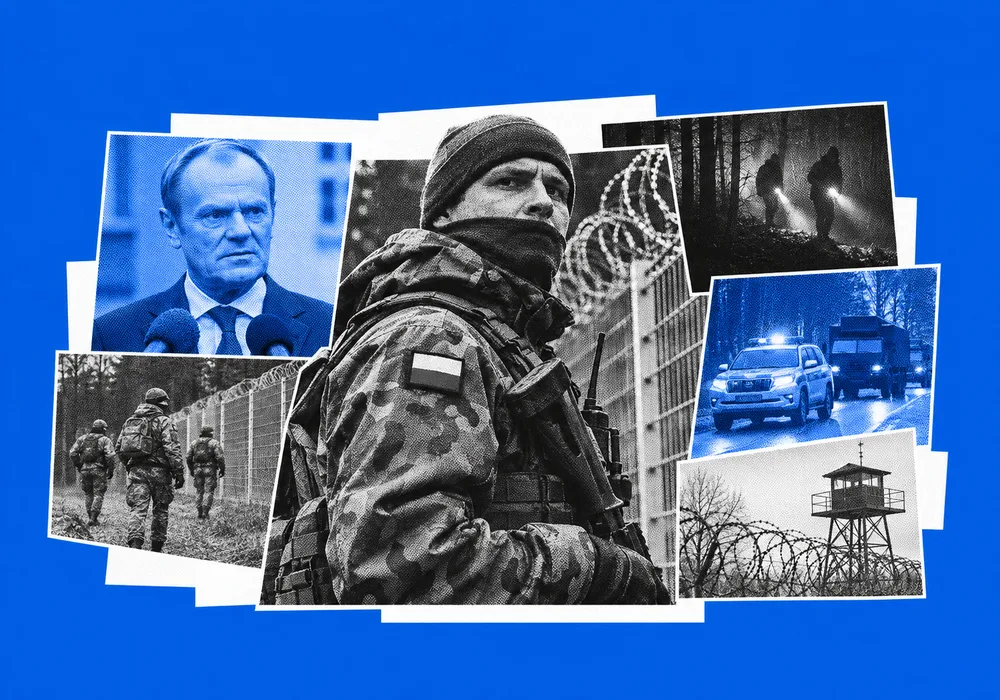
Poland has deployed additional police, military and counter-terrorism units to its north-eastern border after detecting suspicious movements near the Russian exclave of Kaliningrad. Prime Minister Donald Tusk says intelligence warnings point to possible sabotage and armed incursions during the first half of November, raising concerns about a further escalation of hybrid threats along NATO’s eastern flank.
Poland has strengthened security along its border with Russia after Prime Minister Donald Tusk announced on 3 November that border guards had prevented what appeared to be an attempted provocation near the Russian exclave of Kaliningrad. The incident took place shortly after midnight, when border personnel detected suspicious movements on the Polish-Russian border. According to Tusk, individuals carrying flashlights were observed in the area, prompting an immediate response from the border guards. The authorities intervened before the situation developed into a more serious incident, although the Polish government has not disclosed further details about the individuals involved or their intentions.
Tusk said he had been informed about the activity shortly after midnight. While describing the response as successful, he cautioned against drawing definitive conclusions about the nature of the incident. Polish authorities have not established with full certainty that the individuals were attempting to provoke a confrontation or carry out an organised operation. Nevertheless, the episode occurred against the background of intelligence warnings about possible hostile activity along Poland's eastern borders, making it particularly significant for the country's security services.
The incident coincided with the deployment of additional police officers and military personnel to Poland's north-eastern regions. The operation covers Warmia-Masuria and Podlaskie, areas bordering Kaliningrad and Belarus. Counter-terrorism units have also been assigned to the operation, while the police are coordinating activities with the military, Border Guard and intelligence services. The mobilisation is intended to strengthen surveillance, protect border communities and secure facilities that could become targets of sabotage.
Intelligence warnings point to possible armed incursions
The deployment follows warnings received by Polish authorities towards the end of October from the country's Military Intelligence Service and intelligence agencies in allied countries. According to information cited by Polish media, the warnings concerned possible sabotage operations and attempts by armed groups to enter Polish territory from the direction of Russia. The potential incidents were expected during the first half of November, prompting security institutions to introduce preventive measures rather than wait for an actual attack.
National Police Chief Marek Boroń confirmed that the operation was organised in response to information received from both domestic and foreign intelligence services. He linked the deployment to a wider pattern of sabotage and hostile hybrid activities attributed by Polish officials to intelligence services operating from the east. The authorities consider the protection of residents, public facilities and other potentially vulnerable sites a central part of the operation.
Additional police personnel have been transferred from several Polish regions to reinforce the north-eastern deployment. The operation is being coordinated through a special command centre established at the National Police Headquarters in Warsaw. This structure is intended to facilitate cooperation between regional police commanders and other security institutions, allowing information and operational decisions to be shared more quickly.
Polish police also addressed speculation surrounding an order requiring regional commanders to maintain heightened readiness between 2 and 8 November. The readiness measures were linked to the reported sabotage threat rather than the country's domestic political disputes. The distinction is important because the security operation involves several institutions and extends beyond an ordinary increase in border patrols.
The warnings have not resulted in a publicly confirmed armed incursion or a verified sabotage attack connected to the current operation. Polish officials have also not presented evidence establishing that the individuals observed near Kaliningrad were acting under Russian direction. The government's response is therefore preventive, based on intelligence assessments of potential threats rather than confirmation that a coordinated attack is already under way.
NATO command has also raised concerns
Tusk said that concerns about possible escalation had been communicated directly by NATO's Supreme Allied Commander Europe, General Alexus Grynkewich, during his visit to Warsaw in October. The Polish prime minister indicated that the warnings received from allied intelligence services had become increasingly specific over recent months.
According to Tusk, Poland has been receiving information from its own security institutions as well as NATO, Ukrainian and US intelligence services, including the CIA. He has repeatedly warned that Russia could be preparing a more serious hybrid operation against a NATO member. The latest intelligence assessments have reinforced the government's concern that hostile activity could extend beyond isolated incidents and involve coordinated efforts to undermine security inside allied territory.
The involvement of allied intelligence services highlights the international dimension of the situation. Poland's border security is not solely a national issue because the country serves as a major logistical and military hub for NATO's eastern flank. Any serious incident involving an armed incursion or sabotage operation could require consultations with allies, particularly if evidence indicated that the activity was organised by a foreign state.
Tusk has warned that the latest developments should not be considered an isolated episode. He expects Russian escalation to continue and has indicated that the risks are unlikely to be limited to the overnight incident near Kaliningrad. However, the Polish government has not publicly identified a specific operation or provided evidence establishing the intended targets of the reported threats.
Kaliningrad's position creates a strategic security challenge
The Russian exclave of Kaliningrad occupies a sensitive geographical position between Poland and Lithuania on the Baltic Sea. Separated from mainland Russia, it is surrounded by NATO territory and has long been an important element of Moscow's military posture in the region. Its proximity to Poland makes the border particularly relevant to the security calculations of both countries.
Kaliningrad hosts significant Russian military infrastructure, including facilities associated with the Baltic Fleet and missile systems. Its location also gives Russia the ability to maintain a military presence close to several NATO members. For Poland, the challenge is therefore not limited to monitoring unauthorised crossings. The country must also account for the possibility of military pressure, intelligence activity and other forms of disruption originating from or organised through the region.
The nearby Suwałki Gap adds another dimension to the security situation. This strategically important stretch of Polish and Lithuanian territory lies between Kaliningrad and Belarus and provides the Baltic states with their main land connection to the rest of NATO. In a military crisis, the corridor would be essential for moving allied reinforcements, equipment and supplies towards Lithuania, Latvia and Estonia.
Its geographical vulnerability has made the area a central consideration in NATO's eastern defence planning. Any disruption to transport routes or critical infrastructure in north-eastern Poland could complicate the alliance's ability to reinforce the Baltic states. This is one reason why Warsaw treats suspicious activity in the region as a matter extending beyond ordinary border management.
Poland also shares a long border with Belarus, which has deepened its military cooperation with Moscow. The two countries' geographical positions create a security environment in which Poland must monitor potential threats from both directions. Although the current operation has been prompted primarily by warnings concerning the Russian border, the broader deployment and security coordination also cover the country's eastern frontier.
Hybrid operations increase pressure on European security services
The Polish operation reflects a wider concern among European governments about the use of activities below the threshold of conventional warfare. Sabotage, cyberattacks, disinformation, surveillance of critical infrastructure and the recruitment of individuals to carry out hostile tasks can create security problems without triggering an immediate military response.
Such operations can be particularly difficult to investigate because their perpetrators may attempt to conceal their links to foreign intelligence services. Individuals involved in sabotage can operate through informal networks, intermediaries or criminal groups, making attribution more complicated. Authorities may detect suspicious activity without immediately possessing enough evidence to establish who organised it or what its intended purpose was.
For Poland, this creates a requirement for closer cooperation between institutions that traditionally have different responsibilities. Border guards monitor crossings and territorial security, police investigate criminal activity, intelligence services identify potential threats, while the military maintains the capacity to respond to more serious security incidents. The current operation brings these functions together under police coordination.
The approach also reflects the changing role of internal security institutions on NATO's eastern flank. Police counter-terrorism units may be required to respond to incidents involving armed groups or sabotage, while military personnel provide additional support and protection. This division of responsibilities allows governments to address threats that do not necessarily constitute a conventional armed attack but may still have implications for national security.
The challenge is to maintain readiness without treating every suspicious movement as evidence of a state-sponsored operation. The incident near Kaliningrad illustrates this difficulty: the border guards detected unusual activity and prevented further developments, but the available information does not establish who was involved or whether the activity was part of a coordinated attempt to destabilise the border.
Poland strengthens its role on NATO's eastern flank
Poland's response is taking place against the background of a broader expansion of its defence and security capabilities. Warsaw has made the protection of its eastern borders a central national security priority, investing in military modernisation, border infrastructure and cooperation with NATO allies. The country's geographical position also makes it an important transit point for military assistance and logistical support to other members of the alliance.
The security situation along the Russian and Belarusian borders has required Poland to maintain a substantial presence of personnel and equipment in areas that would otherwise be managed primarily through routine border protection. The latest operation adds another layer to these efforts by increasing the role of counter-terrorism and intelligence capabilities in the north-east.
For NATO, the incident is relevant because hybrid operations can test the alliance's ability to coordinate responses before a situation develops into a conventional military confrontation. An act of sabotage against infrastructure, an armed border incursion or a series of coordinated provocations could create uncertainty about the appropriate response, particularly if the perpetrators' links to a foreign state remained unclear.
The alliance must therefore consider not only the defence of territory against military attack but also the protection of infrastructure, transport corridors and border communities. Poland's experience is likely to remain relevant to other eastern members facing similar concerns about sabotage and hostile intelligence activity.
For the moment, Warsaw has not announced that a major security breach has occurred or that the latest border incident has been conclusively attributed to Russia. The immediate response remains focused on prevention, surveillance and coordination between security institutions. However, the intelligence warnings covering the first half of November suggest that Polish authorities consider the risk serious enough to maintain an elevated level of readiness.
The developments underline how the security environment along NATO's eastern frontier is increasingly shaped by threats that fall between conventional military activity and domestic law enforcement. Poland's ability to identify suspicious movements, protect critical facilities and coordinate a response with allied institutions will be important not only for its own border security but also for the wider resilience of NATO's eastern flank.
Sources: Notes from Poland, RMF24