
Pentagon Urges Europe to Tone Down Warnings About Russia

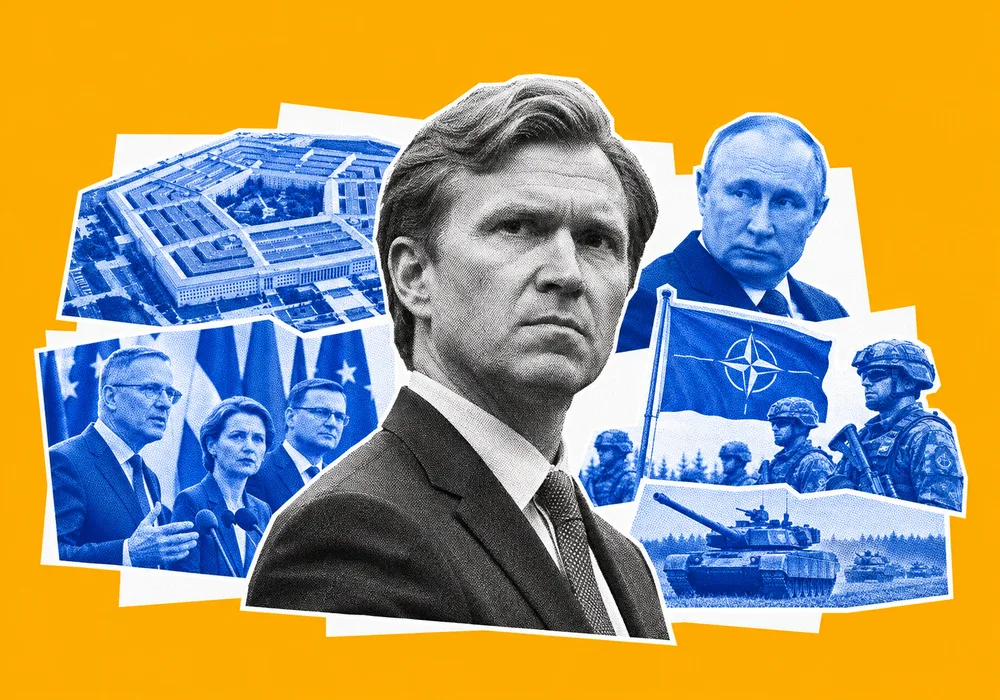
The Pentagon has privately urged Lithuania, Latvia and Estonia to moderate their public statements about the Russian threat, exposing growing differences within NATO over how to confront Moscow. The intervention comes as the Trump administration pursues renewed negotiations over Ukraine and reassesses the scale of the US military presence in Europe.
The Pentagon has privately urged several European NATO members to tone down their public rhetoric about the threat posed by Russia, arguing that increasingly forceful statements by European leaders could undermine security across the continent. Lithuania, Latvia and Estonia are among the countries that have received the message through bilateral discussions with American officials, according to four people familiar with the exchanges.
The intervention reflects a growing divergence between Washington and some of its European allies over how openly the Russian threat should be discussed and what approach is most likely to deter further aggression. While the Baltic states have consistently warned about Moscow's intentions, the Trump administration appears increasingly concerned that confrontational public language could complicate its efforts to manage relations with the Kremlin.
Pentagon policy chief Elbridge Colby was among the American officials involved in delivering the message, according to the sources. Colby, who plays a central role in the administration's reassessment of US military commitments abroad, reportedly advised a Baltic official against "poking" Russia. He cited public remarks suggesting that Moscow was becoming increasingly cornered and resorting to desperate measures as its invasion of Ukraine made limited progress.
One example discussed was the description of Russian President Vladimir Putin as a rat in a corner. Estonian Prime Minister Kristen Michal used this comparison in late September, arguing that the Russian leader was increasingly turning to sabotage operations in Europe as Russia became bogged down in Ukraine.
The American intervention was not described as confrontational. However, one European official offered a revealing account of the message being conveyed by Washington: the United States was still providing support, but European governments should avoid drawing unnecessary attention to their warnings about Russia.
In a separate meeting, Pentagon officials reportedly encouraged an Estonian delegation to adopt a more measured approach to public communications. It remains unclear whether similar requests were made to other European governments. The defence ministries of Lithuania, Latvia and Estonia did not respond to requests for comment, while NATO also declined to comment.
A growing disagreement over the Russian threat
The American position reflects an increasingly visible debate within NATO about whether strong public warnings about Russia strengthen European security or inadvertently serve Moscow's strategic objectives.
Some Western officials believe that repeatedly emphasising the possibility of Russian escalation risks creating unnecessary alarm among European populations. From this perspective, the Kremlin benefits when European societies become increasingly fearful of a wider conflict, potentially weakening political support for continued assistance to Ukraine and higher defence spending.
There is also concern that aggressive political language could make diplomatic engagement with Moscow more difficult, particularly as Washington attempts to revive negotiations aimed at ending the full-scale war in Ukraine.
Other European officials take a different view. They argue that governments cannot prepare their populations for a prolonged confrontation with Russia while simultaneously minimising the scale of the threat. Public warnings are seen as an important part of explaining why European countries need to invest in defence capabilities, strengthen critical infrastructure and prepare for possible security crises.
This disagreement is particularly sensitive for the Baltic states. Lithuania, Latvia and Estonia share borders with Russia or its close military partner Belarus and have spent years warning that Moscow's ambitions extend beyond Ukraine. Their security policies are built around the assumption that deterrence requires both credible military capabilities and political recognition of the threat.
One European official reportedly found Washington's advice difficult to reconcile with the assessments of Baltic intelligence services, which have themselves played down the immediate likelihood of Russia testing NATO's collective defence commitments. Other intelligence agencies within the Alliance have been considerably more vocal about the possibility of an expansion of Russian sabotage operations across Europe.
The disagreement therefore concerns more than diplomatic language. It raises questions about how NATO should communicate the risks facing its members, maintain public preparedness and preserve a common strategic position when individual allies increasingly assess the threat differently.
Russia's covert campaign complicates Washington's approach
The Pentagon's intervention comes amid growing concerns about suspected Russian operations targeting infrastructure and other strategic assets across Europe. Western intelligence officials have warned that Moscow has intensified its campaign of deniable attacks, using methods that allow the Kremlin to exert pressure without triggering an immediate conventional military response.
Recent incidents have reinforced these concerns. German prosecutors announced the arrest of two Belarusian nationals suspected of planning arson attacks against a building or critical infrastructure facility in the Nuremberg area. In September, the German government also attributed an attempted drone attack at Leipzig/Halle Airport to Russia, an allegation Moscow denied.
Such incidents have made the distinction between conventional military confrontation and activities below the threshold of open warfare increasingly important for European security planners. Sabotage, infrastructure disruption, cyber operations and other forms of covert interference can impose significant costs on NATO members while complicating decisions about an appropriate response.
For countries on the Alliance's eastern flank, these activities are not isolated security incidents but part of a broader pattern of Russian pressure. Their governments argue that the possibility of escalation should be taken seriously even when Moscow avoids direct military confrontation with NATO.
Washington's preference for more restrained public language therefore risks creating an additional political difficulty for European governments: they must maintain public awareness of the threat while avoiding an impression that they are escalating tensions with Russia.
Ukraine negotiations and the future of US military commitments
The timing of the Pentagon's message is closely connected to the Trump administration's renewed efforts to negotiate an end to the war in Ukraine. Washington's latest diplomatic approach reportedly combines potential incentives for Russia, including sanctions relief, with pressure on Kyiv to halt attacks against Russian energy infrastructure.
These efforts have generated mixed reactions among European governments. While some continue to support diplomatic initiatives, many remain concerned that concessions to Moscow could weaken the economic pressure imposed on Russia and undermine the security of Ukraine and other European states.
The situation is further complicated by the ongoing American review of its military presence in Europe. Pentagon planners are reassessing Washington's force posture, with the process potentially resulting in a substantial reduction in the number of US troops stationed on the continent.
The Trump administration has repeatedly argued that European NATO members must assume greater responsibility for their own defence. Washington's priorities increasingly include security challenges in the Middle East, Latin America and East Asia, placing additional pressure on European governments to develop independent military capabilities.
For the Baltic states, this creates a particularly difficult strategic environment. They depend heavily on NATO's collective defence framework and the credibility of American military involvement, while simultaneously facing pressure to increase their own defence spending and preparedness.
The Pentagon's request to moderate public warnings about Russia consequently comes at a time when European governments are being asked to shoulder more responsibility for their security while potentially facing a reduced American military presence.
NATO's strategic cohesion under pressure
The disagreement highlights a deeper challenge for the Alliance. NATO's deterrence depends not only on military capabilities and defence spending but also on the perception that its members share a common understanding of the threats they face.
If Washington increasingly prioritises diplomatic engagement and the avoidance of public confrontation with Moscow, while eastern European members continue to emphasise the risks of Russian aggression, maintaining a coherent strategic message could become more difficult.
For the Baltic states, restraint in public language does not necessarily translate into a reduction in their assessment of the Russian threat. Their security concerns are rooted in geography, historical experience and intelligence assessments that cannot be resolved through changes in diplomatic communication.
At the same time, Washington's position reflects a broader shift in its approach to European security: European governments are expected to take greater responsibility for deterrence while the United States retains more flexibility over its military commitments and diplomatic priorities.
The central question is whether this approach can preserve NATO's credibility. A more restrained public posture might give Washington additional room for negotiations with Moscow, but it could also make it harder for European governments to explain the need for long-term defence preparations and maintain political support for confronting Russian pressure.
The resulting tension is unlikely to disappear simply because European leaders adjust their language. It reflects competing assessments of how Russia should be contained, what role diplomacy can realistically play and how much responsibility Washington is prepared to retain for Europe's security.
Sources: Reuters, Defense News