
Nearly 6,000 Russians Reclassified Themselves as Estonian in a Single Year

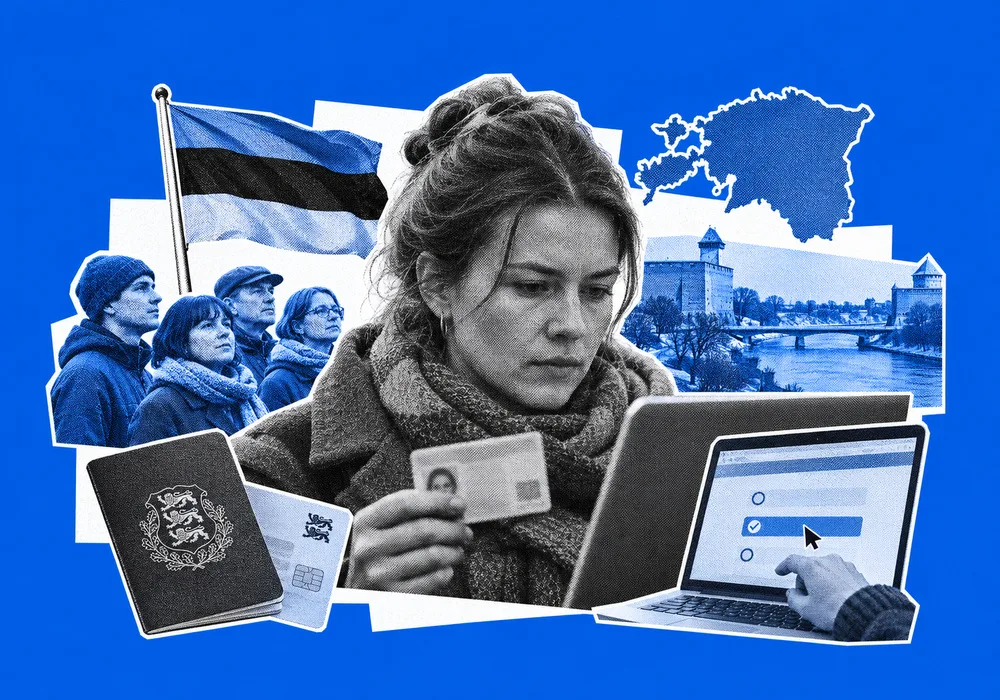
A record shift in Estonia's population register has seen thousands of people change their registered ethnicity from Russian to Estonian. The trend, particularly visible in regions with large Russian-speaking populations, reflects the impact of Russia's war against Ukraine, changing perceptions of identity and the growing importance of integration into Estonian society.
Nearly 5,800 people in Estonia changed their registered ethnicity from Russian to Estonian in 2025, highlighting a shift in how part of the country's Russian-speaking population chooses to identify itself. According to data reported by the Estonian newspaper Maaleht and cited by ERR, 5,782 people made the change, accounting for the majority of the 9,632 ethnicity changes recorded during the year.
The process is relatively straightforward. Residents can update their declared ethnicity through Estonia's population e-register, without providing an explanation or demonstrating any change in citizenship. Ethnicity, or rahvus in Estonian, is a personal identity marker rather than a legal status. It must therefore be distinguished from nationality in the sense of citizenship.
The trend is not entirely new. Over the past five years, 27,934 people have changed their registered ethnicity. Nevertheless, the scale of the latest figures has drawn attention to broader changes in the country's social and cultural landscape, particularly following Russia's full-scale invasion of Ukraine in February 2022.
Russia's War and the Changing Meaning of Identity
The invasion appears to have influenced how some residents perceive their Russian background and its relationship with their identity as members of Estonian society. Former Narva mayor and former interior minister Katri Raik has observed that, since the beginning of the war, more people have emphasised that they are Russian-speaking Estonians rather than simply Russians.
This distinction has become increasingly significant in a country where historical, linguistic and political connections with Russia remain part of the social environment. For some residents, identifying as Russian may now carry associations with the Kremlin and its military aggression, even when their personal identity, political views and cultural background have little connection with the Russian state.
However, the reasons behind the changes are not uniform. Some people may be expressing a genuine shift in their sense of belonging, while others may see the change as a practical decision that makes their integration into Estonian society easier.
Statistics Estonia cannot establish the individual motivations because residents are not required to explain their decisions when updating the register. The figures therefore indicate a change in declared identity, but do not necessarily demonstrate an equivalent transformation in people's cultural affiliations or political attitudes.
Russian-Speaking Communities and the Integration Challenge
The geographical distribution of the changes is particularly relevant. Harju County, which includes Tallinn, recorded an increase of nearly 3,000 people identifying as Estonian at the expense of the Russian category in 2025. Ida-Viru County, in north-eastern Estonia, recorded a corresponding shift of almost 800 people.
Ida-Viru is especially important because of its large Russian-speaking population and its proximity to the Russian border. The county has long represented one of Estonia's most complicated integration challenges, with linguistic and cultural divisions shaping relations between communities and the state.
According to Statistics Estonia figures cited in the parliamentary debate, ethnic Estonians accounted for 20.9 per cent of Ida-Viru County's population, up from 18.5 per cent in 2022. The number of residents changing their registered ethnicity from Russian to Estonian was also five times higher than the number making the reverse change.
A separate 2025 study of 1,991 residents with undetermined citizenship provides another indication of how complex identity can be in the region. Only 21 per cent identified as Russian, while 44 per cent preferred the description Russian-speaking Estonians and 18 per cent identified as Estonian Russians. These residents, often referred to as holders of grey passports, are predominantly Russian-speaking but do not hold citizenship in Estonia or another country.
The findings suggest that linguistic background and national identity do not necessarily coincide. Many residents may continue to use Russian as their primary language while increasingly identifying with Estonia as their political and social home.
Political Debate Over the Implications
The changes have also attracted political attention. Mart Helme, an MP from the right-wing Conservative People's Party of Estonia (EKRE) and a former interior minister, raised the issue in the Riigikogu after receiving reports of increased numbers of ethnic Russians changing both their names and their registered ethnicity in Ida-Viru County.
Helme questioned whether the authorities were monitoring the phenomenon and whether they knew who was making these changes. The issue reflects wider concerns among some Estonian politicians about the security implications of the country's Russian-speaking population, particularly against the backdrop of Russia's increasingly confrontational relationship with its neighbours.
However, Interior Minister Igor Taro rejected the suggestion that changing one's registered ethnicity should itself be treated as a security concern. He said the ministry did not maintain separate statistics on the phenomenon because it had not previously been considered a problem, adding that the trend was more likely to reflect a desire for integration.
Estonian academics have also cautioned against interpreting administrative changes as definitive evidence of a transformation in identity. Raivo Vetik, a professor of comparative politics at Tallinn University, has argued that the more important question is whether people genuinely feel Estonian, rather than simply which category appears in the population register.
Meanwhile, University of Tartu professor emerita Ene-Margit Tiit has suggested that the growing willingness to identify as Estonian may indicate the prestige associated with belonging to the country's national community. From this perspective, the trend could be a positive development if it reflects stronger social integration.
Identity as Part of Estonia's Long-Term Security
The figures present Estonia with a development that extends beyond demographic statistics. For a country bordering Russia and carrying a substantial Russian-speaking population, the relationship between language, identity and political allegiance has long been a sensitive issue.
The increase in people identifying as Estonian may indicate that Russia's war against Ukraine has accelerated a reassessment of national belonging among some Russian-speaking residents. At the same time, the figures do not establish that all those changing their registered ethnicity have adopted Estonian cultural or political identities.
For Estonia, the longer-term challenge will be to translate these shifts into meaningful integration through education, language acquisition, access to public institutions and participation in civic life. Formal identification can be an initial indication of changing attitudes, but durable social cohesion depends on whether people feel included in the country's institutions and future.
The trend also underlines a broader consequence of Russia's aggression: its effects extend beyond the battlefield, influencing how communities in neighbouring countries understand their own identities and relationship with Moscow. In Estonia, the growing number of people choosing to identify as Estonian suggests that this process is already visible within society.