
Latvia Is Turning the Border Into a Cultural Firewall

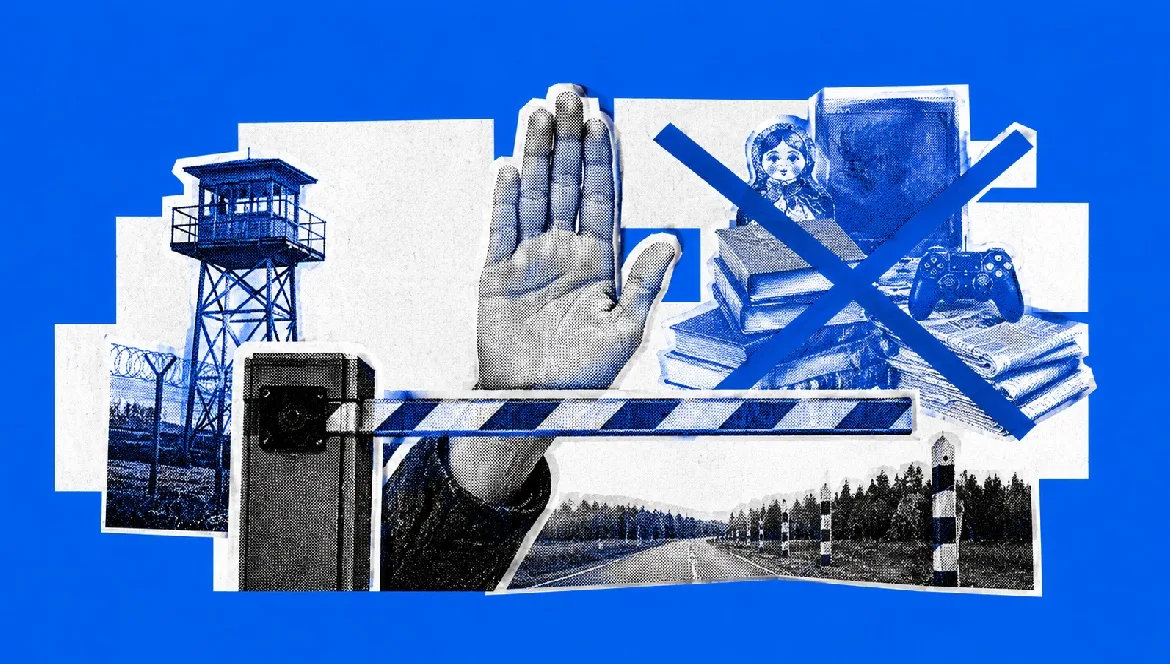
Latvia is moving to ban a wide range of books, newspapers, video games and other goods from Russia and Belarus, turning cultural and commercial ties into a question of national security. The decision reflects a broader shift across Europe, where influence is increasingly understood as something that can enter through markets, media and everyday culture — not only through politics or military power.
Latvia is moving to close one of the last remaining channels through which Russian and Belarusian influence can enter the country legally. Parliament has approved restrictions on the import of a wide range of goods from Russia and Belarus, including books, newspapers, video games, clothing, toys and sporting equipment. The measure goes beyond the existing EU sanctions regime and is designed not only to reduce commercial links with Moscow and Minsk, but also to limit the circulation of content that Riga sees as part of a broader political influence system.
The law is expected to enter into force after being promulgated and will remain in place until 1 July 2027. Crucially, the restrictions will also apply to products routed through third countries, closing a loophole that could otherwise allow Russian or Belarusian goods to reach the Latvian market indirectly. Latvia is therefore treating the issue not simply as a question of trade, but as a question of control over the information and cultural environment in which its society operates.
The border is no longer only about goods
For Latvia, the distinction between an imported product and an imported political influence has become increasingly difficult to maintain. A book can carry a historical narrative. A newspaper can reproduce a state-sponsored worldview. A video game can normalise symbols, language or interpretations of history that Moscow has spent years using to sustain its influence across the former Soviet space.

That does not mean that every Russian-language cultural product is automatically propaganda. The Latvian measure is broader and more politically charged than a simple ban on material explicitly produced by state institutions. Its significance lies precisely in the decision to treat the origin of a product as a security concern in itself. The legislation reflects a growing conviction in the Baltic states that economic and cultural openness towards Russia cannot be separated from the political environment in which Russian influence operates.
The logic has been strengthened by the experience of the war in Ukraine. Moscow's influence has not relied solely on military force or formal diplomatic pressure. It has also depended on language, media, historical narratives and the persistence of economic relationships that make the presence of Russian institutions and products appear normal. Latvia is now attempting to make that normality harder to reproduce.
A decision shaped by Latvia's own history
The issue is particularly sensitive in Latvia because Russian remains widely spoken among a significant part of the population. The country has spent years debating how to reduce the role of Russian in education, public life and the media while strengthening Latvian as the dominant language of the state.
That debate has become more urgent since Russia's full-scale invasion of Ukraine. In Riga, the question is no longer simply whether a Russian-language newspaper or book should be available to consumers. It is whether the continued circulation of Russian-produced content can create a social and political space in which Moscow's narratives retain influence.
Latvia's policy therefore reflects a broader post-Soviet transformation. For decades, the country was economically and culturally connected to the Russian market. Those connections were often treated as a legacy of geography and history rather than as a strategic vulnerability. The war has changed that calculation. What was once viewed as ordinary cross-border commerce is increasingly being examined through the lens of resilience.
The cultural front is becoming part of European security
The Latvian decision also illustrates how the definition of security in Europe is expanding. Traditional sanctions have focused on energy, finance, technology and military goods. But governments in the region are increasingly turning their attention to the less visible channels through which influence survives after formal political relations have deteriorated.
Books and video games may appear insignificant compared with oil, weapons or banking. Yet influence is rarely built through a single product. It is built through repetition: the same language, the same historical references, the same symbols and the same assumptions about who belongs in a particular political and cultural space.

For Latvia, the objective is not to eliminate Russian culture from Europe. The more precise objective is to reduce the ability of the Russian state and its economic ecosystem to use cultural and commercial access as a mechanism of influence. That distinction will remain politically important, particularly in a country where language and identity are already deeply contested.
Riga is acting where Brussels has not
One of the most important aspects of the legislation is that Latvia is moving beyond the restrictions currently imposed at the EU level. The measure is a national response to a problem that many eastern member states believe cannot always wait for a common European decision.
The European Union has repeatedly struggled to maintain a unified approach to Russian economic and cultural ties. Sanctions require political consensus, and the limits of what can be restricted are often contested. National governments therefore increasingly look for areas where they can act independently.

Latvia's decision is part of that wider pattern. The country is effectively saying that the absence of a common EU ban does not necessarily mean that continued access is strategically harmless. This approach could become increasingly important in the Baltic and Nordic region, where governments are often willing to move faster than the broader European consensus when they believe their national security is directly involved.
The difficult question is what comes after the ban
The immediate impact of the restrictions may be limited. The Latvian market is relatively small, and consumers can often find alternative products from European or other international suppliers. Digital distribution also makes it difficult to seal a cultural environment completely. A physical ban cannot prevent people from accessing content online, using foreign platforms or consuming material through private channels.
But that may not be the primary purpose of the legislation. The deeper objective is to change the direction of dependency. Every book no longer imported from Russia, every newspaper no longer distributed through Latvian channels and every commercial relationship removed from the market contributes to the gradual dismantling of a system that once connected Latvia to Russia almost automatically.
This is why the measure matters beyond the individual products it targets. Latvia is not merely banning another category of Russian goods. It is attempting to redraw the boundary between its own information space and the political system to which those goods are connected.
The Baltic states have spent years warning that Russia's influence cannot be measured only in tanks, missiles or military bases. Latvia's latest decision reflects that broader understanding of security. In the Europe that is emerging after years of war and confrontation, the question is increasingly not only what crosses the border, but also which narratives, institutions and dependencies are allowed to remain on the other side of it.