
NASA’s Swift Satellite to Crash to Earth on Nov 6 After Failed Rescue

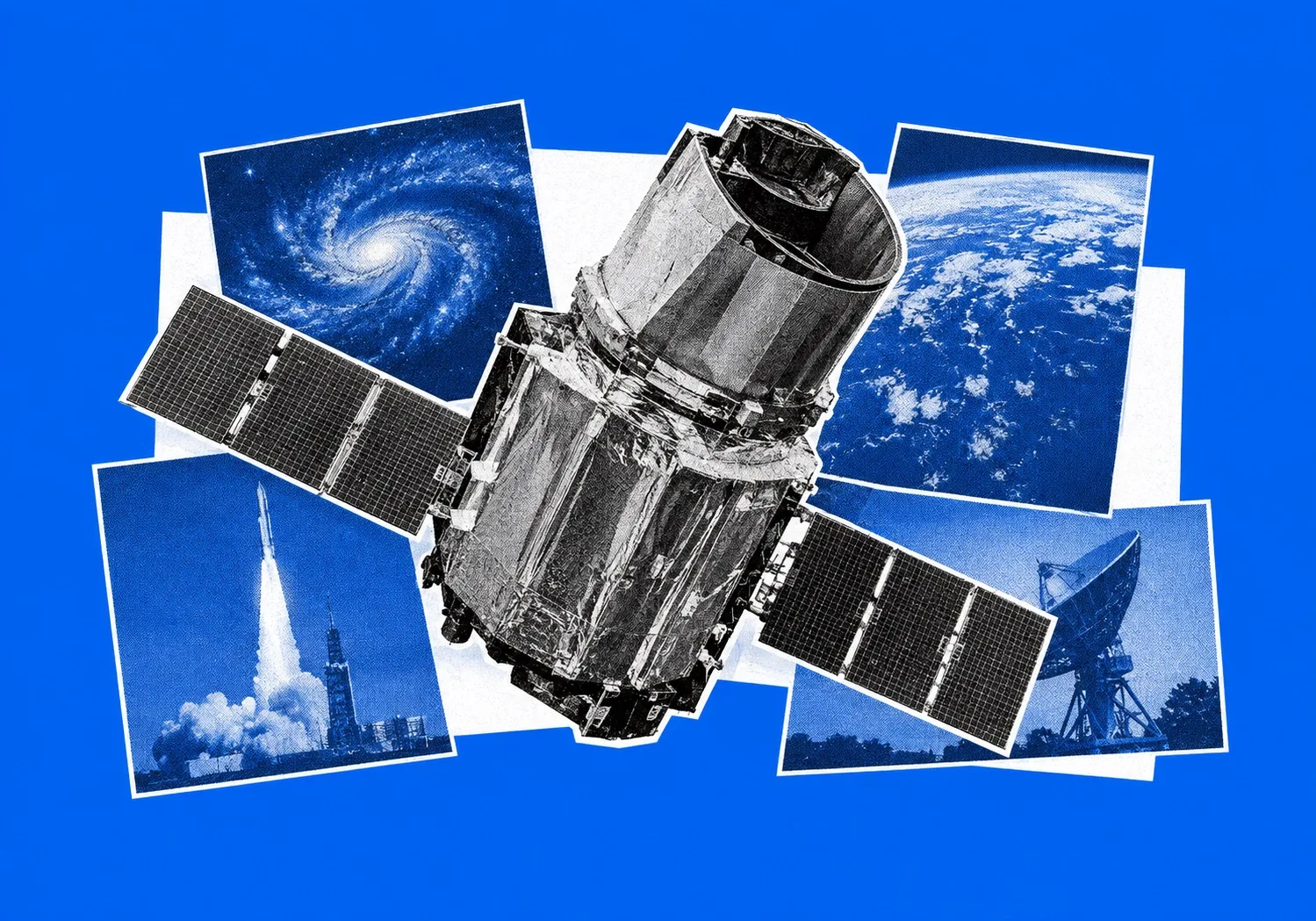
NASA’s Swift space telescope is projected to re-enter Earth’s atmosphere around November 6, 2026, following a failed commercial rescue mission. The US Space Force is currently tracking the 1.5-tonne observatory, which was powered down in late October after 22 years in orbit. While most of the spacecraft will burn up during descent, authorities warn that small metal and mirror fragments could survive re-entry and reach the surface.
The observatory's descent was accelerated by heightened solar activity, which expanded Earth's upper atmosphere and created unexpected drag. While NASA initially hoped to avert the crash, orbital decay ultimately outpaced intervention efforts, setting up a definitive end for the mission.
The failed rescue is perhaps the most consequential part of Swift's final chapter. Space agencies have become adept at launching sophisticated scientific instruments, but keeping them operational when their orbits deteriorate remains considerably harder. For spacecraft built before robotic servicing became a serious prospect, there may be no practical solution.
The Rescue That Stopped 15 Kilometres Short
Swift had been operating since November 2004, far longer than its original generation of space technology might suggest. Its instruments were still contributing to astronomical research when its falling altitude became an urgent concern.
The difficulty originated partly with the Sun.
Periods of heightened solar activity can increase the density of Earth's upper atmosphere. Although satellites in low orbit encounter very little atmospheric resistance, even a modest increase in drag can become significant over months and years.
Swift began descending more quickly than anticipated. Unlike spacecraft designed for orbital maintenance, it had no practical way to restore its altitude.
NASA commissioned Katalyst Space to attempt a rescue. The company's Link spacecraft, equipped with three robotic arms, launched in July 2025 with the aim of reaching the observatory and carrying out a servicing operation.
It encountered technical problems before completing the rendezvous.
Link never approached closer than roughly 12 to 15 kilometres. The mission was abandoned, and in September 2025 the robotic vehicle burned up during its own return through the atmosphere.

For Katalyst, the attempt ended without the central task being performed. For NASA, it meant that a telescope still capable of useful scientific work would have to continue descending.
Swift briefly resumed observations, but the remaining time was limited. By late October 2026, it had fallen below 275 kilometres, where atmospheric drag made stable operations impossible. NASA shut down its scientific systems.
The failure is a reminder of how demanding orbital servicing remains. A robotic vehicle must do considerably more than arrive in approximately the right place. It must match the target's motion, approach safely and establish the conditions needed for physical interaction.
Swift was an especially difficult candidate because it had not been designed to receive such assistance.
The attempt also exposed a commercial problem. Satellite operators may be willing to pay to preserve expensive equipment, but rescue services must work reliably and within the limited time available. In Swift's case, the technology never reached the point at which it could demonstrate that capability.
Twenty-Two Years of Watching the Violent Universe
Swift was not among NASA's largest or most publicly recognisable observatories. Within astrophysics, however, it occupied an important position.
Its main task was to detect gamma-ray bursts, powerful flashes associated with events such as collapsing stars and neutron-star mergers. The bursts themselves can be extremely brief. Astronomers therefore need to identify them quickly and observe the radiation that follows.
Swift was built for that job.
It could detect an event, turn towards its source and begin gathering information while the aftermath was still visible. Its observations also helped direct other telescopes, including Hubble and Webb, towards newly discovered targets.
That rapid response made the spacecraft particularly valuable. A larger telescope might collect more detailed data, but only if astronomers knew where to point it before the event faded.
Over 22 years, Swift observed more than 2,000 gamma-ray bursts and approximately 1,400 supernovae. Its work contributed to over 6,600 scientific papers.
Several discoveries changed astronomers' understanding of high-energy events.
In 2005, the observatory recorded the afterglow of a short gamma-ray burst, providing evidence linking such explosions to neutron-star mergers. In 2009, it identified GRB 090423, then a record-breaking distant gamma-ray burst.
Two years later, Swift detected an event involving a star being torn apart by a black hole. In 2013, it observed a short gamma-ray burst associated with a kilonova.
The telescope's scientific importance came from the connections it allowed researchers to make between sudden bursts of radiation and the processes responsible for them.
Its loss will be felt particularly in studies of transient astronomical events, where the ability to respond within a short observational window can determine whether useful evidence is collected at all.
Other observatories will continue this research. What is less certain is how quickly astronomers can replace Swift's particular role in detecting events and coordinating follow-up observations. No confirmed replacement timetable is identified in the available mission information.
What Happens When 1.5 Tonnes Re-enter the Atmosphere?
The US Space Force currently expects Swift to return to Earth on or around Friday, November 6. Its precise re-entry point remains uncertain.
Possible locations extend across parts of Africa, Australia, India, Southeast Asia, and Central and South America. The wide geographical range reflects the difficulty of predicting the final descent of an uncontrolled spacecraft.
It does not mean that debris will be scattered across those continents.
Most of Swift is expected to disintegrate as it encounters the denser atmosphere. Some components are more resistant to heating, particularly tungsten parts and fragments of the telescope's mirrors.
Those pieces could survive and reach the surface.
The most likely destination is the ocean. Water covers approximately three-quarters of Earth, and much of the land beneath potential re-entry paths has little or no human population.
The European Space Agency considers the danger to any individual from uncontrolled spacecraft re-entries to be extremely small, several orders of magnitude below ordinary risks such as road travel.
The distinction between the possibility of surviving debris and the probability of an injury is important. A large spacecraft returning without guidance requires monitoring, but the event does not necessarily present a substantial threat to people on the ground.
Nor is atmospheric re-entry unusual.

ESA recorded approximately 1,200 whole objects, including satellites and rocket stages, entering the atmosphere in 2025. Swift is larger and more scientifically significant than many discarded objects, but it is part of a regular process through which orbital hardware eventually returns to Earth.
What concerns space authorities is whether that process can be managed more predictably as the number of satellites increases.
Europe's Tougher Rules for Retiring Satellites
Swift was launched in an era when spacecraft were not generally expected to accommodate future robotic servicing or sophisticated disposal operations.
It lacked the remaining fuel and suitable design features needed for a controlled deorbit. Once its altitude fell beyond recovery, there was no way for NASA to choose precisely where it would enter the atmosphere.
That is the kind of situation European space authorities want future missions to avoid.
ESA's Zero Debris approach is intended to reduce the amount of abandoned equipment left in orbit. Its newer disposal requirements call for low-Earth orbit spacecraft to be removed within five years of completing their missions.
The agency also applies strict casualty-risk limits. When the estimated risk from re-entry exceeds one chance in 10,000, controlled disposal over an uninhabited area is required.
Such standards place greater responsibility on spacecraft operators before launch. A satellite's eventual retirement must be considered alongside its scientific or commercial purpose.
That can mean reserving enough capability for disposal, designing systems that remain controllable near the end of a mission or making future servicing easier.
None of those measures can readily be added to a telescope launched in 2004.
For operators of older spacecraft, the available choices are consequently limited. They can continue using an instrument while its orbit permits, attempt a technically difficult intervention or allow it to descend naturally.
Swift's failed rescue illustrates the uncertainty surrounding the second option.
Commercial servicing could eventually offer a way to maintain satellites that would otherwise be lost. It could also support active debris removal, allowing defunct objects to be retrieved or directed out of orbit.
Yet the Link mission never reached the stage at which its robotic arms could assist Swift. That leaves the practical reliability of such services an open question, particularly when the target spacecraft was never designed for capture or docking.
The Difficult Economics of Saving Old Spacecraft
The case for extending satellite lifetimes is straightforward in some respects. Building and launching a replacement can be expensive, and an existing observatory may continue delivering valuable data long after its expected retirement.
Swift was a good example. Its scientific output remained useful, and its loss leaves astronomers without a familiar rapid-response instrument.
But the economics of a rescue depend on the chances of success.
A servicing company must develop specialised hardware, launch it, reach the correct orbit and perform a demanding operation around another spacecraft. Technical problems at any stage can defeat the mission.
The operator must decide whether to undertake that risk, particularly when the satellite's remaining lifetime is uncertain.
Solar activity made Swift's situation more difficult by shortening the time available. The telescope was losing altitude while NASA's proposed solution was still being attempted.
For future spacecraft, the balance could change if servicing becomes part of the original design. Standardised interfaces and provisions for robotic interaction would make the task less dependent on improvising around old equipment.
Such changes would also create a clearer division between satellites designed to be maintained and those intended to be safely disposed of after a fixed working life.
The difficulty is the existing population of orbital hardware.
Many spacecraft still operating were built under assumptions similar to Swift's. Their designers could not rely on commercial robotic servicing, and disposal standards were less stringent.
Some may remain useful for years. Others will face technical failures or orbital decay before operators have dependable ways to intervene.
Europe's tighter rules may help prevent the same problems from recurring with newer missions, but they do little for satellites already in space.
Swift's final weeks showed how narrow the choices can become. NASA had a working scientific instrument, a commercial partner willing to attempt a rescue and a clear reason to preserve the mission. The robotic spacecraft failed to reach it, the observatory continued descending, and its instruments were switched off.
As more satellites reach retirement age, operators will have to decide how much they are prepared to spend on rescue capabilities that remain technically uncertain, and how much responsibility for safe disposal must instead be built into spacecraft before they ever leave Earth.