
Microsoft Offers Voluntary Redundancy to 60,000 Staff to Fund AI Boom

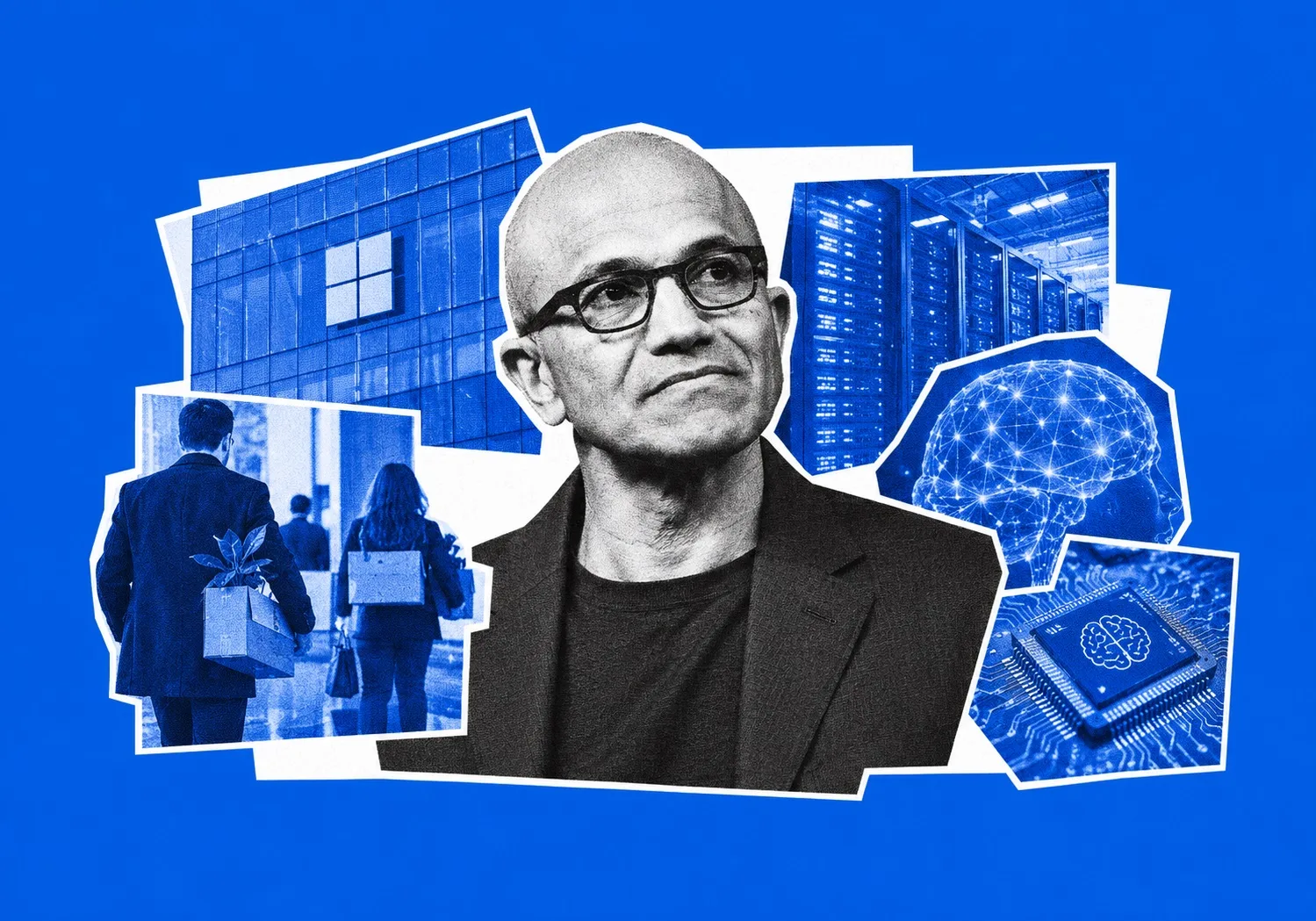
Microsoft has offered voluntary severance packages to around 60,000 employees across the US, UK, Canada, and India in its largest restructuring effort to date. Covering over a quarter of its global workforce, the move highlights how the soaring costs of AI infrastructure are forcing Big Tech to slash headcount and rethink traditional software models.
Management has indicated that compulsory job cuts could follow if too few workers accept the voluntary terms by the end of 2026.
For investors, the announcement was largely welcome. Microsoft shares gained between 1% and 1.5% on Monday, while analysts at Oppenheimer, Scotiabank and Truist raised their price targets to between $600 and $625.
The contrasting reactions capture the economics of the AI boom. Microsoft is committing enormous resources to the infrastructure needed to develop and operate advanced models, while seeking to contain the recurring costs of the organisation that built its existing software empire.
The expensive business of becoming an AI company
For decades, Microsoft's commercial strength rested on software products that could be sold repeatedly without a corresponding increase in the cost of producing each additional copy. Engineers, product managers and corporate support teams were central to that business.
AI changes the balance.
Running services such as Copilot requires substantial computing capacity. Developing advanced models demands specialised hardware, data centres and the electricity infrastructure needed to support them. These investments must be made before the company can fully establish how much revenue they will generate.
The resulting pressure is not necessarily a shortage of money. It is a question of how Microsoft distributes capital between its established operations and an increasingly expensive technological ambition.
Reducing payroll can release funds for infrastructure investment while helping protect operating margins. Unlike the purchase of computing equipment, employee compensation represents a recurring commitment. Removing positions can therefore produce savings that extend well beyond the initial restructuring period, although severance payments create an immediate cost.
Microsoft has not disclosed the total expense of its latest programme, making it impossible to calculate the eventual savings. Nor does offering buyouts to 60,000 people mean that 60,000 jobs will disappear. The company does not expect every eligible employee to participate.
Nevertheless, the number is extraordinary. Microsoft reported approximately 223,000 employees worldwide at the end of June. The latest offer reaches roughly 27% of that workforce.
The scale indicates that management is reconsidering more than a handful of duplicated positions.
The departments Microsoft wants to protect
The clearest indication of Microsoft's priorities lies in the employees who have not been invited to leave.
Data centre infrastructure teams are excluded from the programme, as are cybersecurity operations, commercial sales and specialist research groups working on Discovery and Quantum technologies.
These exemptions are economically revealing.
Data centre employees maintain the physical systems on which Microsoft's cloud and AI ambitions depend. Reducing their numbers while expanding computing capacity would risk undermining the investment the restructuring is intended to support.
Cybersecurity remains essential to the company's enterprise business, particularly as customers face increasingly demanding security and compliance requirements. Commercial sales teams, meanwhile, protect the recurring contracts and enterprise relationships that provide the revenue needed to finance new investment.
Specialist research groups are also being preserved, indicating that Microsoft is unwilling to sacrifice certain longer-term technological capabilities for immediate savings.
The picture is different elsewhere.
Employees in Windows + Devices, Xbox, Finance, Human Resources, AI Experiences and Copilot are among those eligible for the offers. The programme extends through non-executive corporate ranks up to and including vice-president level.
The inclusion of AI Experiences and Copilot is particularly significant. Microsoft is not simply abandoning older software activities to fund an entirely separate AI business. It is examining staffing costs even within divisions associated with its AI products.
That distinction matters. The company appears to be separating the infrastructure and capabilities it considers indispensable from organisational structures whose size it believes can be reduced.
An employee working on an AI-related product is not necessarily protected merely because the product itself is strategically important.
Why voluntary departures appeal to management
Microsoft has already tested the approach.
In April, approximately 9,000 US employees were offered buyout packages. Another 4,800 positions were eliminated in July. The October initiative extends the voluntary model across four major employment markets and a much broader range of operations.
For management, voluntary exits offer several advantages over announcing immediate mass redundancies.
Employees can decide whether a financial package makes departure worthwhile. The company can reduce headcount without initially selecting every individual whose position will be eliminated. Voluntary schemes may also reduce some of the legal, administrative and reputational difficulties associated with compulsory cuts.
The packages include a minimum of eight weeks' base salary for eligible US employees, with additional compensation depending on tenure. Other provisions include extended equity vesting arrangements, temporary subsidised healthcare continuation and career transition assistance.
Employees have been given a 25-day decision period, with departures intended to take place by year-end.
But voluntary does not necessarily mean free from pressure.
Microsoft has left open the possibility of compulsory layoffs if participation falls short of its objectives. Workers must therefore assess an offer without knowing whether remaining at the company will provide greater security.
For some, severance may be an attractive opportunity to pursue another job or change direction. Others may see the programme as an indication that their department has a diminished place in Microsoft's plans.
Employee discussions on Blind and Reddit have reflected both interpretations.
The uncertainty is part of the mechanism. By offering financial incentives first, Microsoft gives employees an opportunity to make the decision themselves, while retaining the option of further intervention.
The risk of paying the wrong people to leave
There is an important weakness in voluntary restructuring: the employees most willing to accept an offer may not be those management would prefer to lose.
Experienced engineers with valuable skills and strong prospects elsewhere may find severance particularly attractive. They can collect compensation and move to another employer without waiting for their existing position to disappear.
Workers with fewer alternatives may be more inclined to remain.
Economists describe this as adverse selection. In Microsoft's case, it could leave the company paying to lose engineers whose knowledge is difficult to replace, while retaining employees in areas where management still wants to reduce costs.
The risk is particularly relevant to established software products. Windows, Xbox and Microsoft's wider device operations require technical expertise accumulated over years. Even where staffing reductions are financially justified, losing too much institutional knowledge could affect product development and operational continuity.
There is also a management problem. Employees considering departure may become less willing to commit to longer-term projects, while colleagues who intend to stay must work through uncertainty about future staffing levels.
The eventual cost of the programme will depend partly on which employees accept, not merely how many.
Should participation remain low, Microsoft faces another calculation. Compulsory redundancies could deliver more predictable headcount reductions, but would also introduce additional restructuring expenses and potentially greater disruption.
That decision will become more pressing as the programme approaches its December deadline.
An industry learning to spend differently
Microsoft is hardly alone in reassessing its workforce.
Alphabet has pursued targeted reorganisations and voluntary departures across parts of its Cloud and Devices businesses. Meta has undertaken substantial restructuring while directing resources towards Reality Labs and AI infrastructure. Amazon has reduced selected corporate and device-related roles, while Intel has used voluntary separation programmes amid the costs of restructuring its manufacturing operations.
On October 26, Skydance also extended voluntary redundancy offers to thousands of employees.
These companies have different businesses and financial circumstances. Their decisions should not be treated as interchangeable. But they belong to a wider period in which large technology groups are reassessing employment costs while pursuing expensive strategic changes.
Microsoft's programme is especially striking because of the contrast between the scale of the offer and the market's response.
Investors did not interpret the announcement primarily as evidence of financial distress. The rise in Microsoft's shares and the higher analyst price targets indicate confidence that reducing operating costs can support profitability while the company continues investing in AI.
That confidence rests on an assumption: money redirected from salaries and conventional operations will generate better returns when invested in computing infrastructure, models and related capabilities.
It is an assumption that remains to be tested.
Data centres and specialised processors require substantial upfront spending. Their commercial value depends on sustained demand for the AI services they support. Payroll reductions, by contrast, can be measured relatively quickly, even if the broader operational consequences take longer to emerge.
The financial benefits and risks therefore unfold on different timescales.
For Microsoft's management, the immediate challenge is to protect margins without damaging the products and teams that still generate much of the company's revenue.
The longer-term question is more difficult. A business built on the value of software expertise is increasingly directing its capital towards the machines required to produce and deliver AI services. Microsoft must now determine how much of its existing workforce it can afford to lose before that shift begins to weaken the business paying for it.