
Israel Election: Gadi Eisenkot Chosen To Form Government In Setback For Netanyahu

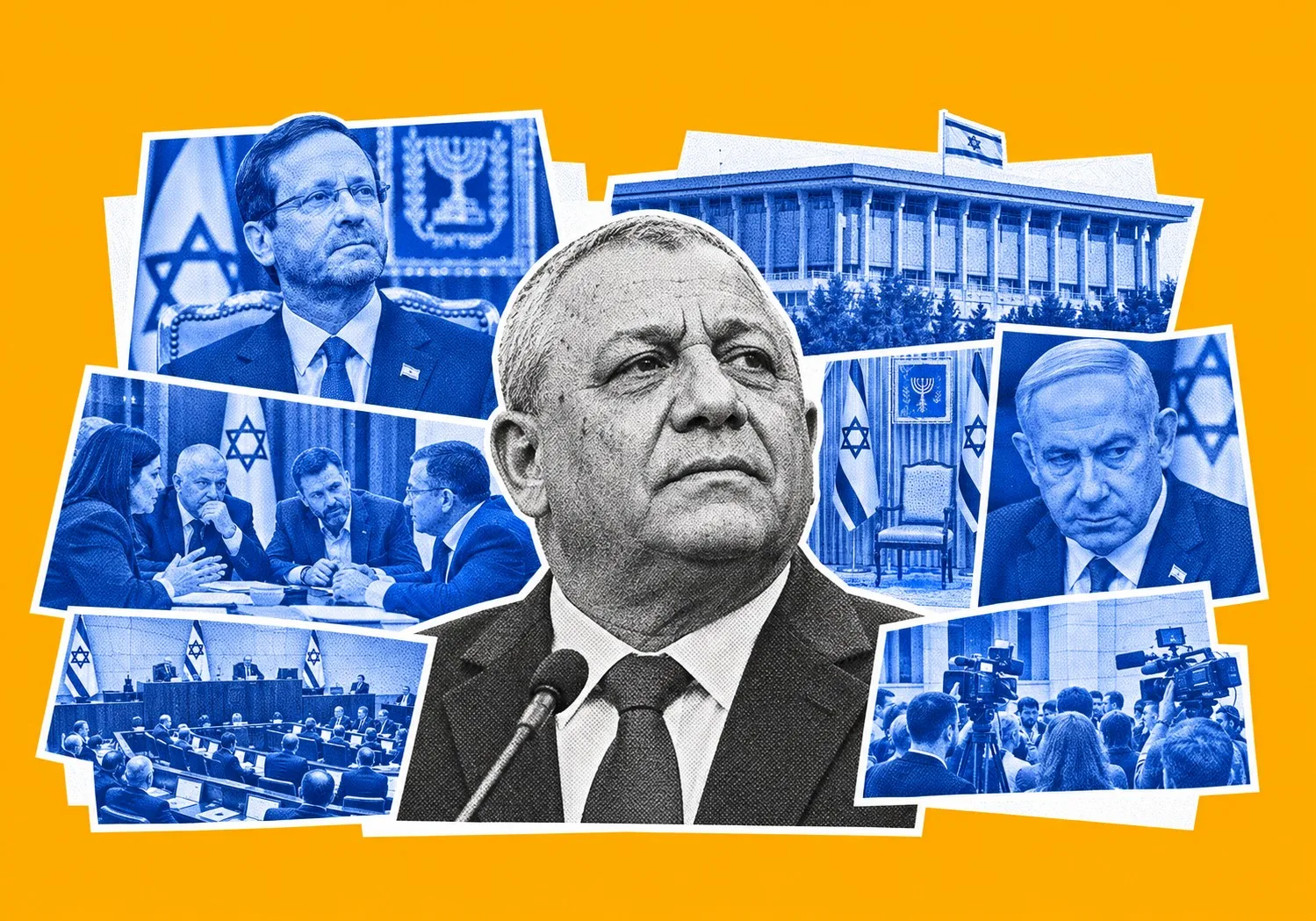
Israeli President Isaac Herzog has chosen opposition leader Gadi Eisenkot to form a new government following an inconclusive parliamentary election. The former military chief secured recommendations from 67 lawmakers, including two Arab-led parties, compared with 46 for Prime Minister Benjamin Netanyahu. Eisenkot now faces difficult coalition talks, with potential partners divided over military conscription and cooperation with Arab parties.

Eisenkot gets first chance to form government
Eisenkot has been invited to the president’s residence in Jerusalem to receive the formal mandate at 17:00 local time on Sunday, 8 November.
Herzog announced his decision on Saturday after several days of consultations with parliamentary factions and separate meetings with Eisenkot and Netanyahu. He had initially expressed doubts about either candidate’s ability to assemble a working coalition, given the disagreements between parties that recommended them.
Under Israeli law, Eisenkot will have 28 days to form a government, with a possible extension of 14 days.
If negotiations fail, Herzog can give another parliamentarian the opportunity to form an administration. Further attempts may follow before another election becomes necessary.
Netanyahu will remain caretaker prime minister until a new government takes office.
The leader of the centrist Yashar party has called for a national emergency government, promising to address Israel’s security problems and establish an independent investigation into the failures surrounding the Hamas-led attacks of 7 October 2023.
He must first find partners willing to support a common programme and survive a parliamentary vote of confidence.
Arab parties back Eisenkot despite political differences
The Joint List and Ra’am, Israel’s two main Arab-led parliamentary groups, played a crucial role in the presidential consultations.
Ra’am, led by Mansour Abbas, announced its support on 4 November. The following day, the Joint List, headed by Yousef Jabareen, also recommended Eisenkot.
Their endorsements were largely motivated by opposition to Netanyahu’s government, rather than agreement with Eisenkot’s political programme.
Jabareen acknowledged substantial disagreements with the former military chief, particularly over the Israeli-Palestinian conflict and the position of Arab citizens within Israel.
The Joint List has criticised Netanyahu’s government over discrimination, policing and its policies in the occupied Palestinian territories. Jabareen said Arab voters had turned out in large numbers to demand political change.
Ra’am has followed a different strategy.
Abbas has long advocated using parliamentary negotiations to secure funding for Arab municipalities, improve infrastructure and address organised crime.
In 2021, his party joined the coalition led by Naftali Bennett and Yair Lapid, becoming the first independent Arab party to participate in an Israeli government.
Eisenkot, however, has ruled out including Arab-led parties in his cabinet.
The Joint List has indicated that it could support an administration from outside the coalition. This would allow Arab lawmakers to help sustain a government without holding ministerial positions.
Such an arrangement faces resistance from Avigdor Liberman, leader of the nationalist Yisrael Beytenu party. Liberman has rejected forming a government dependent on Arab parliamentary support.
The ultra-Orthodox parties offer another possible route.
United Torah Judaism, which holds seven seats, declined to recommend either candidate to Herzog. Its refusal to endorse Netanyahu was particularly significant given the party’s longstanding relationship with him.
Shas, with six seats, remains aligned with the outgoing prime minister.
Together, the religious parties could give Eisenkot’s four-party alliance a narrow majority of 61 seats. But their demands over military conscription conflict with the policies supported by several of his prospective partners.
Ultra-Orthodox leaders want to preserve exemptions for religious students, while Eisenkot has promised legislation requiring wider participation in military or civilian service.
Liberman, who has campaigned against those exemptions for years, has reportedly become more willing to consider governing alongside ultra-Orthodox parties.
The discussions remain preliminary, and Shas has shown no indication of abandoning Netanyahu.
Eisenkot could also seek cooperation with Likud lawmakers, although his refusal to serve under Netanyahu makes a conventional unity government difficult.
The different positions leave him with no agreed coalition despite the substantial parliamentary support for his nomination.
Election results leave Israel politically divided
Likud remained the largest party in the 27 October election, winning 27 seats and 20.51% of the vote. Eisenkot’s Yashar finished second with 21 seats and 16.05%.
Be’Yahad, led by former prime minister Naftali Bennett, secured 12 seats. The Democrats, headed by Yair Golan, won eight, while Liberman’s Yisrael Beytenu obtained seven.
On the right, Itamar Ben-Gvir’s Otzma Yehudit secured seven seats, as did United Torah Judaism. Shas and the Religious Zionism–Zehut alliance each won six.
The results gave Netanyahu’s right-wing and religious bloc 53 seats. Eisenkot’s four-party opposition alliance secured 48, while the Arab-led parties won the remaining 19.
An outright parliamentary majority requires 61 seats.
Arab representation recorded one of the largest gains of the election, rising from 10 seats in the outgoing Knesset to a record 19.
The Joint List won 11 seats and Ra’am eight. Increased participation among Arab voters helped both parties improve their parliamentary position after several elections marked by comparatively low turnout.
National turnout reached 77.9%.
The results also changed the leadership of Israel’s opposition. Eisenkot, who founded Yashar in 2025, overtook more established politicians, including Bennett and Lapid, to become Netanyahu’s principal challenger.
His party emerged as a significant centrist force, combining criticism of the outgoing government with a strong national-security platform.
The new Knesset is scheduled to convene for its inaugural sitting on 10 November.
Why Netanyahu has lost his political advantage
Netanyahu, Israel’s longest-serving prime minister, entered the election with the support of an alliance whose constituent parties had previously held 68 seats in the outgoing parliament.
Their combined representation has fallen by 15.
Although Likud remains the largest individual party, its traditional partners no longer provide enough seats for an outright majority.
The dispute over military conscription has been particularly damaging to Netanyahu’s relations with ultra-Orthodox politicians.
Religious leaders have demanded continued exemptions for men studying in religious institutions. The issue has become increasingly contentious as prolonged military operations have placed additional pressure on reservists and their families.
The outgoing government struggled to produce legislation acceptable to religious parties while addressing demands for more equal military obligations.
Netanyahu has also faced sustained criticism over the security failures surrounding the October 2023 attacks.
Opposition politicians and victims’ families have demanded an independent state commission of inquiry into the circumstances that allowed Hamas militants to breach Israel’s border defences.
The prime minister has defended his wartime leadership, arguing that his government acted to protect Israel against Hamas, Hezbollah, Iran and other threats.
His critics have questioned decisions made before and during the war in Gaza, including the handling of the hostage crisis and the conduct of military operations.
Eisenkot brought direct experience of those decisions to the election campaign.
A former chief of staff of the Israel Defense Forces, he joined Netanyahu’s emergency war cabinet after the attacks but left in June 2024 alongside Benny Gantz.
He subsequently criticised the government’s strategic objectives in Gaza and its failure to reach an agreement on a state investigation.
Netanyahu’s political position has also been complicated by his ongoing corruption trial, in which he denies wrongdoing. The proceedings have contributed to disputes over judicial independence and the government’s relationship with Israel’s legal institutions.
After the election, Netanyahu called for a national unity government and warned against an administration dependent on Arab-led parties.
Eisenkot rejected serving under him but left open the possibility of cooperation with Likud politicians willing to join a government under different leadership.
That would require a significant shift within Likud, where Netanyahu retains strong support.
His party has also challenged aspects of the election process, raising allegations of irregularities involving Arab political groups. Election officials have rejected claims that widespread fraud affected the outcome, although investigations into specific allegations have continued.
Netanyahu could still receive an opportunity to form a government if Eisenkot fails. He retains considerable influence over the right-wing and religious parties, while disagreements among opposition politicians have complicated previous attempts to replace him.
For Eisenkot, the immediate question is whether he can persuade enough lawmakers to support an administration without bringing Netanyahu into it.
Eisenkot’s political views and priorities
Gadi Eisenkot, 66, spent more than four decades in the Israeli military before entering politics in 2022.
Born in Tiberias to a family of Moroccan origin, he rose through the armed forces to become chief of staff of the Israel Defense Forces, serving from 2015 to 2019.
His military career included senior command responsibilities during periods of confrontation with Hezbollah and Palestinian armed groups. He developed a reputation for favouring strong military deterrence and long-term strategic planning.
Eisenkot entered Netanyahu’s emergency war cabinet following the October 2023 attacks.
His son Gal, an Israeli soldier, was killed during fighting in Gaza in December 2023. Two of Eisenkot’s nephews also died during the war.
In 2025, he established Yashar, presenting it as an alternative to Netanyahu’s leadership.
The party’s programme combines national-security priorities with proposals for judicial reform, wider national service, economic competition and improvements in public administration.
Eisenkot wants to revise Israel’s national security doctrine and improve coordination between military commanders, intelligence agencies and civilian authorities.
His party advocates strengthening the armed forces, improving border security and expanding regional defence cooperation.
An independent investigation into the October 2023 attacks is among its principal commitments.
Yashar wants the inquiry to examine decisions made during the preceding decade, the security failures that allowed the attacks to occur and the subsequent management of the war.
It has also proposed additional assistance for bereaved families, former hostages and communities damaged by fighting, particularly in southern and northern Israel.
Eisenkot supports dismantling Hamas’s military and governing capabilities.
He has argued that Israel must prevent the organisation from rebuilding its armed infrastructure while developing arrangements for Gaza’s future administration.
One of the most contentious elements of Eisenkot’s programme is his proposal for a National Service for All law.
The legislation would require broader participation in military or civilian service, including arrangements for ultra-Orthodox and Arab citizens.
Yashar proposes establishing an independent national service authority responsible for assessing recruits and assigning them to appropriate roles.
The party also wants public benefits to give greater recognition to those who undertake national service.
These proposals would mark a significant change to existing arrangements and could become a major obstacle in negotiations with religious parties.
On constitutional reform, Eisenkot advocates legislation clarifying the powers of parliament, government and the judiciary.
Yashar supports judicial independence, a two-term limit for prime ministers and a reduction in the number of government ministries. It also wants to restrict political appointments and strengthen professional standards in the civil service.
Its economic programme focuses on competition and reducing living costs.
The party proposes measures against monopolistic practices, wider adoption of international standards and investment in transport, education and healthcare outside Israel’s main economic centres.
It has also promised stronger action against organised crime, including violence affecting Arab communities.
The Palestinians and relations with Europe
Eisenkot’s position on the Israeli-Palestinian conflict differs from that of many European governments.
In August 2026, he dismissed the prospect of a two-state solution following the October 2023 attacks as unrealistic.
He has nevertheless criticised the proposed E1 settlement expansion in the occupied West Bank, which would threaten territorial continuity between major Palestinian population centres.
Eisenkot has condemned violence by Israeli settlers against Palestinians and criticised far-right politicians, including Ben-Gvir and Bezalel Smotrich, over deteriorating security in the territory.
He opposes Palestinian statehood but has spoken in favour of limited Palestinian self-government under overriding Israeli security control. His position allows for settlements in areas he considers consistent with Israel’s security interests and international legal requirements.
That approach would preserve significant disagreements with the European Union, which supports a negotiated two-state solution and regards Israeli settlements in occupied territory as illegal under international law.
Eisenkot’s criticism of settler violence and opposition to some expansion plans could provide scope for renewed diplomatic engagement. His support for an independent inquiry into the October 2023 attacks and for judicial independence may also receive a favourable response from European governments.
However, his approach to Gaza and Palestinian statehood remains firmly rooted in Israeli security priorities.
The composition of a future coalition will determine which policies he can pursue. His prospective partners range from nationalist politicians opposed to Palestinian statehood to Arab lawmakers demanding greater political rights and changes in Israel’s approach to the occupied territories.