
Ireland Faces Pressure to Halt Alumina Exports to Russia Over Military Supply Links

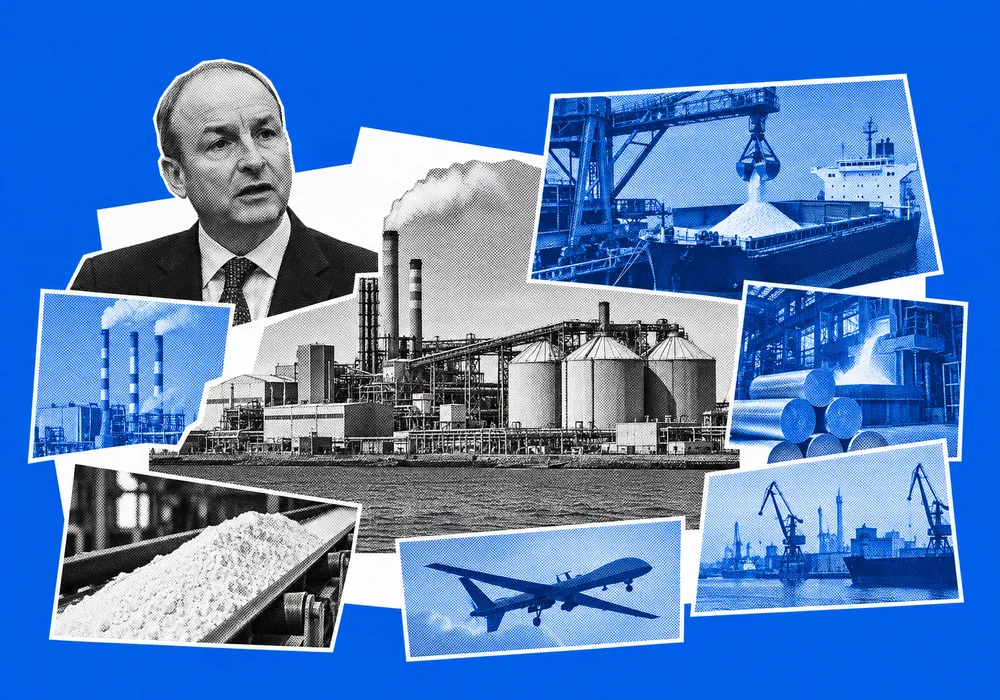
A Russian-owned refinery in Ireland continues to supply alumina to Russia, raising concerns that a critical industrial material is entering supply chains linked to the country's defence sector. With more than 491,000 tonnes reportedly shipped between March and October 2026, the trade has exposed weaknesses in the EU's sanctions framework and highlighted the difficulty of preventing European-based businesses from indirectly supporting Russia's military-industrial complex.
Ireland is facing mounting pressure from Ukraine and European policymakers to halt exports of alumina to Russia from a major refinery in County Limerick. The shipments have continued despite the EU's extensive sanctions against Moscow, raising questions about the effectiveness of restrictions on strategic industrial materials and the ability of European governments to monitor the ultimate destination of goods entering Russian supply chains. The controversy has become particularly sensitive as European leaders gather in Dublin to discuss support for Ukraine and the bloc's response to Russia's war.
The focus is on the Aughinish Alumina refinery, Europe's largest facility of its kind, which is owned by Russian aluminium producer Rusal. The plant regularly exports alumina directly to Russian ports, including St Petersburg. Although the material has numerous civilian applications, it is also a critical industrial input for producing aluminium used in military equipment, including aircraft, missiles and drones.
According to estimates by the advocacy group Alumina 22, approximately 491,307 metric tonnes of alumina were shipped from Ireland to Russia between March and October 2026. These deliveries have become increasingly important to Rusal following the loss of other sources of raw materials after Russia's full-scale invasion of Ukraine. A 2026 report by Ukraine's Economic Security Council estimates that Russia's access to alumina declined by approximately 40% after facilities in Australia and Ukraine stopped supplying the Russian market. Ireland now accounts for roughly 17% of Rusal's alumina supply.
From Irish industrial production to Russian defence supply chains
The Aughinish refinery was established in the 1970s and acquired by Rusal in 2007. The Russian company was founded by Oleg Deripaska, a sanctioned oligarch with ties to President Vladimir Putin, who remains a shareholder. Rusal is a major component of Russia's aluminium industry and, according to assessments by the US and Australian governments, accounts for virtually all of the country's aluminium production.
Alumina is produced by refining bauxite and subsequently processed into aluminium. The resulting metal is used across civilian manufacturing, but its strength, flexibility and resistance to high temperatures also make it important for defence production. Aluminium alloys are incorporated into aircraft structures, missiles and other military equipment, while aluminium is also used in the manufacture of rocket fuel and explosives.
The concern surrounding Aughinish is not limited to the fact that its products reach Russian ports. An investigation by the Organized Crime and Corruption Reporting Project (OCCRP) and The Irish Times traced alumina from the Irish refinery to Russian smelters, where it is processed into aluminium. Some of this material is subsequently sold to a Moscow-based metals trading company known to supply Russian defence contractors, including manufacturers involved in producing weapons and missile systems.
EU sanctions envoy David O'Sullivan has publicly acknowledged the significance of these findings. Speaking in Dublin in October, he said there was little doubt that alumina supplied to Russian smelters was reaching the country's military-industrial complex, at least in part. He also expressed confidence in the investigative reporting, indicating that the connection between the Irish refinery's exports and Russian defence-related supply chains could not be dismissed as a purely speculative concern.
However, establishing the precise destination of individual shipments remains difficult. The fact that alumina is processed into aluminium before being sold to other companies creates additional layers between the original supplier and the eventual industrial user. This makes it harder for European authorities to determine how much of the material ultimately enters military production and whether existing monitoring arrangements can prevent its diversion.
Ireland's investigation leaves critical questions unanswered
The Irish government has conducted an investigation into the refinery's exports and shared its findings with the European Commission and Ukraine. However, the report has not been made public, limiting independent scrutiny of its conclusions and the evidence considered by the authorities.
Irish officials have maintained that the investigation found no definitive evidence that alumina from Aughinish was directly supplied to Russian arms manufacturers. At the same time, the government has acknowledged that it could not establish that the material was excluded from military supply chains. Enterprise Minister Peter Burke previously said it had been impossible to verify Rusal's assertion that the Irish alumina was used exclusively to manufacture aluminium intended for export from Russia.
The distinction between direct supply and indirect access is central to the controversy. The absence of documented deliveries from Aughinish directly to a weapons manufacturer does not establish that its products cannot contribute to Russia's military production through intermediary companies and processing facilities. Without effective traceability beyond the initial export, the Irish authorities have limited capacity to establish the ultimate use of the material.
Aughinish Alumina rejects allegations that its products are connected to Russian military supply chains. The company says its material has no connection to Russian military procurement and has commissioned an independent company to conduct monthly audits for Irish authorities, with the stated objective of improving export traceability.
Nevertheless, these assurances have not resolved concerns among Ukrainian representatives and European policymakers. Ukrainian President Volodymyr Zelenskyy previously criticised European companies owned or controlled by Russian interests that continue supplying essential materials to the aggressor. The case has therefore become a test of whether European governments are prepared to address indirect industrial links to Russia's war effort, rather than focusing exclusively on direct transactions with sanctioned entities.
Brussels faces pressure to close the sanctions gap
Alumina remains outside the EU's general export restrictions against Russia, allowing the Irish refinery to continue supplying Russian customers without violating a specific prohibition on the material itself. The European Parliament adopted a non-binding resolution in July 2026 calling for a ban on alumina exports to Russia, but the substance was not included in the bloc's 21st sanctions package.
The European Commission has since examined the issue and consulted member states about possible restrictions. Officials reportedly considered introducing export quotas that would gradually reduce shipments from Aughinish, giving the refinery time to find alternative markets. However, restrictions on the facility were not included in the draft of the EU's proposed 22nd sanctions package, according to reporting by The Irish Times in October.
Estonia has indicated that it intends to push for sanctions targeting alumina exports during negotiations among member states. The proposal reflects growing concern that Russia continues to retain access to industrial inputs through commercial channels that remain open despite the EU's broader efforts to weaken its defence-industrial capacity.
Any new sanctions would require unanimous approval from all 27 EU member states. This creates an additional political obstacle, particularly given the potential economic consequences for Ireland and other European industries dependent on alumina supplies. The European Commission has previously described sanctions policy as a balance between restricting Russia's ability to sustain its war and limiting negative consequences for the economies of member states.
The possibility of imposing restrictions has also raised questions about whether the EU should prioritise an outright export ban or a gradual reduction in shipments. A quota system could provide a transition period for the Irish refinery to redirect its production towards European customers, while a comprehensive prohibition would more immediately restrict Russia's access to the material.
Economic interests complicate Ireland's position
The controversy is particularly sensitive because Aughinish is an important employer in County Limerick, providing several hundred jobs and supporting wider industrial activity in the surrounding area. The refinery has warned that restrictions on exports to Russia could threaten the viability of its operations and potentially force it to close.
The facility also supplies European customers, including an aluminium smelter in Dunkirk, France. It is therefore not simply a question of ending a commercial relationship with Russia: any restrictions would have to account for the refinery's role in European industrial supply chains and the potential consequences for aluminium producers elsewhere in the bloc.
Irish government representatives have stressed the country's commitment to supporting Ukraine while maintaining that there is insufficient evidence to demonstrate that Aughinish is directly supplying the Russian military. Minister Niall Collins has defended the refinery, pointing to its economic importance and the absence of publicly demonstrated evidence of wrongdoing. Foreign Minister Helen McEntee, meanwhile, has said Ireland would support measures proposed by the European Commission.
Opposition Labour Party leader Ivana Bacik has called for stronger action, including the possibility of temporary nationalisation of the refinery to protect employment while ending exports to Russia. Her proposal reflects a broader argument that the economic viability of a European industrial facility should not depend on maintaining supply relationships that could indirectly benefit Russia's military production.
The debate is also taking place against the backdrop of wider disruptions to international trade. Concerns over cargo traffic through the Strait of Hormuz, linked to the US-Israeli war with Iran, have increased the importance of maintaining reliable supplies of industrial raw materials. This further complicates efforts to restrict Russian access without creating additional vulnerabilities for European manufacturers.
A test of Europe's economic security policy
The Aughinish case exposes a structural weakness in the EU's approach to economic pressure on Russia. Restrictions on military equipment and sensitive technologies can limit direct access to defence-related goods, but their effectiveness is reduced when strategically important raw materials remain outside the sanctions regime. The problem becomes more pronounced when materials pass through several companies and processing facilities before reaching their final users.
For Russia, maintaining access to aluminium and its production inputs is particularly important because the metal is used across the aerospace, defence and explosives industries. The loss of Ukrainian and Australian supplies has increased the strategic importance of remaining sources, making Irish exports more significant than their commercial value alone might suggest.
For European policymakers, the dispute raises broader questions about ownership structures, intermediary trading companies and the responsibility of businesses operating within the EU. It also highlights the limitations of relying on assurances from companies when governments cannot independently verify the final destination of their products.
The outcome will have implications beyond Ireland. If the EU cannot establish effective controls over the movement and end use of strategic industrial materials, Russia may continue accessing essential inputs through commercial channels that remain legally open despite the bloc's sanctions policy. The challenge for Brussels is therefore not only to restrict individual exports, but to develop a more comprehensive approach to identifying and closing indirect supply routes that sustain Russia's military-industrial capacity.
Sources: The Irish Times, Associated Press, Euronews