
Iranian Intelligence Operatives Convicted of Spying on Journalists in the UK

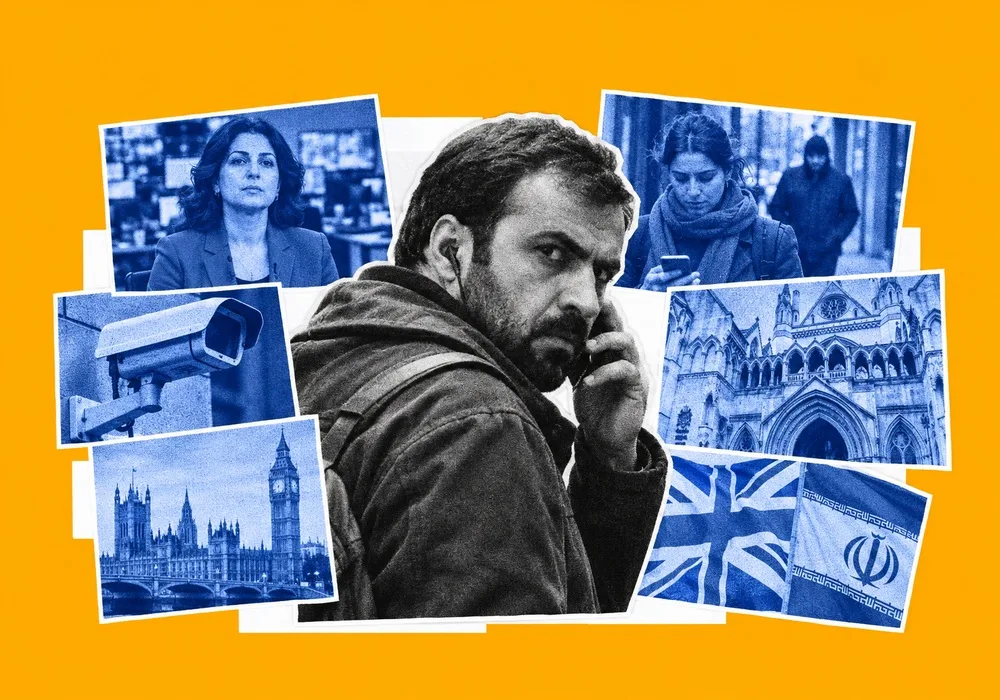
Two Iranian nationals have been convicted in the United Kingdom of conducting surveillance on journalists and a lawyer critical of Tehran on behalf of Iranian intelligence. The case exposes the use of proxy networks to monitor dissidents abroad and raises further concerns about the security of Iranian opposition figures living in Europe.
Two Iranian nationals have been convicted in the United Kingdom of conducting espionage activities on behalf of the Iranian state, following an investigation into a surveillance operation targeting journalists critical of Tehran and a lawyer based in London. Mostafa Sepahvand, 41, and Farhad Javadi Manesh, 46, were found guilty at Woolwich Crown Court on 12 November 2026 of engaging in conduct likely to assist a foreign intelligence service, contrary to the National Security Act 2023.
The operation took place between August 2024 and March 2025 and involved surveillance of individuals associated with Iran International, a London-based Persian-language broadcaster that has become a prominent source of independent reporting on Iran. The targets included journalists Mojtaba Pourmohsen and Kambiz Hosseini, Jonathan Turner, a founding member of UK Lawyers for Israel, and a media production professional. Tehran has repeatedly targeted Iran International and its staff, treating the broadcaster as a hostile organisation because of its reporting on the Iranian government.
The investigation established that Sepahvand played a leading role in coordinating the operation, communicating with contacts in Iran and passing surveillance instructions to Manesh. The latter supplied photographs, videos and other information about the targets. The two men were promised financial rewards for gathering intelligence, with prosecutors presenting evidence that the information was intended to support hostile activities against people living in the UK.
A third defendant, Shapoor Qalehali Khani Noori, was acquitted of all charges. Sepahvand was convicted both of assisting a foreign intelligence service and of preparatory conduct involving surveillance, reconnaissance and open-source research with the intention of facilitating serious violence. Manesh was convicted of the intelligence-related offence but acquitted of the separate charge concerning preparation for serious violence.
Surveillance Developed into Preparations for Violence
Evidence presented during the six-week trial revealed the extent of the surveillance operation. Investigators recovered briefing documents containing photographs of the targets, their residential and workplace addresses, descriptions of their vehicles and other personal details. Some documents even included the names of their pets, demonstrating the level of information being collected about individuals and their private lives.
The defendants visited locations associated with their targets, recorded photographs and videos and conducted online research to establish their movements and whereabouts. Their activities were not limited to identifying public appearances or professional connections. Investigators found evidence of attempts to locate individuals at their homes and establish patterns that could potentially facilitate physical attacks.
One of the most concerning aspects involved a journalist who had already been forced to leave their home because of security concerns and temporarily relocate to a hotel in west London. Despite the relocation, material recovered from Sepahvand's mobile phone showed continued attempts to identify the individual's whereabouts. His communications with contacts in Iran included a request for £150,000 to 'finish off' the target once they had been located.
Prosecutors also established that Sepahvand expected financial compensation amounting to tens of thousands of pounds and hoped that his cooperation would help resolve a criminal conviction for theft in Iran. In communications presented to the court, he discussed the possibility of carrying out serious violence if the promised payment was made. The prosecution argued that the evidence demonstrated an operation moving beyond intelligence collection towards the preparation of a potentially lethal attack.
Sepahvand admitted conducting surveillance on behalf of the Iranian state but claimed that he had been acting under pressure and feared the consequences of refusing to cooperate. Prosecutors nevertheless demonstrated that his activities were intentional and that he understood the information he was gathering could assist a foreign intelligence service in carrying out hostile operations.
Counter Terrorism Policing London examined approximately 534GB of digital material during the investigation. The evidence included messages, voice recordings, photographs and videos, much of which required translation from Persian. Investigators also used mobile phone location data to establish the defendants' movements and connect their activities to specific surveillance operations in London.
Both men were arrested at their homes on 3 May 2025. British authorities said their arrests prevented serious violence from being inflicted on one or more of the targets. No physical attack took place.
The Growing Use of Proxies by Hostile States
The case illustrates a broader security challenge facing European governments: the use of individuals operating within democratic countries to carry out intelligence activities on behalf of foreign states. Such operations can rely on relatively informal recruitment networks, financial incentives and communications through social media rather than exclusively on trained intelligence officers operating under diplomatic cover.
British counter-terrorism officials have warned that Iran has adapted its methods of conducting hostile activities abroad. According to Deputy Assistant Commissioner Vicki Evans, Senior National Coordinator for Counter Terrorism Policing, the threat involves different categories of intermediaries, including individuals who enter a country temporarily to carry out specific tasks and people who already have established lives and legal residence in the country where surveillance is conducted.
This approach creates particular difficulties for domestic security services. Individuals recruited as proxies may not initially attract attention because their activities can resemble ordinary criminal behaviour or personal disputes. However, when coordinated with foreign contacts, seemingly isolated acts of photographing buildings, monitoring individuals or collecting personal information can become components of a state-directed intelligence operation.
The British police identified the case as the fourth in recent years involving direct threats against journalists working for Iran International. The broadcaster's employees have faced repeated intimidation, including threats that have forced individuals to take additional security precautions. The targeting of Persian-language journalists is particularly significant because it demonstrates how foreign governments can attempt to restrict independent reporting beyond their own borders.
The implications extend to other members of the Iranian diaspora, political dissidents and organisations engaged in activities opposed to Tehran's policies. Journalists are not the only potential targets. Lawyers, activists, political figures and individuals involved in documenting human rights abuses can also become subjects of surveillance or intimidation. Operations of this kind can undermine freedom of expression by creating an environment in which criticism of a foreign government carries perceived personal risks even after individuals have relocated to democratic states.
The inclusion of a UK-based lawyer among the surveillance targets also demonstrates that these operations can extend beyond the media sector. The targeting of professionals involved in political and legal advocacy raises concerns about the protection of civil society organisations and the security of individuals whose work brings them into conflict with foreign governments.
Britain's Response and the European Security Dimension
The convictions represent an important test of the UK's National Security Act 2023, which strengthened the country's legal framework for addressing espionage, sabotage and other activities conducted on behalf of foreign powers. The legislation provides prosecutors with additional instruments to pursue individuals whose activities assist foreign intelligence services, including operations conducted through intermediaries rather than directly by state officials.
The case also demonstrates the importance of cooperation between counter-terrorism police, intelligence services and prosecutors in identifying the wider purpose of apparently disconnected activities. Digital evidence, location data and the reconstruction of communications with foreign contacts were central to establishing the connection between surveillance conducted in London and the Iranian state.
The British authorities have increasingly described Iran as one of the foreign states presenting a significant security challenge to the country. In October 2025, MI5 Director General Ken McCallum warned that British intelligence and police had responded to more than 20 potentially lethal Iran-backed plots since January 2022. The November convictions add a concrete example of how these threats can develop through locally recruited individuals and operations targeting people who are not directly involved in state institutions.
The broader implications are relevant to European security cooperation. Iranian opposition figures, independent media organisations and diaspora communities are present across several European countries, making the protection of individuals targeted by foreign intelligence services a shared concern. Intelligence sharing, cross-border investigations and improved awareness of proxy recruitment methods are therefore important elements of the response.
For European governments, the challenge is not limited to identifying foreign intelligence officers. It also involves recognising how hostile states can exploit ordinary communication platforms, financial incentives and existing social networks to organise surveillance and intimidation. The British case shows that such operations can develop over extended periods, collect highly detailed personal information and create conditions for violence without immediately attracting public attention.
The Iranian Embassy in London rejected allegations linking the individuals to Iranian state institutions and described the British proceedings as politically motivated. The convictions, however, were based on evidence examined during a six-week criminal trial and a jury's assessment of the defendants' conduct.
Sepahvand and Manesh are due to be sentenced at the Central Criminal Court on 17 December 2026. Their convictions mark a significant development in Britain's efforts to prosecute foreign state-linked espionage and underline the growing difficulty of protecting democratic societies from intelligence operations conducted through domestic proxies. The case also reinforces a wider European security concern: authoritarian governments can continue targeting critics even after those individuals have left their countries of origin, turning the protection of political freedom and independent journalism into an increasingly important part of national security.
Sources: Crown Prosecution Service, Metropolitan Police