
Iran Threats Force Security Tightening at US Air Bases in Britain

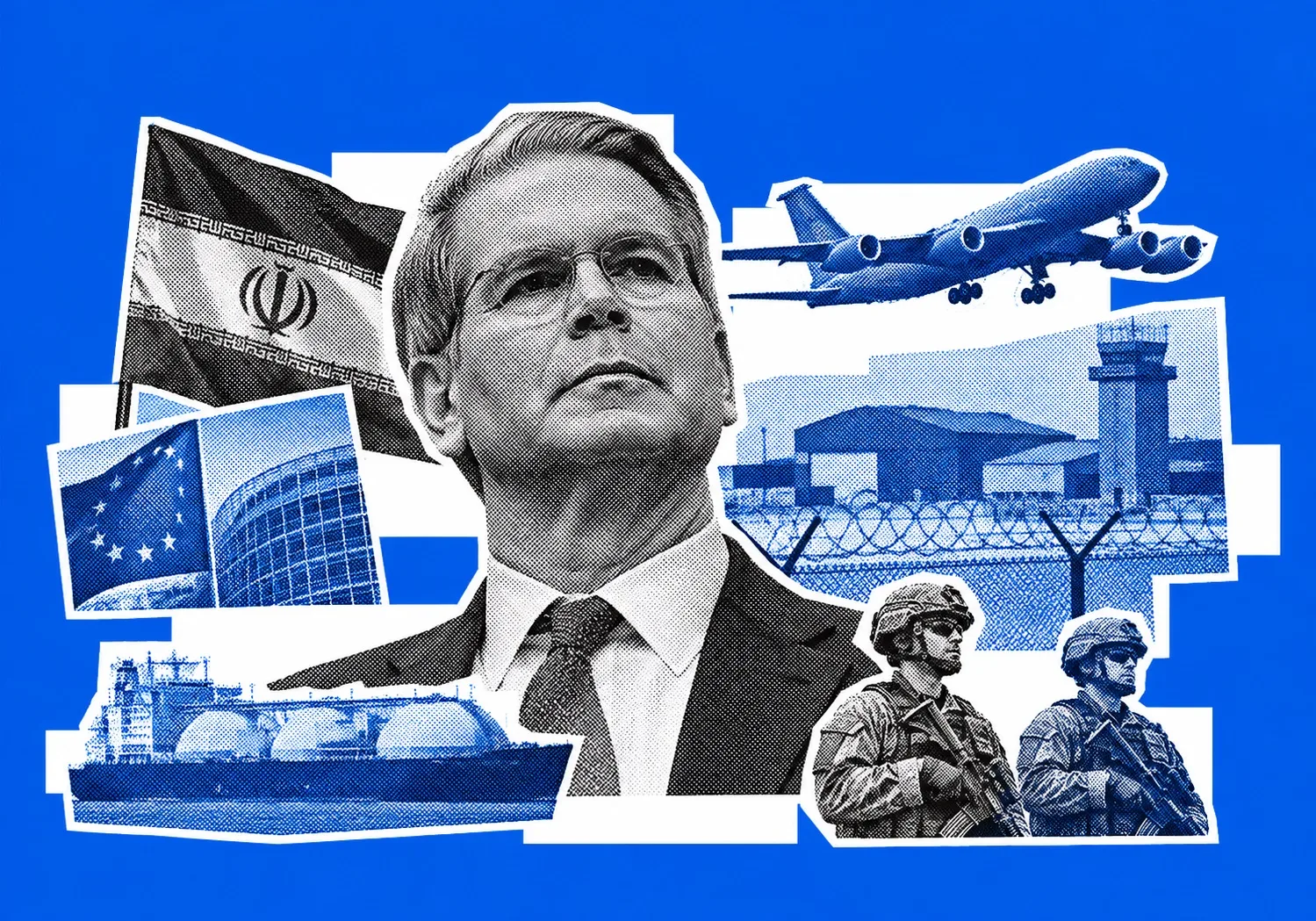
American air bases in the UK have raised threat levels and relocated aircraft following intelligence on Iranian plots. The security crackdown comes as US officials face assassination threats and European nations investigate Iranian-linked cyberattacks.
The New York Times reported that US intelligence agencies believe Iranian threats against serving and former American officials have reached a more advanced stage. Bessent, who leads Washington's campaign to cut off funding to Iran's Islamic Revolutionary Guard Corps (IRGC), is among the officials considered particularly exposed.
He is at least the seventh senior figure associated with Donald Trump's administration to move into secure military housing. Stephen Miller and former Attorney General Pam Bondi were among those who took similar precautions in 2025.
The warnings have coincided with developments much closer to European territory. US prosecutors have brought charges relating to alleged Iranian-linked operations across Europe and North America, while France has accused Iranian actors of involvement in cyberattacks on supermarket infrastructure.
Britain, where several major American air installations are located, is already dealing with the immediate military consequences.

American Aircraft Moved as Security Tightens in Britain
Security at RAF Mildenhall and RAF Lakenheath in Suffolk has been raised to Force Protection Condition Charlie, according to reporting by Reuters, The Telegraph and Forces News.
The designation requires stricter protective arrangements in response to an elevated threat. Access to the installations has been restricted, while additional security measures have been introduced.
Nine American aerial refuelling tankers and three V-22 Osprey aircraft have also been moved from Mildenhall to bases in Germany, Spain and elsewhere in Britain.
Mildenhall is an important refuelling and air mobility centre for American operations. Its aircraft help extend the range of other military aircraft and support deployments across considerable distances. Lakenheath hosts US combat aircraft, while RAF Fairford provides facilities for strategic bombers.
These installations are valuable precisely because they allow American forces to operate across several regions without having to maintain every aircraft close to a potential conflict zone.
Their locations, however, also create security responsibilities for Britain.
The latest precautions follow an incident in September, when B-1 bombers were withdrawn from RAF Fairford amid concerns about suspected terrorist plotting. Iranian state media had publicly identified American military assets based in Britain.
Moving aircraft between installations can make them less vulnerable to an attack concentrated on one site. The receiving bases must nevertheless accommodate additional aircraft and their support requirements.
Whether the redeployments have affected operational readiness has not been established. Military authorities have also not publicly disclosed the intelligence behind the latest alerts in sufficient detail to assess the likelihood of an attack.
For British authorities, the immediate concern is protecting installations that serve American military objectives but operate from British territory. Any hostile activity directed against them would also raise domestic security questions.
Why Bessent Has Become a Security Concern
The reported threats against Bessent come during a renewed American effort to restrict Iran's access to international finance.
The Trump administration intensified economic restrictions on Tehran in early 2025. In August, Bessent took charge of Operation Economic Outcast, a campaign intended to isolate Iranian financial networks and reduce revenue reaching the IRGC.
The strategy relies heavily on financial restrictions rather than direct military action. By limiting access to money and international commercial channels, Washington aims to constrain the resources available to Iran's security establishment.
The personal risks facing officials responsible for those measures have become a concern for American intelligence agencies.
Yet the available information leaves important questions unanswered. The New York Times reporting relies on intelligence assessments whose underlying details remain classified. It does not publicly establish the precise nature of the alleged plans against Bessent or the extent of any direct involvement by Iranian authorities.
Separate criminal proceedings provide further information about suspected operations abroad.
On 10 November, the US Department of Justice unsealed indictments against three Iranian nationals. Prosecutors allege that the defendants were connected to approximately 20 attacks and plots across Europe and North America, including a suspected operation targeting RAF Fairford.
The allegations remain subject to judicial examination. An indictment sets out the prosecution's case; it does not establish that the accused committed the offences.
The geographical scope of the alleged activity nevertheless raises concerns for European security services. Protecting senior American officials is primarily a US responsibility, but suspected operations involving facilities and individuals in Europe require cooperation with national authorities.
There is also a practical limit to what traditional military precautions can achieve.
Aircraft can be moved and base access restricted. Alleged assassination networks and covert operations, however, demand intelligence gathering, criminal investigations and cooperation between jurisdictions.
Those requirements can persist even when the immediate military alert is reduced.
French Cyberattack Allegations Add to EU Concerns
European governments are also examining an alleged Iranian-linked cyberattack affecting refrigeration systems at hundreds of supermarkets across several EU member states.
French authorities attributed the operation to Iranian actors and called for a coordinated response.
The reported attack involved equipment used in ordinary commercial activity. Supermarkets depend on functioning cooling systems to store perishable goods, making disruption potentially costly even without damage to a wider electricity network.
The incident has prompted discussion of additional European sanctions.
EU foreign policy chief Kaja Kallas has indicated that she is open to further restrictive measures. Foreign ministers are scheduled to review possible sanctions against individuals and organisations associated with Iranian cyber operations on 16 November.
The proposed measures remain under discussion. Their adoption would depend on agreement among member states and the evidence available to support individual designations.
Attribution is a particular difficulty in cyber investigations. Although French authorities have identified Iranian-linked actors, the information described publicly does not fully establish how the operation was organised or whether it was directed by central Iranian state institutions.
European governments must therefore decide how to respond to the reported activity without treating every aspect of the allegations as proven.
Their diplomatic relationship with Iran adds another consideration.
While Washington has pursued an increasingly restrictive financial campaign, European capitals have continued diplomatic engagement over Iran's nuclear and ballistic missile programmes. They have also introduced sanctions concerning human rights abuses and activities considered destabilising.
The approaches overlap in some areas but are not identical. A European decision to sanction suspected cyber operators would not necessarily mean adopting Washington's entire economic strategy.
Nor would sanctions eliminate the need to improve the security of civilian systems that may be vulnerable to similar attacks.
Energy Markets React to Threats in the Strait of Hormuz
European exposure to the dispute extends to shipping routes in the Middle East, where reports of attacks on commercial vessels and liquefied natural gas carriers have unsettled energy markets.
Dutch TTF natural gas futures rose above €101 per megawatt-hour earlier in November. On 9 November, the benchmark reached €86.70/MWh before declining to €82/MWh on 10 November following a temporary easing of political tensions.
Brent crude fell 2.58% to $90.18 a barrel.
The Strait of Hormuz carries a substantial share of internationally traded oil and LNG. Threats to shipping can affect supply expectations and transport costs, with consequences for buyers far from the Gulf.
European industries are sensitive to these movements, particularly businesses that consume large quantities of gas or electricity. Higher wholesale prices can increase production costs and, if sustained, eventually feed through to consumers.
The recent decline in prices is a reminder that market reactions are not the same as confirmed supply losses. Traders are responding to changing assessments of shipping security, and those assessments can shift rapidly.
There is no basis in the available figures to conclude that Europe is facing a prolonged shortage. What the price movements reveal is the speed with which Middle Eastern security developments can affect European energy costs.
The problem is difficult to address through European sanctions or military security measures alone. Even countries with limited direct dependence on Gulf energy can be affected by changes in international prices.
For Britain, the immediate decisions concern the protection of American bases and the accommodation of aircraft moved from threatened installations. EU governments, meanwhile, must assess evidence of alleged Iranian cyber activity before deciding whether to impose further restrictions.
Those decisions will unfold against different national interests and diplomatic priorities. European countries host American military infrastructure, participate in security cooperation with Washington and maintain their own policies towards Tehran.
The forthcoming EU foreign ministers' meeting will provide an indication of how far member states are prepared to go in responding to the cyber allegations. It will not settle the separate question of how long heightened protection will be required at American installations in Europe, or whether the intelligence warnings that prompted the latest precautions will lead to further operational changes.
Sources: The New York Times, Statement issued by the government of the United States of America, The Detroit News, RFI, CNBC, Reuters