
Inside Spain’s Deadly DANA Storms: The Climate Physics Behind the Mediterranean Floods

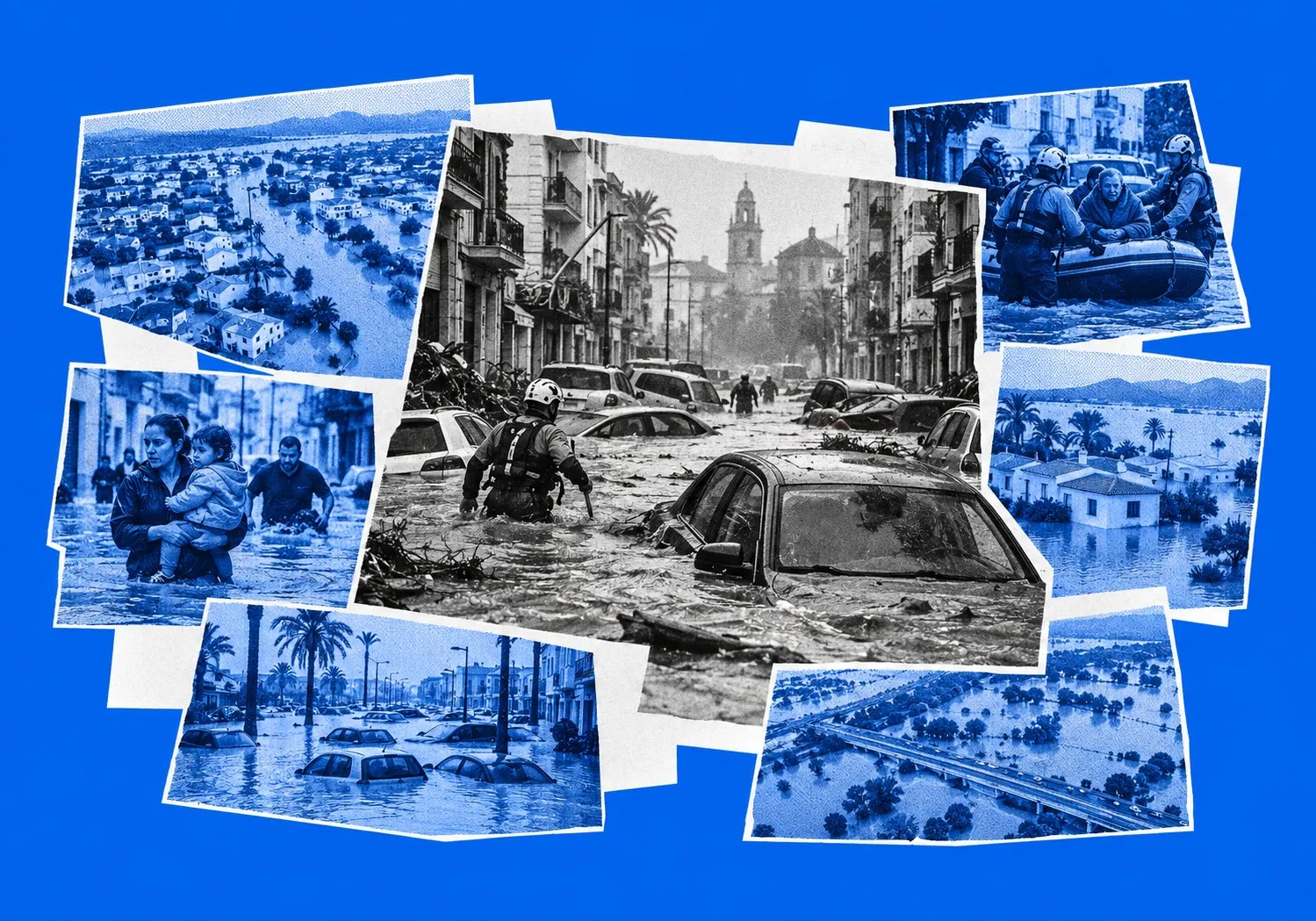
Torrential rain across eastern Spain between 17 and 19 October dumped up to 700 litres of water per square metre in parts of Valencia, leaving five people dead and submerging critical transport infrastructure from Catalonia down the Mediterranean coast. The disaster was driven by a DANA—Depresión Aislada en Niveles Altos—an isolated cut-off low-pressure system in the upper atmosphere. As fossil-fuel emissions raise sea surface temperatures and load the air with extra moisture, these distinct weather systems are striking with far greater velocity and destructive force across Southern Europe.
Emergency crews conducted well over a thousand rescues as riverbeds transformed into torrents, trapping residents in homes and washing away parked vehicles.
The fatalities included a 79-year-old woman found in her flooded residence in Oliva, a man who suffered a cardiac arrest at a local campsite, a swimmer caught by violent currents off Sagunto, and a woman swept into a swollen stream in Catalonia.

The immediate civil protection response stood out against the tragic flooding of October 2024, when severe delays in emergency messaging preceded more than 200 deaths.
This time, Spain’s meteorological agency, Aemet, sent emergency push notifications directly to mobile phones hours before the heaviest rain began, warning people to stay off roads, avoid low-lying ravines, and seek safety on upper floors. Yet even with functional alerts and clear public warnings, streets still turned into rushing rivers and local infrastructure broke down under sheer volumes of runoff.
Long treated as an unpredictable autumn hazard along the Iberian coast, the DANA has turned into one of Europe’s most destructive climate risks.
Unpicking why these systems produce such sudden, extreme rain means looking closely at atmospheric dynamics, marine heat, and the built environment.
Atmospheric Physics
Explaining why a DANA unleashes such localized destruction requires looking thousands of metres up into the troposphere rather than focusing strictly on surface barometric charts.
In Spain, popular parlance relied for decades on the term gota fría—"cold drop"—a phrase that entered everyday conversation but carried little scientific precision.
Modern meteorology replaced it with DANA to describe a specific low-pressure cell that snaps off entirely from main atmospheric currents.
The process originates miles above the earth within the polar jet stream, the fast-flowing ribbon of high-altitude wind that steers storms from west to east across the Northern Hemisphere.
Under normal conditions, the jet stream moves in a relatively steady, high-speed line that separates cold northern air masses from warmer southern currents.
When the jet stream begins to meander into deep, exaggerated loops, a trough of cold polar air can push unusually far south toward the Iberian Peninsula.
If the neck of that southward loop pinches off, an isolated pocket of cold air becomes trapped in the upper troposphere.
Lacking guidance from the main jet stream, this cut-off low stalls over Southern Europe, creating an area of persistent atmospheric instability. Without strong steering winds to push the storm system along, cloud formation remains pinned over the same stretch of terrain for hours.
Southeastern Spain sits in an ideal geographic zone for these cut-off lows.
When warm, humid air from the Mediterranean collides with cold upper-level air, rapid convection follows. As moisture rises, it cools, condenses, and forms massive storm clouds. The mountain ridges running parallel to the Spanish coast act as physical walls, forcing incoming air currents higher through orographic lifting and dumping massive quantities of water over narrow river catchments.
Ocean Warming
Cut-off lows are a long-standing feature of Mediterranean weather, but global warming has fundamentally changed their thermodynamic engine.
Autumn rainstorms that once caused manageable localized swelling now regularly produce sweeping flash floods.
The core physics behind this shift comes down to the Clausius-Clapeyron relation.
Air holds roughly 7 percent more water vapour for every additional degree Celsius of atmospheric warming. As global mean temperatures rise, the atmosphere over Southern Europe functions as a much larger sponge, holding far more moisture before releasing it during storm events.
That atmospheric capacity is further driven by rising ocean temperatures in the Mediterranean Basin.
As surface waters absorb surplus thermal energy, evaporation surges, pouring water vapour and heat into the lower atmosphere.
When a cold upper-level DANA moves over these warm waters, the temperature gap between the sea surface and the cold air aloft widens dramatically. That steep thermal contrast accelerates updrafts, fueling convective clouds that drop immense volumes of rain in brief windows.
At the same time, shifting circulation patterns across the Atlantic basin play a role.
A warming Arctic reduces the temperature difference between polar and equatorial regions, causing jet streams to slow down and form wider, more stubborn bends. Cut-off low systems break away and stay anchored over single regions for longer periods, driving up cumulative rainfall totals on the ground.
Attribution Science
The connection between industrial emissions and intensifying DANA events is heavily backed by empirical research. Studies from international networks like World Weather Attribution use historical data and climate models to assess how global warming alters extreme downpours.
Rapid analysis of rainfall records in eastern Spain indicates that climate change has made heavy downpours in the region roughly 12 percent heavier and twice as likely to occur compared to pre-industrial baselines.
With global warming currently standing around 1.3°C above pre-industrial levels, rainfall events that used to occur once in a generation are becoming regular features of the autumn season.
These scientific findings expose the hard limits of civil protection.
While meteorologists can model upper-atmosphere lows with high accuracy, forecasting exact rainfall totals down to individual streets remains notoriously difficult. When a storm drops hundreds of millimetres of water onto steep mountain valleys, gravity and geography take over.
Mobile phone alerts help save lives by getting people out of harm's way, but they cannot stop swollen rivers from breaching town defences.
Long droughts make the problem worse. Extended dry spells bake topsoil, destroying its natural porosity and turning farm fields and hillside dirt into hard, concrete-like surfaces. When a DANA drops sudden heavy rain onto parched land, the soil cannot absorb the water, forcing nearly all of it to run off directly into dry ravines and urban streets.
European Policy Impact
The rising severity of DANA storms carries implications that extend far beyond the Spanish coast, presenting real challenges for infrastructure, emergency planning, and economic policy across the continent.
Southern and Central Europe are facing a clear shift in climate hazards, moving away from familiar seasonal patterns toward erratic, high-impact weather shocks.
The old disaster management playbook—treating severe floods as rare events to be handled through emergency relief funds—is proving both expensive and inadequate.
Decades of rapid urban expansion across Southern Europe have paved over natural floodplains, sealing soil beneath asphalt and concrete. During hot summers, ground surfaces bake dry. When a DANA arrives, rainwater streams off hard surfaces into urban storm drains built for historical weather averages, quickly overwhelming municipal networks.
That reality is forcing a rethink of European urban design and land management.
Expanding underground pipe networks is no longer enough; cities are turning toward broader spatial changes. Restoring natural river channels, laying permeable pavement, and building dedicated retention basins—often gathered under the banner of "sponge city" design—are becoming necessities for long-term urban survival.
At the same time, repeated flooding threatens regional supply chains, agriculture, and public budgets. The Spanish Mediterranean coast acts as a critical agricultural hub and freight corridor for the European Single Market.
Ongoing damage to rail lines, highways, crop harvests, and commercial property creates real economic friction that ripples across borders.
With sea temperatures rising and atmospheric moisture loading up, the physical drivers behind Spain’s DANA storms offer a clear look at Europe’s changing weather landscape.
Upgrading mobile alerts and emergency response buys vital time, but dealing with the underlying risk will require deep, permanent changes to how European towns, roads, and floodplains are built.
Sources: Euronews, Reuters, Scince Media Centre Espana