
Deadly Floods and Record Heat: Europe’s Unseasonal Weather Tests City Defences

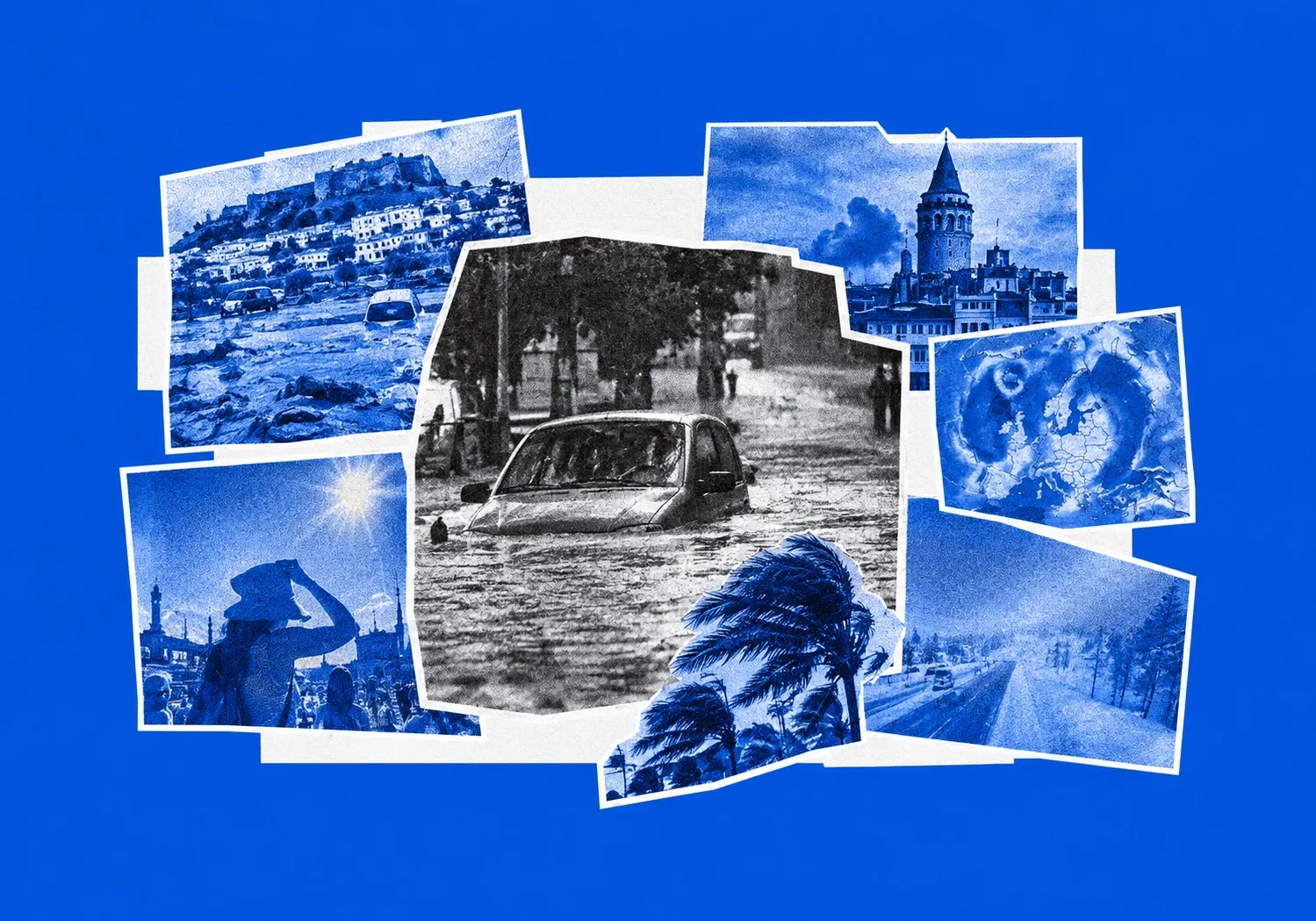
Lethal flash floods in Greece and Turkey, an unseasonal heatwave in Spain, and impending Arctic frosts in the north have left Europe facing a wave of concurrent climate extremes. As casualties rise and urban infrastructure collapses under torrential downpours, governments are being forced to confront the escalating cost of repairing - rather than preventing - seasonal disasters.
The deaths in Greece and Turkey came after deadly flooding in Catalonia earlier in October. More than 100mm of rain fell overnight, killing two people and leaving another missing. Yet the Iberian Peninsula was also experiencing an intense heatwave, with temperatures reaching 30–33°C in parts of Spain and Portugal between 13 and 17 October.
Further north, forecasts warned of Arctic air bringing temperatures as low as minus 16°C to Scandinavia and parts of Eastern Europe.
There is no single weather system responsible for all these events. Different atmospheric conditions are producing different hazards across the continent. Spain’s DANA systems, which can bring intense thunderstorms, are not the same phenomenon as the cold air expected farther north. El Niño may influence broader seasonal patterns this winter, but it does not explain every local storm or temperature spike.
What connects these extremes is the changing climate in which they occur.
Human-driven warming is increasing the atmosphere’s capacity to hold moisture, raising the potential for intense rainfall. Higher temperatures also contribute to prolonged heatwaves and worsen drought conditions. When heavy rain follows a dry period, the resulting pressure on local infrastructure can be severe, particularly where water cannot drain away quickly enough.
This does not mean that every flood or heatwave can be attributed directly to climate change. It means that rising temperatures are changing the conditions against which governments must prepare.

October used to offer a reasonably predictable transition from summer to winter. It is becoming harder to build public safety systems around that assumption.
When the water rises, the weaknesses become visible
In Istanbul, the consequences of Wednesday’s downpour spread well beyond flooded streets. Homes and businesses were inundated, transport was disrupted, and emergency services rescued people caught in dangerous conditions. The governor’s office closed schools for Thursday and advised residents to avoid unnecessary journeys.
On Rhodes, the force of the water carried four vehicles away. Local authorities urged people on the island and elsewhere in the Aegean to limit their movements.
These responses helped restrict exposure to the immediate danger. But emergency restrictions are only one part of flood protection, and they come with limits. By the time a road is closed or residents are told to stay indoors, water may already be entering buildings or cutting off escape routes.
The available information does not establish exactly when warnings reached those who died in the latest incidents. It would be wrong to conclude that a specific failure by local authorities caused their deaths. The wider record, however, makes preparedness difficult to dismiss as a secondary concern.
Greece recorded 1,871 local floods between 2000 and 2025. Severe incidents increased by 38 per cent in the latter half of that period, killing 269 people. The figures describe a recurring problem rather than a series of unrelated accidents.
Spain has faced similar consequences. The catastrophic floods in Valencia in 2024 killed 238 people, exposing the deadly potential of extreme rainfall in populated areas.
For cities, the problem is not simply how much rain falls. It is how quickly the water arrives, where it flows, and whether roads, drainage networks, and buildings can cope. A drainage system that performs adequately during ordinary autumn rain may be overwhelmed by a concentrated downpour. Underpasses and low-lying streets can become traps, while floodwater can turn apparently harmless public spaces into dangerous environments.
The weather cannot be controlled. The vulnerability of the places it hits can be reduced.
The expensive part comes after the headlines
Flooding produces an immediate emergency, followed by a less visible financial burden. Roads need repairs, businesses must reopen, damaged properties require restoration, and local governments have to find money for work that may not have been planned or budgeted for.
Tourism-dependent areas face additional uncertainty. Southern Europe relies on visitors arriving during the autumn shoulder season, when summer temperatures begin to ease. Unseasonal heat can make outdoor activities uncomfortable, while sudden flooding can disrupt travel and damage accommodation and other tourist facilities.
Neither extreme necessarily stops tourism on its own. Repeated disruption, however, makes planning more difficult for businesses whose income depends on predictable conditions.

Insurance companies and climate-risk specialists are likely to play a growing role as property owners, businesses and governments seek to understand their exposure. Satellite monitoring and predictive modelling can help identify vulnerable locations and inform investment decisions. But a better assessment of risk does not automatically produce the money needed to address it.
That is where municipal finances become crucial. A city may know that its drainage system is inadequate and still struggle to fund a replacement. Prevention competes with other immediate demands on public money, while the benefits of a flood defence are difficult to demonstrate: its success may consist of a disaster that never happens.
Repairing damage is more visible. It is also a poor long-term substitute for reducing the risk in the first place.
Brussels can set the direction, but cities must do the work
The EU requires member states to establish national climate adaptation strategies. Its policy framework also supports restoring natural floodplains, expanding urban green spaces and using satellite monitoring to improve disaster management.
These measures point towards a broader change in how governments should approach extreme weather. Adaptation needs to influence decisions about housing, transport, land use and public investment, rather than remain confined to environmental policy.
The difficult work happens locally. Municipal authorities must identify flood-prone areas, decide which drainage improvements are most urgent and consider whether development is increasing the number of people and properties exposed to danger. Natural flood defences can help, but they are not a universal solution. Each location requires an assessment of its terrain, infrastructure and specific risks.
Warnings need similar scrutiny. Forecasting a storm is not enough if people do not receive an alert in time or cannot understand what action to take. Tourists may be unfamiliar with local hazards, while residents may underestimate the danger of travelling through flooded streets. Public authorities need communication systems that translate meteorological information into clear instructions, backed by emergency plans that can be activated quickly.
There is also a question of money. If national adaptation strategies are to have practical value, governments must find ways to fund protection before a disaster occurs. Otherwise, local authorities will continue to depend heavily on emergency assistance and unplanned repair budgets after each major event.
The EU can establish priorities and common expectations. It cannot make every vulnerable street safe through legislation alone.
Preparing for several emergencies at once
Europe’s summer of 2026 brought severe drought, low river levels and extensive wildfires. The autumn has added destructive rainfall, persistent heat in the west and the prospect of severe cold farther north.
For civil protection agencies, this range of hazards creates a difficult operational problem. Emergency services must respond to immediate threats while maintaining the capacity to deal with the next one. A system built around occasional, isolated disasters may struggle when several regions face serious disruption at the same time.
Heat also presents risks that are less visible than flood damage. Prolonged high temperatures can threaten public health, particularly among vulnerable people, even when there is no dramatic incident to draw attention to the danger. Governments must therefore prepare for hazards that unfold over days as well as those that destroy within minutes.

There will be no single investment capable of solving these problems. Better warnings, improved drainage, stronger building standards, restored floodplains and more reliable emergency funding all have a role to play. The challenge is deciding which measures will prevent the greatest harm and ensuring that they receive money before the next emergency.
On Rhodes, a man lost his life when floodwater swept away his car. In Istanbul, a teenager died after stepping into a puddle and an adult suffered a fatal fall on a wet pavement. The circumstances were different, but both incidents show how quickly severe weather can turn an ordinary day into a fatal one.
For European governments, the harder question begins after the water recedes. If flooding has become a recurring risk, how many times should taxpayers finance the damage before preventing it becomes the more urgent priority?
Sources: Independent, DobraPogoda24, Climate ADAPT, DW