
Hungary Detains Viktor Orbán’s Brother in Human Smuggling Investigation

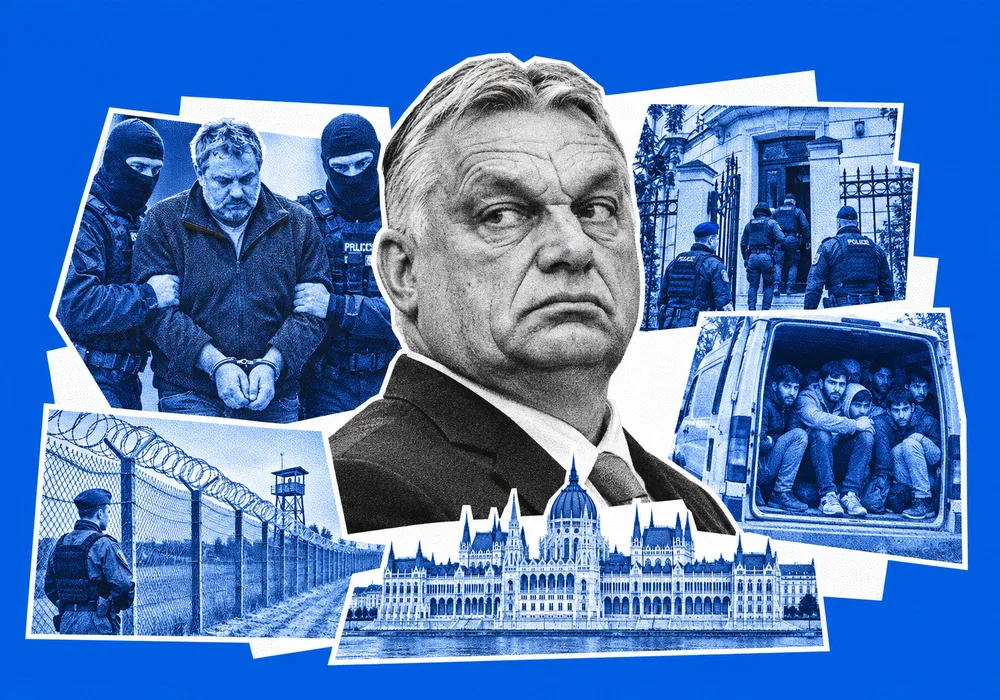
The detention of Áron Orbán in a suspected human-smuggling case has intensified scrutiny of business networks connected to Hungary’s former ruling establishment. The investigation forms part of Prime Minister Péter Magyar’s broader anti-corruption campaign following the end of Viktor Orbán’s 16-year rule, raising questions about political influence over migration and visa procedures.
Hungarian authorities have detained Áron Orbán, the younger brother of former Prime Minister Viktor Orbán, as part of an investigation into suspected human smuggling and the alleged misuse of visa procedures. Prime Minister Péter Magyar confirmed the detention on 10 November during a speech in Berlin, following an operation in which investigators arrested four people and searched properties in Budapest and Pest County.
Áron Orbán, 49, is a businessman whose activities have previously attracted attention over alleged connections to visa arrangements for foreign workers. According to Hungarian authorities, the suspects are believed to have helped Vietnamese citizens travel to Western Europe during several months in 2024. Investigators suspect that applicants were charged so-called recruitment fees through Hungary’s diplomatic missions in Vietnam, with the proceeds subsequently shared among those involved.
The National Asset Protection and Recovery Office (NVVH), which is leading the anti-corruption effort alongside the police, described the suspected offences as human smuggling committed through a criminal conspiracy for financial gain. Authorities have not publicly identified all four detainees, and the police declined to confirm the suspects' identities. Magyar nevertheless explicitly identified the former prime minister's brother during his Berlin remarks.
Visa Networks Under Investigation
The case concerns more than suspected irregular migration arrangements. It also raises questions about the possible use of political connections to facilitate access to Hungarian residence and employment permits. In September, the NVVH identified the alleged sale of political influence to secure residence permits for foreign workers as one of the first cases it intended to investigate.
Earlier investigations by Hungarian media had examined business relationships involving Áron Orbán and associates working in the foreign recruitment sector. Reporting published in 2025 raised allegations that individuals connected to his business activities had sought preferential treatment in visa applications and assistance from people with access to government institutions. These reports provide background to the current investigation, although the allegations have yet to be established through judicial proceedings.
The involvement of Hungary's diplomatic missions in Vietnam gives the case an international dimension. If investigators establish that visa procedures were manipulated for financial gain, the findings could expose weaknesses in the mechanisms used to regulate labour migration and issue permits to foreign nationals. The case may also prompt closer scrutiny of how intermediaries and politically connected businesses operate within Hungary's recruitment industry.
Magyar’s Anti-Corruption Campaign Targets the Former Establishment
The investigation is part of Magyar's broader effort to examine alleged corruption during Orbán's 16 years in office. After winning the April 2026 election, Magyar made accountability for the previous administration a central commitment of his government. The newly established NVVH has become one of the principal institutions responsible for pursuing cases involving suspected corruption and the misuse of political influence.
The prime minister has described the campaign as Operation Purgatory. Its scope extends beyond the former prime minister's family and business associates. Two former ministers from Orbán's government and former central bank governor György Matolcsy are also in custody in separate investigations involving corruption allegations.
The growing number of cases involving figures from the previous administration suggests that the new government is seeking to investigate networks of influence that may have extended across political institutions, state-linked businesses and financial structures. However, the outcome will depend on the ability of investigators to establish individual responsibility and produce evidence that can withstand judicial scrutiny.
Orbán Accuses the Government of Political Revenge
Viktor Orbán has rejected the detention of his brother as politically motivated, accusing the government of using law enforcement to eliminate its opponents. In a Facebook statement, he argued that the authorities were seeking to establish a one-party system and described Áron as a means of targeting him personally.
The accusation places the investigation within Hungary's wider political confrontation following the change of government. Magyar's administration has made the investigation of the previous leadership a defining element of its political mandate, while Orbán continues to portray the new government's actions as an attempt to marginalise his political movement.
The distinction between political accountability and political retaliation will therefore remain central to the case. Investigations into alleged wrongdoing by individuals associated with a former government are not, in themselves, evidence of political persecution. Equally, the authorities will need to demonstrate that their actions are based on independently verifiable evidence rather than political considerations.
The investigation could become an important test of Hungary's institutional transition. Establishing whether politically connected businesses benefited from privileged access to visa procedures would provide insight into the relationship between political influence and economic activity under the previous administration. The credibility of Magyar's anti-corruption programme will ultimately depend not only on the number of arrests but also on transparent proceedings, independently verified evidence and judicial outcomes.