
Hungary’s New Government Faces Its First Test of Political Accountability

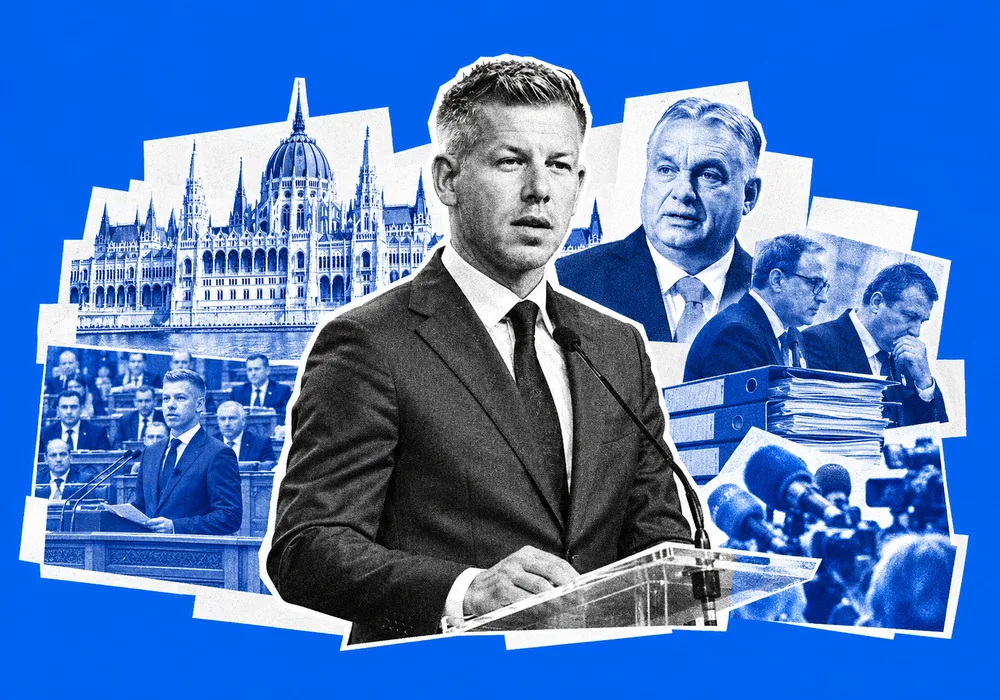
Hungary’s parliament has lifted the immunity of Prime Minister Péter Magyar and two former ministers from Viktor Orbán’s government, opening separate criminal investigations. The cases mark an early test for Magyar’s anti-corruption agenda as Hungary moves from Orbán’s 16-year rule to a new political system.
Hungary’s parliament has lifted the parliamentary immunity of Prime Minister Péter Magyar, allowing prosecutors to pursue a criminal investigation into an incident dating back to 2024. The same vote also removed the immunity of two former ministers who served under Viktor Orbán, opening separate investigations into allegations of misuse of public funds and bribery. The decisions place members of Hungary’s new political leadership and senior figures from the previous government under legal scrutiny at the same time.
The vote took place on 28 September, with 139 lawmakers voting in favour and none voting against or abstaining. Orbán’s Fidesz and its coalition partner, the Christian Democratic People’s Party, boycotted the session. The decision concerning Magyar is particularly notable because he is the first sitting Hungarian prime minister to lose parliamentary immunity.
The cases are formally separate, but their timing gives the parliamentary decision a broader significance. Magyar came to power after campaigning against the political system built during Orbán’s 16 years as prime minister and promising investigations into alleged corruption and abuse of office under the previous government. Now, only months into the new administration, the prime minister himself is facing a criminal investigation.
The investigation involving Magyar
The case against Magyar concerns an incident at a Budapest nightclub in June 2024, when he was an opposition politician and a member of the European Parliament. Prosecutors allege that Magyar took the mobile phone of a man who was filming him and later threw the device into the Danube. The phone was subsequently recovered from the river.
Hungarian prosecutors first sought to have Magyar’s immunity lifted in September 2024, while he was still an MEP. The European Parliament did not approve the request, meaning Hungarian authorities could not proceed with the investigation at that stage. After Magyar entered Hungary’s parliament following his party’s election victory, the investigation was reopened and prosecutors again requested that his immunity be removed.
Magyar has denied committing a crime and has described the case as politically motivated. At the same time, he has supported the removal of his immunity, arguing that politicians should not be treated differently from other citizens. He has also previously called for parliamentary immunity to be abolished altogether in criminal cases.
The lifting of immunity does not determine whether Magyar is guilty. It removes a procedural protection that had prevented prosecutors from pursuing the case while he was protected by parliamentary immunity. The investigation and any subsequent court proceedings would still have to establish whether the allegations meet the relevant legal standard.
The former Orbán ministers
The other two cases are more directly connected to Magyar’s political programme. Parliament simultaneously lifted the immunity of former Culture and Innovation Minister Balázs Hankó and former National Development Minister Miklós Seszták, both of whom remain members of parliament from parties associated with Orbán's former governing coalition.
Hankó is being investigated over allegations concerning around 17.3 billion forints in public funds, equivalent to roughly €44–47 million depending on the exchange-rate calculation used. Prosecutors allege that funds from Hungary’s National Cultural Fund were improperly allocated in more than 1,000 cases and that some of the money was connected to political purposes, including the financing of the 2026 election campaign. Hankó has rejected the allegations and described the accusations as unfounded.
Seszták, who served as national development minister from 2014 to 2018, is facing a separate investigation into alleged bribery connected to public procurement. Prosecutors are examining claims that he received substantial payments from companies involved in state contracts, including contracts connected to the purchase of buses. Seszták has denied wrongdoing and was detained after the parliamentary vote on his immunity.
The two investigations are among the first criminal cases targeting senior figures from Orbán’s 16-year government after Magyar’s Tisza party took power. The new administration has made scrutiny of the previous government's handling of public money one of its central political priorities.
From political promises to institutional action
The cases are unfolding as Magyar’s government begins to translate its anti-corruption programme into state institutions. A newly established anti-corruption office has already announced its first investigations into alleged abuses associated with the previous government, while authorities are examining a range of issues including public spending and state investments.
That process represents a significant change in Hungary’s political environment. Under Orbán, Fidesz maintained political control for more than a decade and built a highly centralised governing system. Magyar’s rise has disrupted that structure, but changing political leadership does not by itself determine how effectively prosecutors, courts and other institutions will operate independently.
The immunity vote therefore matters beyond the individual cases. Magyar has built much of his political identity around the argument that Hungary needs stronger accountability for those holding public office. Allowing prosecutors to investigate former government officials is consistent with that agenda, but allowing the same legal mechanisms to operate when the subject is the sitting prime minister creates a separate test for the new government.
Magyar’s decision to support the removal of his own immunity has allowed him to present the case as an example of equal treatment under the law. His opponents, meanwhile, have portrayed the proceedings against former government figures as politically driven. Fidesz did not participate in the immunity vote and has rejected the corruption allegations against its members.
The wider political transition
The developments come less than six months after Tisza's election victory ended Orbán’s long period in power. Magyar’s party campaigned on promises to investigate alleged corruption, strengthen institutions and break with the political practices associated with the previous government. The new administration is now moving from electoral rhetoric into a phase in which its claims about institutional accountability can be tested through actual investigations and prosecutions.
That transition is unlikely to be straightforward. Investigations involving former ministers can become politically charged even when prosecutors insist they are based on evidence, while a criminal case involving the prime minister creates a different set of political risks. The credibility of the process will therefore depend not only on the allegations themselves but also on whether investigations are conducted transparently and according to established legal procedures.
There is also a distinction between political accountability and criminal liability. Parliament's decision to remove immunity does not establish that Magyar, Hankó or Seszták committed the offences under investigation. The cases must proceed through the relevant investigative and judicial processes, and the allegations against all three remain subject to those proceedings.
For Hungary, the more consequential question is whether the change of government will also produce a different relationship between political power and legal institutions. Magyar has made equal treatment before the law a central part of his political message. The simultaneous investigation of figures from both the new and former governments gives that principle an immediate practical test.
The outcome will depend on the evidence and on the institutions handling the cases. But the political significance of the parliamentary vote is already broader than the individual allegations: Hungary's new government is beginning to confront the same question it raised while in opposition — whether political office should provide protection from scrutiny, and whether that principle will apply consistently to those who currently hold power as well as those who previously did.
Sources: Rapporteur, Telex