
How Ukraine Is Taking Its Drone Industry Global

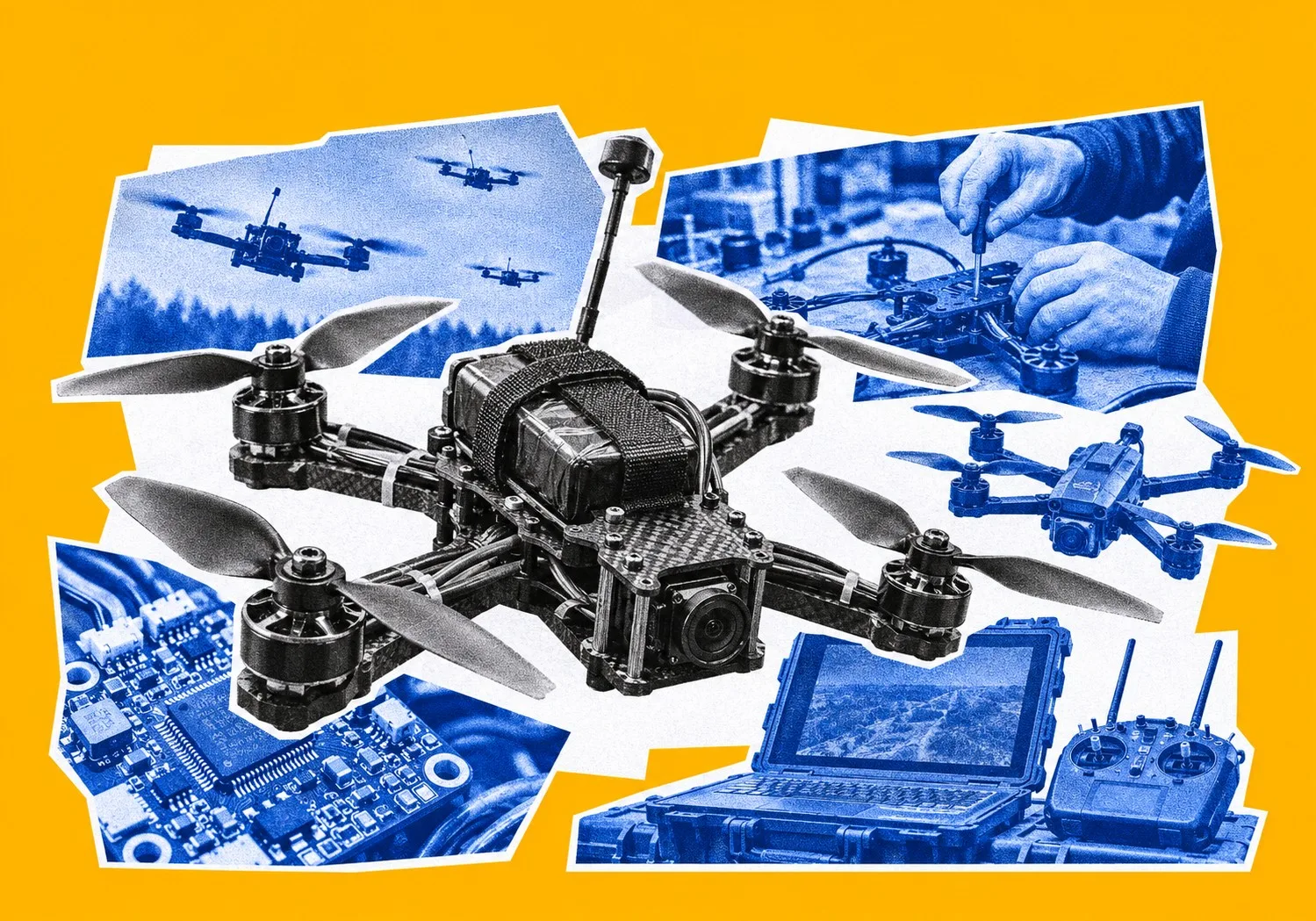
US-based defence technology company Swarmer has acquired rights to strike and interceptor drone technology developed by Ukraine’s Vataga Drone, expanding its push into autonomous unmanned systems. Vataga will remain an independent manufacturer, while its chief executive and 14 engineers join Swarmer.

Swarmer announced the acquisition on 16 November. It covers selected intellectual property, including drone designs, electronics and ground-control technology. Vataga chief executive Maksym Melnyk becomes Swarmer’s vice-president of hardware, reporting to Alex Fink, its president and US chief executive. The engineers will help develop strike drones and interceptors capable of operating in coordinated groups.
A filing with the US Securities and Exchange Commission says Swarmer paid $500,000 in cash and issued 393,701 shares, with possible further payments linked to revenue. The transaction closed on 10 November through the purchase of a newly formed Ukrainian company holding the intellectual property.
Swarmer’s current revenue remains modest. It reported $25,554 in revenue for the third quarter of 2026, down from $35,771 a year earlier, and a net loss of about $9.3 million, compared with $3.4 million. Those results exclude Ratel, whose acquisition had not closed. In the same update, Swarmer reported Ratel’s preliminary, unaudited revenue of $42.1 million for the first nine months of 2026. The figures show the scale of the manufacturing business Swarmer is seeking to add.
The Software Behind the Swarm
Swarmer was founded in 2023 by Ukrainian entrepreneur Serhii Kupriienko and American co-founder Alex Fink. Headquartered in Austin, Texas, it also has teams in Ukraine, Poland and Estonia. Its best-known product, Styx, allows an operator to supervise several unmanned vehicles, automating parts of their movement and coordination.
The technology addresses a constraint on expanding drone operations: more aircraft usually require more pilots and more complex coordination. Swarmer aims to let a smaller team direct larger groups, with software handling tasks that would otherwise require individual commands.
The company says its software entered combat operations in April 2024 and has supported more than 100,000 missions with nearly 50 Ukrainian units, including in areas affected by electronic warfare. That total covers aircraft using its operating system at different levels of autonomy; it is not a count of successful strikes or fully autonomous swarm attacks.
Swarmer advertises a platform capable of managing hundreds of unmanned systems, although publicly reported combat operations have involved much smaller groups.
What Vataga Builds
Founded in Ukraine in 2023, Vataga produces first-person-view drones, which transmit a camera feed to the operator, as well as control stations and electronics.
It says it has manufactured more than 30,000 aircraft. Its products include the Peacemaker strike drone, the larger Krab bomber and the Kvach interceptor.
 Vataga lists its 10-inch FPV platform with a maximum speed of 100km/h and a payload of up to 3.5kg. Advertised range varies with the load: 12km carrying 2.5kg, falling to 9.5km with 3.5kg. Options include a thermal camera and assisted terminal guidance.
The larger Krab is an 18-inch, six-rotor bomber designed to carry 8kg. Vataga lists a flight time of 20 minutes with that load and a combat radius of up to 19km, depending on payload. Its cruising speed is given as 40–70km/h.
Swarmer says Peacemaker has been deployed with more than 20 Ukrainian military units. Vataga also supplies other manufacturers: its VTG Spark electronics, used to activate munitions, have been supplied for more than 100,000 Ukrainian drones.

The partnership already has a battlefield application. According to Swarmer, Vataga’s 13-inch FPV attack drone is operating in eastern Ukraine using its Fire Raid software. The system automates the approach to the target area before an operator takes control for the final strike.
Kvach is intended for air defence, with Swarmer identifying Shahed-type attack drones as a target.
Vataga lists a maximum speed of 300km/h, a cruising speed of 150km/h and a maximum range of 25km, with daytime and night-camera versions. These performance figures are manufacturer specifications. The acquisition announcement did not report a confirmed interception by that model.

In September 2025, The Wall Street Journal reported a night-time attack in which three Ukrainian drones using Swarmer’s software coordinated their approach to a Russian position.
Drawing on accounts from a Ukrainian officer and company representatives, it described aircraft determining their attack sequence and adapting when one drone’s battery ran low. The report also described mine-laying missions and attacks on Russian personnel, equipment and infrastructure.
That reporting provides an example of coordinated combat use, but does not establish a success rate. Nor do the companies’ announcements provide independently verified damage assessments for a specific Vataga strike.
The distinction matters because these systems use different degrees of automation. Fire Raid retains manual control for the final attack, while other Swarmer applications automate more of the coordination between aircraft. Deployment figures alone do not show how often a drone reached its target or completed its mission.
Swarmer also announced its agreement to acquire Ratel Robotics, a Leading Ukrainian Unmanned Ground Vehicle Manufacturer, in September.
The proposed payment combines cash and shares and could reach $224 million if all performance milestones are met. More than 300 Ratel employees would join, taking the combined workforce to nearly 500, while founder Taras Ostapchuk would remain chief executive of Ratel.
Ratel has developed unmanned systems for Ukraine’s armed forces since 2023. Its vehicles deliver supplies, evacuate wounded soldiers, conduct reconnaissance, clear mines and launch drones. Swarmer said in September that Ratel had secured $86 million in contracts during 2026 and was discussing projects with several NATO countries through the Build With Ukraine initiative.
The planned acquisition would give Swarmer ground vehicles that could also serve as mobile launch platforms for aerial drones, including interceptors. Its aim is to connect those vehicles with aircraft and autonomous-control software in a single system. As of 16 November, completion of the Ratel deal remained subject to outstanding conditions.
How Drone Deals Work
Ukraine is also expanding defence cooperation through government-to-government agreements known as Drone Deals. The framework combines access to Ukrainian technology and battlefield experience with partner financing, joint development and production. It covers drones alongside air defence, electronic warfare and other military technologies.

The arrangements can include multi-year funding commitments, export contracts and production lines in Ukraine and partner countries. Governments set the framework, while manufacturers implement individual projects through contracts and licensing agreements. In April, for example, Ukraine and the Netherlands agreed to develop the partnership, with a licensing agreement signed to begin joint drone production.
The framework is separate from Swarmer’s commercial acquisitions. Its purpose is to build longer-term industrial partnerships, creating manufacturing capacity and jobs while giving Ukrainian companies access to overseas markets.
Speaking to the Ukraine Defence Contact Group on 17 November, President Volodymyr Zelenskyy said Ukraine had signed 11 Drone Deals and was preparing another 10. He urged partners to accelerate implementation and said Denmark had become the first country to strengthen its own defence with Ukrainian-made weapons.
Sources: Swarmer, Vataga Drone, The Wall Street Journal, LB.ua, Interfax-Ukraine