
A Wider European Union: How Ukraine, Moldova and New Members Could Reshape Europe’s Future

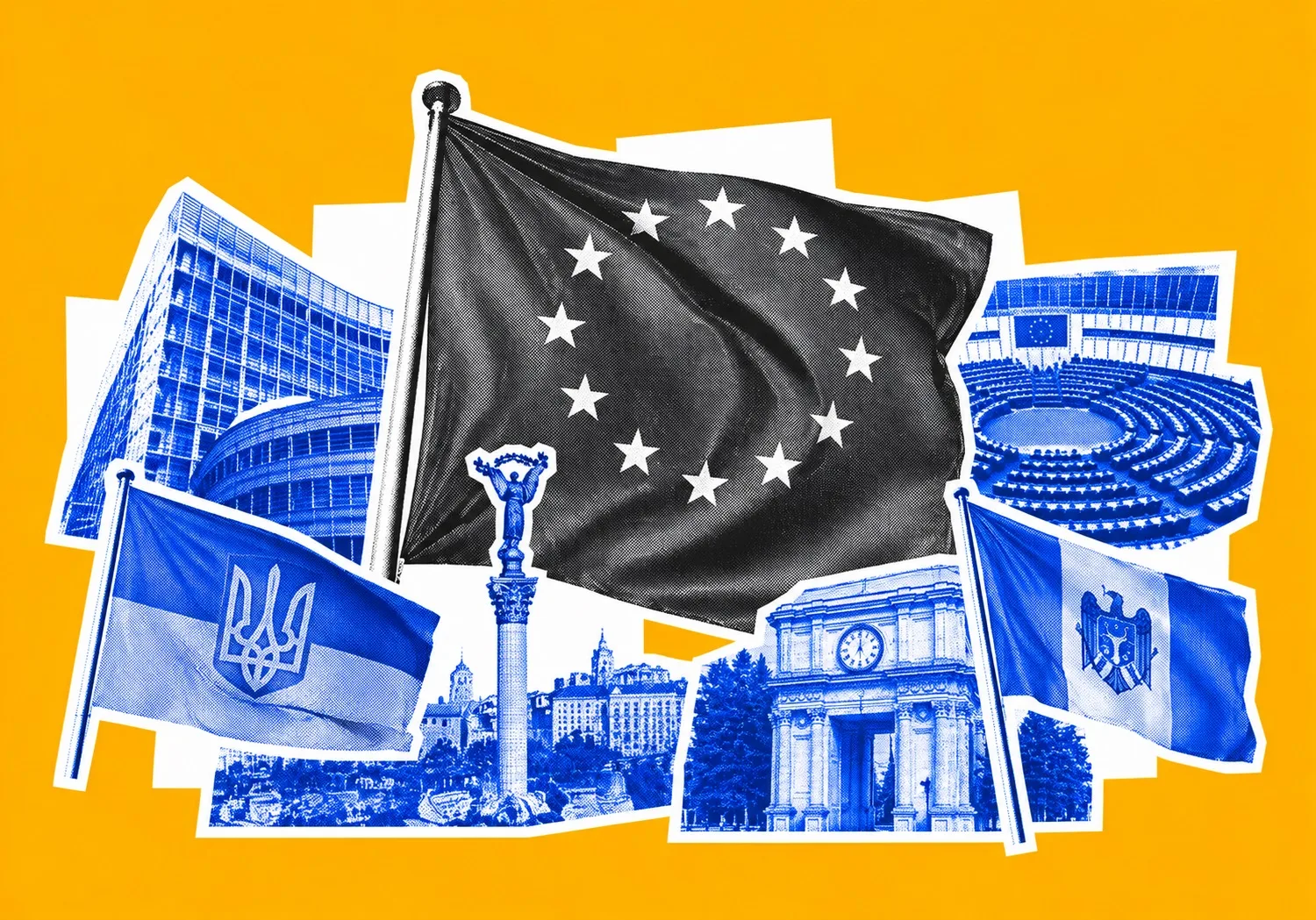
With Ukraine and Moldova advancing accession negotiations, the EU faces questions about security, funding, institutional reform and the future balance of power within an enlarged Union.
The European Union is preparing for a new phase of enlargement as Ukraine and Moldova advance towards membership despite continuing security and political pressures. The European Commission's 2026 Enlargement Package outlines new accession roadmaps, while the Wider Europe – Stronger Europe forum in Brussels on 15–16 November will examine whether the EU's institutions and budget are ready for additional members.
Ukraine and Moldova: Accession Negotiations Accelerate
Ukraine and Moldova have made substantial progress in their accession negotiations during 2026.
At the EU accession conferences held in October, both countries formally opened negotiations on clusters 2 and 3, covering the internal market, competitiveness and inclusive growth.
Together, these clusters contain 17 negotiating chapters.
The European Commission has also presented accession roadmaps for both countries, establishing milestones intended to make the negotiating process more predictable.
Ukraine aims to complete negotiations by the end of 2028, while Moldova has set a target of early 2028.
Neither timetable constitutes a guaranteed membership date.
For Ukraine, the accession process is taking place during Russia's continuing full-scale invasion. The country must implement judicial, anti-corruption and administrative reforms while maintaining essential state functions under wartime conditions.
Moldova faces different challenges, including energy vulnerabilities, external interference and the unresolved Transnistrian conflict.
Both countries must demonstrate that their institutions can implement EU legislation and maintain democratic safeguards.
Their progress is assessed individually, even though important stages of their negotiations have advanced in parallel.
Why Ukraine's Membership Would Change the EU
Ukraine's potential accession would have implications beyond economic integration.
The country has developed extensive practical experience in modern warfare, drone technology, cybersecurity and protecting critical infrastructure.
Closer integration could create additional opportunities for European defence cooperation, joint industrial production and technological development.
Ukraine's agricultural sector, workforce and reconstruction needs would also have significant implications for the European economy.
However, integration would require adjustments to EU policies, particularly agricultural subsidies, regional development funding and market regulation.
The scale of these adjustments would depend on the terms of accession, transitional arrangements and future budget negotiations.
Security obligations would present another important consideration.
Article 42(7) of the Treaty on European Union establishes a mutual assistance obligation between member states in the event of armed aggression.
This provision differs from NATO's collective-defence framework, but Ukraine's eventual membership would nonetheless raise important questions about European security commitments and defence cooperation.
These issues explain why Ukrainian accession is increasingly discussed as part of Europe's wider security architecture.
Moldova's Integration and Europe's Eastern Security
Moldova's accession would also affect the EU's eastern neighbourhood.
The country has pursued closer integration with European energy systems and infrastructure while seeking to reduce vulnerabilities associated with external dependence.
EU membership could deepen these connections and provide a more stable framework for investment and regulatory cooperation.
Yet the unresolved Transnistrian conflict creates questions about territorial administration, border management and the practical implementation of EU law.
These issues would need to be addressed within the accession process.
Moldova's experience also illustrates the growing relationship between enlargement and resilience against foreign interference.
European institutions have increasingly linked democratic safeguards, cybersecurity and information security to the wider stability of candidate countries.
The Commission's approach reflects the view that institutional resilience is relevant not only to domestic governance but also to Europe's collective security.
The EU's Institutional Problem: Can 27 Members Become More?
Enlargement requires reforms from candidate countries, but it also raises questions about the functioning of the European Union itself.
Adding new members would increase the diversity of economic interests, security priorities and political positions represented within EU institutions.
One of the most contentious issues is unanimity.
Several important decisions, particularly in foreign and security policy, still require agreement among all member states.
As membership expands, reaching unanimity may become more complicated.
The European Commission has examined options for strengthening decision-making procedures, including wider use of qualified majority voting in selected areas.
Supporters of such changes argue that they could reduce the risk of individual governments blocking collective action.
Other member states emphasise the importance of protecting national sovereignty and maintaining safeguards for smaller countries.
In September 2026, Reuters reported that the Commission was considering additional protections against democratic backsliding and institutional obstruction following future accessions.
Proposals under discussion included temporary safeguards concerning voting rights and political commitments intended to prevent new members from blocking certain decisions.
These ideas remain part of the institutional debate rather than agreed accession conditions.
Who Will Pay for Enlargement?
The EU's budget presents another major challenge.
New members would become eligible for funding under common European policies, subject to accession terms and transitional arrangements.
Ukraine's potential membership would be particularly significant because of its agricultural sector, population and reconstruction requirements.
Existing EU funding arrangements could require adjustment to accommodate these needs.
Such changes could affect the distribution of agricultural subsidies and cohesion funding among current member states.
The negotiations would therefore involve both candidate countries and existing members with different financial interests.
The Commission has proposed gradual integration as one way to manage the transition.
Under this approach, candidates could participate more closely in selected EU policies before formal accession.
Energy, transport, digital infrastructure and defence are among the priority sectors.
Gradual integration could support investment and regulatory alignment without immediately extending every right and obligation associated with membership.
However, it also creates a political question: how long should candidate countries adopt EU rules without having full representation in the institutions responsible for those rules?
For the approach to remain credible, gradual integration must be connected to a functioning accession process rather than becoming an indefinite alternative to membership.
Brussels Forum: Preparing Europe for Its Next Expansion
The EU Enlargement Forum on 15–16 November will address these challenges under the theme Wider Europe – Stronger Europe.
European Commission President Ursula von der Leyen, European Council President António Costa and Finnish President Alexander Stubb are among the announced participants.
The programme includes a discussion on enlargement and security featuring Moldovan President Maia Sandu, Ukrainian Prime Minister Sergii Koretskyi and European Commissioner for Defence and Space Andrius Kubilius.
Other sessions will examine investment, economic growth, political reconciliation and institutional preparations for a larger Union.
The forum is not a formal accession decision-making body.
Its purpose is to bring political leaders and other stakeholders together to discuss the direction of enlargement and the changes required within the EU.
The event comes shortly after the Commission presented its latest assessment and new accession roadmaps, providing an opportunity to examine how the proposed reforms could be implemented.
Enlargement Is Becoming a Test of European Integration
The Commission's 2026 assessment reflects a change in the political context surrounding enlargement.
Russia's war against Ukraine has reinforced the security dimension of EU integration, while economic competition and geopolitical instability have increased interest in closer cooperation with neighbouring countries.
Nevertheless, strategic considerations do not remove the legal and institutional requirements of membership.
Candidate countries must continue implementing reforms, while existing members must agree on the terms of accession.
Completing negotiations does not automatically result in membership. Accession treaties require agreement and ratification through the relevant procedures.
The coming years will therefore involve two connected processes: preparing candidate countries to join and preparing the EU to accommodate them.
Ukraine and Moldova's progress demonstrates how enlargement negotiations can advance under difficult circumstances.
The more complicated question is whether the Union can adapt its institutions, finances and security arrangements while preserving the democratic standards and legal obligations on which membership depends.
The Brussels forum will not resolve these questions, but its discussions will help clarify the political priorities shaping the next stage of European enlargement.
Sources: European Commission, Council of the European Union, Reuters, European Commission, European Policy Centre, EU Neighbours East