
How a Failed Budapest Rally Exposed Russia’s SVR Plot to Save Paks-2

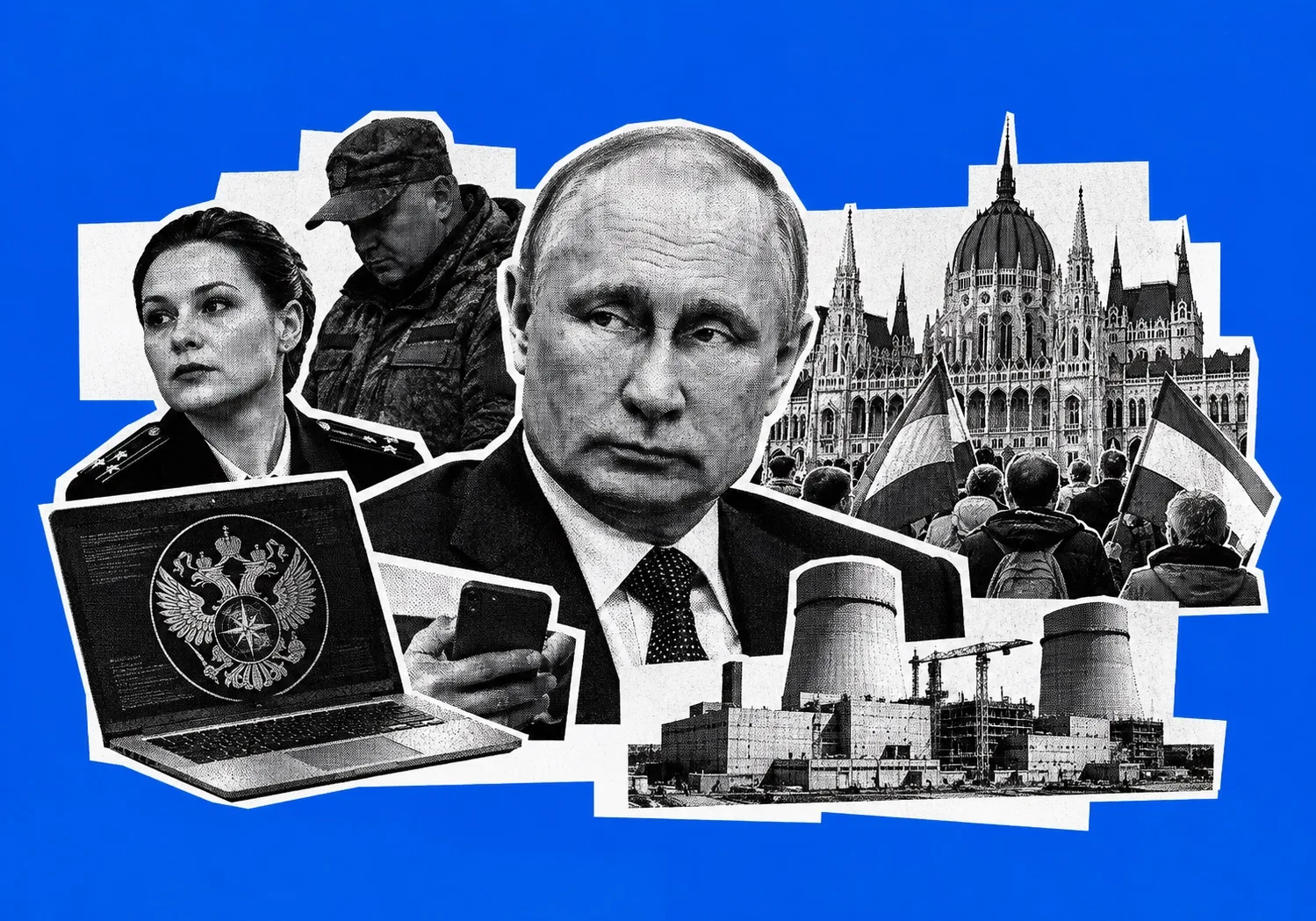
Leaked intelligence documents have linked a cancelled Budapest protest supporting Rosatom’s Paks-2 nuclear project directly to Russia’s Foreign Intelligence Service (SVR). Investigation by InformNapalm and Ukrainian Militant reveals how Moscow is resorting to covert influence operations as Hungary’s new government under Peter Magyar shifts away from Kremlin ties.
For Russian intelligence, the alleged operation illustrates a difficult adjustment. A country that once provided relatively accommodating conditions for Russian diplomatic and commercial activity is becoming a less predictable place to operate.
An Intelligence Trail Behind a Public Protest
The most revealing evidence is not the cancelled demonstration itself, but the correspondence that preceded it.
According to the cyber-intelligence material published by InformNapalm and Ukrainian Militant, Russian colonel Timur Syrtlanov contacted Lieutenant Colonel Irina Parman on 16 September 2026 about an influence operation in Budapest. His message referred to the rescheduling of an aktivka, a term associated with active measures, and requested a profiling task.

Parman is linked to military unit 33949, a longstanding structure associated with the SVR. She is also identified as an instructor specialising in psychological profiling at the intelligence service’s academy.
The same period saw an apparently unrelated recruitment campaign emerge on Facebook. An account using the name Zoltan Biro approached Russian-speaking residents of Budapest about an infrastructure and energy initiative. Interested users were directed towards a Telegram group called DRUZHBA NARODOV, which had 106 members.
There, the purpose became more explicit. Participants were being recruited for a demonstration supporting Paks-2 outside the Hungarian parliament on Lajos Kossuth Square.

Organisers offered banners and indicated that financial compensation might be available. Promotional material carried environmental messaging, including the Hungarian slogan “Az atom a természet barátja!”, meaning “Atom is a friend of nature!”
The digital evidence provides the crucial connection. Metadata associated with the promotional files identified their creator as Irina Larina, Parman’s maiden name. The recorded creation dates, 16 and 18 September, corresponded closely with the intelligence correspondence.
That combination of communications, recruitment activity and document metadata is more significant than any individual element. It provides a basis for connecting an ostensibly local political demonstration to personnel associated with Russian intelligence.
The material does not, however, establish every link in the operation’s chain of command. Nor does it identify who ultimately ordered the demonstration cancelled.
Originally planned for 20 September, the rally was postponed until 26 September because local permits had been delayed. Organisers then abandoned it approximately 30 minutes before its scheduled start.

No public demonstration materialised. The evidence of its preparation remained.
Hungary Is No Longer the Same Operating Environment
The alleged operation took place during an unusually difficult period for Russia’s presence in Hungary.
On 8 September, Foreign Minister Anita Orban announced the expulsion of 10 Russian diplomats for activities incompatible with their diplomatic status. Moscow responded on 1 October by expelling Hungarian diplomats.
The September expulsions followed an earlier move against an alleged SVR operative, Artur Sushkov, in May. Both decisions marked a departure from the relationship cultivated during Viktor Orban’s premiership, when Budapest maintained close energy ties with Russia and offered a comparatively welcoming environment for Russian diplomatic activity despite sanctions elsewhere in the European Union.
Magyar’s government has changed the political calculation.

The significance extends beyond the removal of individual diplomats. Intelligence services rely on established contacts, predictable institutional relationships and access to people capable of advancing their interests without attracting unnecessary attention. Political transitions can weaken those arrangements even when the underlying commercial relationships remain intact.
The Budapest episode offers a glimpse of how Russian influence activity may be adapting to that pressure.
Rather than relying on an openly political organisation, the organisers used social media recruitment, a local-facing identity and a private messaging group. The intended result was a public expression of support for a Russian strategic investment, presented through Hungarian-language environmental slogans.
Such methods can make foreign-directed activity resemble ordinary civic mobilisation. They also create vulnerabilities. Recruitment messages can be preserved, participants can observe organisational discussions, and files can retain identifying information.

In this case, the apparent effort to construct a grassroots campaign left a digital trail connecting it to intelligence-linked individuals.
Whether the cancellation resulted from fear of exposure, organisational problems or another decision cannot be established from the disclosed material. The timing alone does not prove that Hungarian counterintelligence intervened.
But the failed event illustrates the practical difficulties of organising covert influence activity in a more closely scrutinised political environment.


Why Paks-2 Matters Beyond Hungary
Russia’s interest in Paks-2 is not confined to the construction of two nuclear reactors.
Large nuclear infrastructure projects establish relationships that extend across financing, technical expertise, regulation and long-term industrial cooperation. For Rosatom, maintaining a substantial project within the European Union carries commercial and strategic importance.
Paks-2 was already facing serious uncertainty before the alleged influence operation.
In September 2025, the EU General Court annulled the European Commission’s approval of state aid for the project. That decision introduced a major legal complication into the financing arrangements surrounding the expansion.
A further problem emerged on 26 August 2026, when Hungarian police opened an investigation into suspicious financial transactions connected to Paks-2, including an 80 billion forint capital increase undertaken in late 2025.
These developments placed the project under scrutiny from two directions: European rules governing public financial support and domestic examination of financial transactions.
The change of government added a third.
Under Orban, close relations with Moscow had provided Rosatom with a relatively favourable political setting. Under Magyar, the project must contend with a government more willing to question Russian economic dependencies and examine arrangements inherited from its predecessor.

That does not mean Paks-2 has been cancelled, or that Rosatom will necessarily lose its role. The available evidence supports neither outcome.
It does mean that the political protection surrounding the project has weakened just as its legal and financial position has become more uncertain.
A public demonstration could not resolve the underlying state-aid questions or the police investigation. It might, however, have helped portray continued cooperation with Rosatom as a popular Hungarian demand rather than a contested government decision.
That distinction matters when the future of a major infrastructure investment depends partly on political legitimacy.
The Limits of Moscow’s Traditional Influence
The Budapest disclosure also raises a wider question about the future of Russian intelligence operations in Central Europe.
Diplomatic expulsions can disrupt established networks, but they do not necessarily eliminate the capacity to organise influence campaigns. Activities can move towards informal intermediaries, online communities and individuals whose connection to foreign intelligence is less immediately apparent.
The alleged Paks-2 campaign fits that model.

Its recruitment strategy relied on a Russian-speaking audience in Budapest, while its proposed public messaging was designed for a Hungarian political setting. The organisers were attempting to convert a relatively narrow recruitment pool into a visible demonstration of local support.
The weakness was the connection between the covert and public components. Correspondence concerning an active measure and promotional documents associated with an intelligence-linked individual created precisely the kind of evidentiary trail that such operations seek to avoid.
The findings also illustrate the role that independent cyber-intelligence and open-source investigations can play in exposing suspected foreign interference. InformNapalm and Ukrainian Militant were able to connect details that, viewed separately, might have appeared inconclusive.
Their disclosure is not equivalent to a public finding by Hungarian authorities. The briefing provides no evidence establishing how Budapest's security services assessed the material, whether Western intelligence partners contributed to an investigation, or whether any additional action followed.
Those distinctions are important. An intelligence-linked operation can be exposed without its entire structure becoming visible.
For Moscow, the larger difficulty is that Hungary's political transformation has altered the conditions under which such activities operate. Informal access that previously helped sustain Russian interests can no longer be assumed. Even modest public campaigns may face greater scrutiny.
A Nuclear Project Caught Between Law and Intelligence
The consequences for Rosatom may prove more durable than the embarrassment surrounding a cancelled rally.
The company faces a legal challenge to the project's state-aid arrangements, domestic scrutiny of financial transactions and a Hungarian government with fewer political incentives to preserve the relationship on its previous terms.
None of those pressures depends on proving that Russian intelligence directed the September demonstration. They exist independently of the cyber-intelligence disclosure.
Yet the alleged operation introduces an additional complication. If efforts to generate public support for Paks-2 are associated with covert foreign interference, the project's political defence becomes more difficult.
Arguments about nuclear investment, energy supply and public financing risk becoming entangled with questions of sovereignty and intelligence activity.

For European institutions, the distinction between legitimate commercial engagement and covert political influence is especially consequential in critical infrastructure. A foreign supplier can participate in a strategic energy project while remaining subject to regulatory scrutiny. Suspected intelligence involvement in efforts to influence the surrounding political debate creates a different set of concerns.
Hungary's changing position may also alter the wider balance of Russian influence in Central Europe. Budapest's previous willingness to maintain close ties with Moscow had given Russia an important political and economic relationship inside the EU. A government prepared to investigate financial arrangements and expel suspected intelligence personnel narrows the scope of that relationship.
The immediate Budapest operation failed. What remains uncertain is whether its organisers will attempt similar campaigns through different intermediaries, or whether the exposure has compromised the networks involved.

Paks-2, meanwhile, remains subject to decisions that cannot be settled through public relations or diplomatic pressure alone. Its future depends increasingly on legal compliance, financial transparency and the choices of a Hungarian government no longer committed to shielding the project from scrutiny.
For Rosatom, that may be the more serious change: the loss of a political environment in which maintaining the project and protecting Russia's wider influence were largely compatible objectives.
Sources: Unmasking Russia, Euronews, DW, BBC, Reuters