
Germany Approves €561 Billion Budget for 2027 Amid Record Borrowing

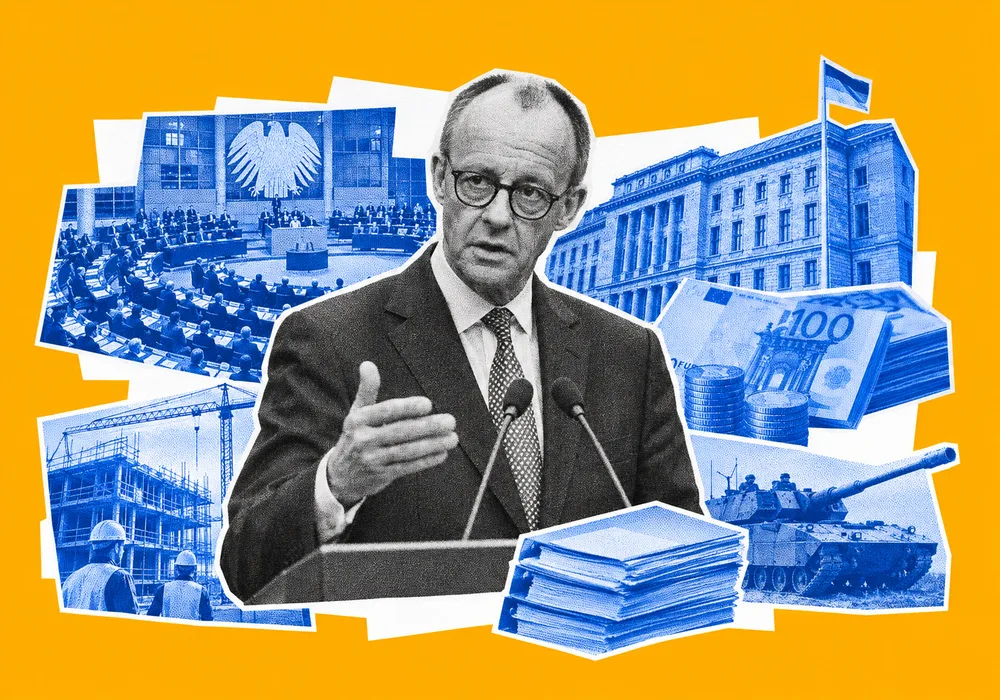
Germany’s parliamentary Budget Committee has approved a €561 billion federal spending plan for 2027, backed by more than €210 billion in total new borrowing. The agreement prioritises defence, infrastructure and economic investment, while exposing tensions within Chancellor Friedrich Merz’s governing coalition over taxation, public spending and social welfare.
Germany’s parliamentary Budget Committee approved the federal budget for 2027 in the early hours of 13 November, clearing the way for the spending plan to proceed to the Bundestag. The package provides for approximately €561 billion in expenditure, making it one of the most ambitious federal budgets in the country’s history. Total new borrowing is expected to reach €210.4 billion, the second-highest level recorded since the end of the Second World War, surpassed only by the €215.4 billion borrowed during the COVID-19 pandemic in 2021.
The agreement follows weeks of negotiations within Chancellor Friedrich Merz’s coalition government, comprising the conservative Christian Democratic Union (CDU/CSU) and the centre-left Social Democratic Party (SPD). The partners have struggled to reconcile their different approaches to economic policy, taxation and social expenditure while maintaining commitments to modernising Germany’s infrastructure and strengthening its military capabilities. The final compromise reflects the government’s attempt to balance immediate domestic economic pressures with the growing demands of European security.
Defence and Infrastructure Remain Strategic Priorities
A substantial share of the budget is directed towards strengthening Germany’s defence capabilities and addressing years of underinvestment in critical infrastructure. The defence ministry’s allocation is set at approximately €109.75 billion, with additional resources available through the special Bundeswehr fund. The government also plans to continue using exceptional borrowing arrangements introduced to facilitate higher defence and security expenditure.
Infrastructure investment is another central component of the spending programme. The Budget Committee increased planned investment to €61.85 billion, approximately €5.58 billion above the original government proposal. Funding is intended to support transport networks, railway infrastructure, housing, digitalisation and other projects considered essential to Germany’s long-term economic competitiveness.
These priorities reflect Berlin’s broader effort to reposition Germany as a central contributor to European security while restoring the country's economic and industrial foundations. The combination of military spending and infrastructure modernisation is particularly significant given Germany’s role as Europe's largest economy and its importance to NATO's defence planning. However, the scale of the planned expenditure also raises questions about the sustainability of public finances and the government's capacity to deliver the promised projects efficiently.
Coalition Compromises Expose Economic and Political Divisions
The agreement required several concessions from both coalition partners. The government abandoned a proposed tax on plastic packaging, postponed the introduction of a tax on sweetened drinks until 2028 and delayed a planned reduction in electricity taxation. It also reversed proposed cuts to benefits for children from low-income households.
These decisions illustrate the difficulties facing Merz’s government as it attempts to reconcile fiscal consolidation with demands for economic relief and continued social protection. The delayed electricity tax reduction is particularly relevant for businesses and households facing persistent cost pressures, while the withdrawal of the proposed plastic tax represents a retreat from one of the government's planned revenue-raising measures.
The negotiations have also highlighted disagreements over the financing and transparency of the budget. Opposition politicians from the Greens criticised the government's reliance on additional borrowing and special financial arrangements, arguing that the actual scale of expenditure and debt was being obscured. The criticism reflects wider concerns about the extent to which Germany's expanded borrowing framework could weaken traditional fiscal safeguards.
Rising Borrowing Creates Long-Term Fiscal Challenges
The overall borrowing figure of €210.4 billion includes approximately €123 billion in new loans under the core federal budget, alongside additional borrowing enabled through special arrangements for defence and infrastructure investment. The distinction is important because the government can finance certain strategic expenditures outside the traditional constitutional debt-brake calculations.
According to the Bundestag's official figures, the core budget's net borrowing is set at €122.97 billion, compared with €97.96 billion in 2026. Of this amount, €84.55 billion in defence and specified security-related expenditure is excluded from the debt-brake calculation. The borrowing subject to the constitutional fiscal rule stands at €38.43 billion, reaching the permitted upper limit.
The scale of the borrowing programme demonstrates the extent of the shift in German fiscal policy. For decades, Berlin's approach to public finances was characterised by restrictive borrowing rules and an emphasis on balanced budgets. The security environment following Russia's full-scale invasion of Ukraine, combined with economic stagnation and deteriorating infrastructure, has forced the government to reconsider those priorities.
The 2027 budget therefore represents more than an annual spending decision. It signals Germany's willingness to use significantly greater public financing to address structural economic weaknesses and meet its defence commitments. Nevertheless, the effectiveness of this approach will depend on whether additional borrowing translates into measurable improvements in military readiness, infrastructure and industrial competitiveness.
Implications for Germany and the European Union
Germany's spending decisions will have consequences beyond its domestic economy. As one of Europe's principal economic and industrial powers, its ability to expand defence production, modernise transport infrastructure and strengthen energy and digital networks is closely linked to the broader economic resilience of the European Union.
Higher German defence expenditure could also support the development of European military-industrial capacity and contribute to NATO's efforts to strengthen deterrence. At the same time, the scale of public borrowing raises questions about the long-term balance between strategic investment, debt sustainability and fiscal discipline within the EU's largest economy.
The budget still requires parliamentary approval before becoming final. However, the Budget Committee's agreement marks a significant step towards implementing Merz's economic and security agenda. The central challenge for the coalition will now be to demonstrate that unprecedented levels of public spending can deliver lasting economic growth and stronger European security without creating additional structural weaknesses in Germany's public finances.
Sources: German Bundestag, German Federal Ministry of Finance