
French Diesel Prices Breach €2.40 as Middle East Strikes Jolt European Fuel Markets

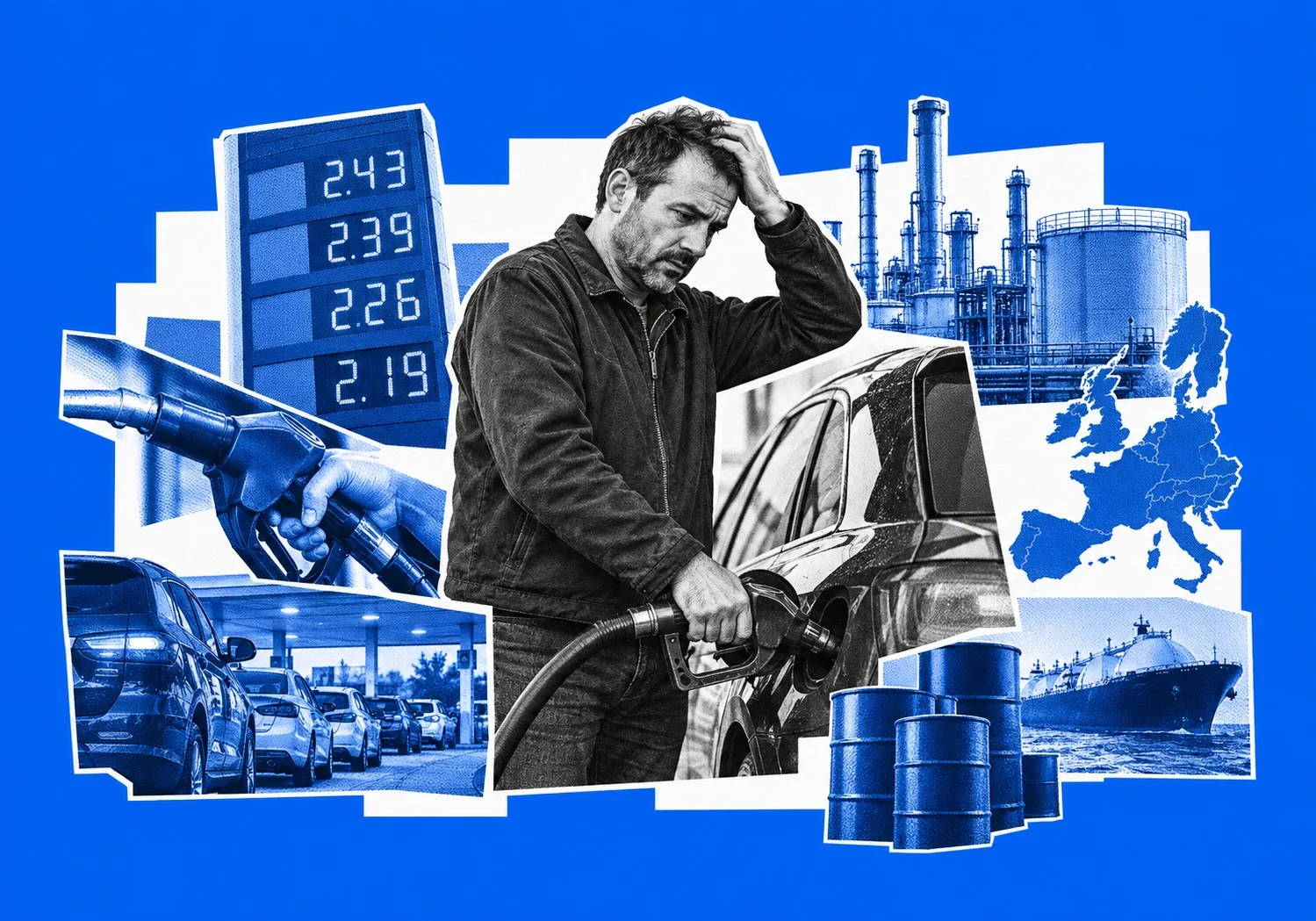
Motorists pulling into French petrol stations over the weekend faced a stark reality: national average diesel prices surging to nearly €2.41 a litre, easily eclipsing records set just twenty-four hours earlier. Forecourt signs across France flash figures that go far beyond seasonal noise.
They point directly to a systemic vulnerability where Middle Eastern flashpoints collide head-on with soaring processing costs across European refineries.
The immediate trigger came from the Arabian Peninsula.
On Saturday, September 19, 2026, coordinated drone and missile strikes launched by Yemen’s Houthi movement targeted sensitive infrastructure inside Riyadh alongside Aramco processing facilities in Yanbu.
Global energy markets reacted instantly.

By Monday morning in Asian trading, Brent crude futures rose 81 cents, or 0.78 percent, to reach $104.68 a barrel, while US West Texas Intermediate moved up 76 cents, or 0.76 percent, to sit at $101.06 a barrel.
Blaming the entire squeeze on crude benchmarks ignores the primary driver behind forecourt inflation.
While higher oil prices establish a difficult baseline, the unprecedented climb in European fuel costs is fundamentally a story about refined product shortages and soaring costs to process crude oil.
Across the broader European Union, weighted average petrol prices have advanced by roughly 29 percent since January, while diesel costs have surged by nearly 40 percent over the same period.
The Anatomy of a Margin Shock
Explaining why European fuel costs are scaling historic heights while crude trades below peak requires looking inside the refinery gate.
Crude oil traditionally accounts for under a quarter of euro-area pump prices, with excise duties and VAT making up roughly 44 percent of diesel and 52 percent of petrol, based on European Central Bank calculations from July.
When those ratios fracture, the cost hits the forecourt instantly.
Diagnostic figures published by European Central Bank experts show that the wedge between crude costs and retail prices has widened dramatically.
ECB calculations for the third week of September 2026 indicate that soaring expenses for refining crude oil contributed a massive €0.41 per litre—representing fully 19 percent of the total retail cost—to euro-area diesel.
For petrol, refining costs added €0.17 per litre, or 8 percent of the final price.
Refined diesel futures tracked through LSEG suggest these processing costs have not yet peaked, pointing toward further upward pressure heading into October 2026.
This dynamic explains the severity of the current shock.
ECB research shows that shifts in crude oil prices typically take one to two months to feed completely through to pre-tax pump prices, but an immediate expansion in refining expenses acts as an instant multiplier on consumer price inflation.
When processing crude oil balloons to nearly a fifth of the ticket price, it exerts immense downward pressure on household disposable income and corporate operating budgets alike.
Margins dictate the final cost.
Fractured Domestic Responses
As the financial squeeze tightens, continental capitals scramble to protect domestic economies, resulting in a fractured patchwork of defensive fiscal maneuvers.
In France, the government announced an emergency extension of its temporary diesel excise-duty discount on Sunday, September 20, abruptly postponing the planned expiration of selective fuel aid to shield motorists and freight hauliers from an unbearable price shock.
Paris is far from alone in this scramble.
Across the bloc, national administrations are abandoning medium-term fiscal consolidation targets to deploy reactive subsidies designed to cushion citizens against runaway commodity volatility.
Divergent national policies lay bare a deeper systemic dilemma.
Ministries of finance find themselves trapped in a fiscal loop, continuously pressured to subsidize energy costs to stave off widespread social discontent, even as those very interventions batter public balance sheets.
Individual member states deploy starkly different toolkits.
Hungary, for instance, bypassed broad nationwide price caps or blanket tax cuts entirely, opting instead for direct, targeted cash grants of €55 paid directly to eligible vehicle owners.
These contrasting policy responses underscore the complex political fallouts of the crisis.
While energy trading houses and independent refiners harvest windfall profits from market volatility and soaring processing overheads, hauliers, agricultural producers, and energy-intensive manufacturers watch their operational margins vanish under the weight of record pump prices.
State taxes continue to be levied.
The Structural Bottleneck
The current crisis exposes the limits of Europe's transition strategy and its low tolerance for regional shocks.
Decades of gradual refining capacity reduction, paired with mounting regulatory compliance pressures, have left the continent structurally reliant on external product markets and highly vulnerable to physical infrastructure choke points.
When a missile strike hits a facility in Yanbu or Riyadh, the shock travels instantly through global derivative trade routes.
Because domestic European refiners face prohibitive expenses to ramp up output and offset imported product deficits, the continent remains exposed as a classic price-taker.
The security situation across the Middle East—anchored by the persistent conflict involving the Houthi movement, ongoing strategic standoffs between Washington and Tehran, and the perpetual threat matrix surrounding vital Saudi energy infrastructure—serves as a permanent background risk capable of shattering European price stability at a moment's notice.
The convergence of tactical military strikes, tightening derivative supplies, and surging costs of refining crude oil demonstrates that Europe's energy security challenge is no longer just about securing raw crude molecules.
It is about an acute inflation of processing expenses that translates regional security failures into immediate inflation for everyday transport and logistics.
As European diesel futures point toward an October peak in refining costs, policymakers face a difficult reckoning.
The central question is no longer how to weather an isolated price spike, but how to manage a permanent structural vulnerability that threatens to exhaust the fiscal limits of European states.