
Atlanta G20 Summit: Meeting Ends With No Joint Resolution or Photo Over Russia

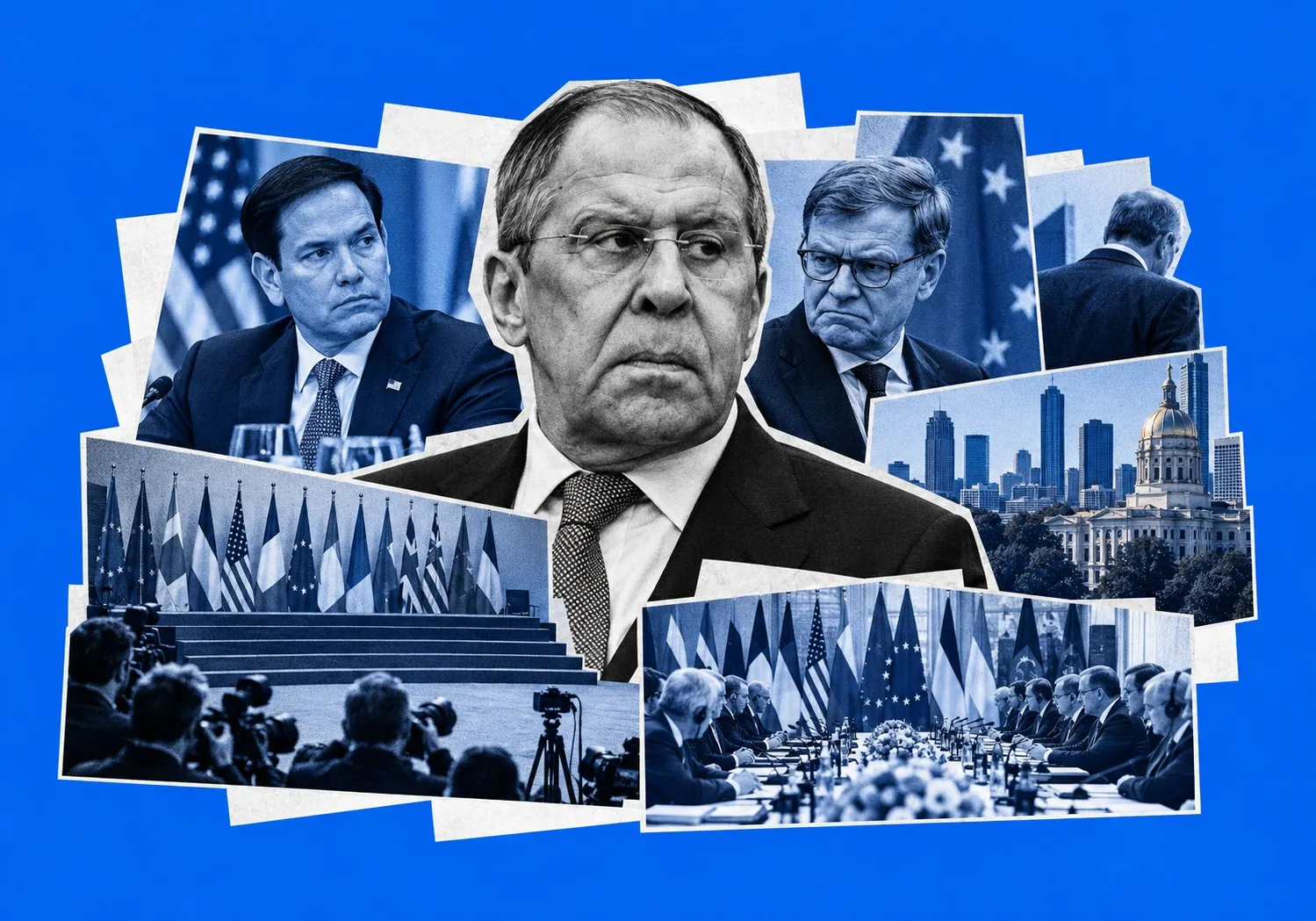
US organizers cancelled the official G20 group photograph in Atlanta between October 30 and November 1. The decision followed a boycott by European foreign ministers over the presence of Russian Foreign Minister Sergey Lavrov. Hosted by US Secretary of State Marco Rubio, the two-day ministerial meeting highlighted transatlantic divisions over Russian energy sanctions, Ukrainian air defense delays, and the lack of a consensus G20 joint statement.

Rubio opened the talks by stating that global stability had reached a key moment.
He sought to set a baseline for the proceedings.
"We are in a critical moment — I would call it a moment of choosing, and I would say not just for my country, the United States of America, but frankly, for the world," Rubio stated.
"We are facing a series of interconnected economic and geopolitical crises. Many pose severe threats to essential foundations of the global economic order."
Despite Rubio's call for unity, diplomatic coordination broke down over how to handle Moscow's presence.
Several European delegations threatened a walkout if forced to join a traditional family photo alongside Lavrov.
In response, American organizers chose to abandon the photograph.
Two US officials, speaking on condition of anonymity, confirmed the cancellation. They explained that multiple delegations had refused to participate.
"Rather than allow a ceremonial photo opportunity to become a diplomatic distraction, the US decided to forgo the photo and keep the focus on the substantive discussions," a US official said.

\## Facing Down Moscow
The tension behind the cancelled photo extended into the conference rooms. European representatives engaged in direct verbal exchanges with the Russian delegation.
During the plenary, UK Foreign Secretary Ed Miliband confronted Lavrov.
He cited a recent Russian missile strike on a railway platform in Dnipro that killed 15 civilians.
Addressing the Russian diplomat across the table, Miliband challenged Moscow's narrative of the conflict.
"Let me say this directly to the Russian Foreign Minister: We all know who the aggressor in this war is," Miliband stated inside the chamber. He added that Lavrov "should have the courage to tell Putin that Russia will not win this war."

Miliband further emphasized the global spillovers of the invasion.
"Russia's war continues to cause colossal global harm - including the deaths of thousands of innocent civilians and disruption that hits energy and supplies and worsens food insecurity," he asserted.
He called on member states to "work harder to secure just and lasting peace in Ukraine" by applying economic and diplomatic pressure to deprive Moscow of its war revenues.
A British official confirmed the stance of the delegation.
"The UK has a longstanding policy not to have direct, bilateral engagement with Russian ministers since the invasion of Ukraine, and we are not about to change that," the official noted.
EU High Representative Kaja Kallas rejected reported proposals from the Pentagon suggesting NATO allies moderate their public criticism of the Kremlin.

Speaking in an interview with Bloomberg TV, Kallas addressed reported calls for Baltic states and NATO allies to tone down their rhetoric. "The question is if you don’t talk about the threat, is it going away? I think it’s not going away," Kallas stated.
Regarding the protocol boycott, Kallas noted: "We must not normalise war crimes around this table," she said when asked about the cancelled photo.
"We don't want to stand next to him in this fora because he's been placed under international sanctions." However, she added that Lavrov's presence allowed European diplomats to challenge Moscow's claims directly. "We were talking about the big geopolitical crisis, including Ukraine, and we were able to address Sergey Lavrov head on with this. Of course, he put forward a lot of lies, a lot of false narratives that Europeans challenged and which we were also able to refute afterwards."
Kallas also highlighted the human toll on the ground. She pointed out that "July, August and September were the deadliest months for civilians in Ukraine."
Lavrov focused his public remarks on criticizing European capitals while praising Washington's willingness to engage in direct bilateral talks. "This is a good lesson for our European colleagues," Lavrov told reporters during a press conference.
He characterized European actions as an "arrogant boycott," while highlighting his bilateral sideline meeting with Secretary Rubio as evidence of American pragmatism.

When asked by journalists whether Lavrov had signaled any flexibility or willingness to offer concessions to end the war, Kallas confirmed that he had not.
She noted that even if Russian officials claimed otherwise, their actions on the ground indicated a different position.
Lavrov himself reinforced this posture.
He stated to reporters that Russia's position on the conflict "was unchanged from the very start of the special military operation." He added that Moscow could not accept Ukraine becoming a "military threat to the lawful security interests of the Russian Federation."
Addressing relations with Washington, Lavrov remarked: "Fundamental issues are not being resolved. Sanctions remain, all the sanctions from Biden are echoed by the current administration."
The Clash Over Warsaw
The confrontation between Moscow and European delegates extended to procedural matters when Lavrov publicly attacked the presence of Polish Foreign Minister Radosław Sikorski.
Sikorski attended the G20 as an invited guest of the United States.
Lavrov claimed that Washington's unilateral invitation of Poland violated G20 consensus norms and established multilateral protocol.
"Ostensibly this is a violation of diplomatic rules, particularly multilateral diplomacy, where members of associations such as the G20 work on the basis of consensus," Lavrov told Russian media. "This applies to the agenda, as well as to inviting new participants."
"Poland brings nothing to this meeting," Lavrov commented on Warsaw's standing.
He argued that Poland's economy was not large enough to qualify for the forum.
He also asserted that NATO and the EU were already overrepresented at the table, making Poland's presence redundant.
"The Americans simply invited the Polish minister, and he came in and sat in the chair provided for him," Lavrov added.
Sikorski rejected Lavrov's statement regarding Poland's legitimacy.
He noted that he was representing his country as an invited guest for the first time and was not surprised by the lack of consensus.
"We have wars going on, and we have participants in those wars around the table, so it's very difficult to agree on a common line," Sikorski told media in Atlanta.
Regarding the group photo, Sikorski stated: "I am not the only one who does not want to be photographed with Lavrov. It was the right decision by the US."

Polish top diplomat also noted that he intended to pass a direct message to Lavrov urging Russia to cease its war against Ukraine.
Cheap Fuel, Delayed Missiles
The diplomatic exchanges in Atlanta unfolded alongside shifting economic and military policies in Washington.
These shifts occurred ahead of the US midterm elections, which will determine the balance of power in Congress for President Donald Trump's final two years in office.
President Trump faced political pressure surrounding the economic fallout of the Iran war.
In an effort to lower domestic retail fuel prices, he waived select sanctions against Moscow.
This enabled an agreement to import Russian diesel for the American market after Russia lifted its domestic petroleum export ban. Trump defended the decision by stating that suspending several Russian sanctions was an effort to keep Moscow at the negotiating table. Meanwhile, Russian President Vladimir Putin confirmed Russia's willingness to supply petroleum products to global and American markets.
Relations between Washington and Kyiv have seen tension over the past month.
The friction stems from a diplomatic standoff between Ukrainian President Volodymyr Zelenskyy and President Trump regarding Ukrainian drone strikes on Russian oil refining infrastructure. Zelenskyy criticized the US-Russia diesel agreement. He labeled it "a gift" to Putin that amounts to "an investment in a war that must be ended, not prolonged."
Simultaneously, the US State Department announced the approval of a $2.1 billion military sales package for Ukraine.
The deal comprises 500 Patriot PAC-3 air defense interceptors. However, official delivery terms specify that shipments will not begin for several years due to manufacturing lead times.
Zelenskyy acknowledged the decision and thanked the US for the measure, but he highlighted the operational challenge posed by the timeline.
"Five hundred PAC-3 interceptors is a substantial number, and very soon – this winter – they could make for a highly effective defence package," Zelenskyy wrote on X.
"However, it has been stipulated that deliveries may begin ONLY IN A FEW YEARS. We are asking our American partners to find a solution for the time when there is a real danger and a real need to use PAC-3 interceptors."
Lavrov cited the Patriot package as evidence that Washington was continuing to supply weapons to Kyiv.
He noted that US intelligence sharing with Ukraine had expanded.
He also argued that Zelenskyy's statements regarding acquiring weapons to strike Russian targets were unhelpful.
"This kind of attitude doesn't really help much in preparing for negotiations," Lavrov said.
He was commenting on potential upcoming trilateral talks that Kyiv hopes to hold in Abu Dhabi between November 6 and 10 involving US, Ukrainian, and European negotiators.
Navigating Global Chokepoints
Beyond the bilateral disputes over Eastern Europe, Secretary Rubio convened discussions with Quad counterparts from Australia, India, and Japan on Saturday.
The talks focused on global supply chains and shipping security.
Participants examined freedom of navigation across maritime routes, including the Strait of Hormuz, the Red Sea, the Black Sea, and the South China Sea.
"Together, I think that we are mapping a vibrant, dynamic, and bold economic future, one that will pioneer new horizons for the entire world," Rubio said at a reception for participants.
European diplomats also utilized the summit to push for a naval ceasefire in the Black Sea. Their objective was to safeguard commercial shipping and agricultural transport corridors. Kallas confirmed that European officials pressed Lavrov on maritime guarantees, calling for continued pressure on Russia to secure a ceasefire in the Black Sea. However, Russian representatives offered no commitments.
Concurrently, the prospect of US military intervention in Iran formed a backdrop to the summit. The situation affected regional members like Saudi Arabia. Rubio met on Friday with Saudi Foreign Minister Prince Faisal bin Farhan and Turkish Foreign Minister Hakan Fidan. US officials reportedly alerted several Middle East allies to prepare for potential renewed military strikes against Iran following the US midterm elections on Tuesday. They were also advised to prepare for possible Iranian retaliation.
Road to Miami
The two-day summit concluded without a joint communique. It relied instead on a chairman's statement released by US Secretary Rubio. Attendees speaking on condition of anonymity noted that a chairman's statement had been the planned outcome. This was due to divisions over the war in Ukraine, the US-Israeli war against Iran, trade tariffs, and South China Sea disputes. The Trump administration's decision not to invite G20 member South Africa over the objections of other nations also contributed to the outcome.
Despite the divisions, diplomats noted that participants agreed to work toward the G20 leaders' summit.
The summit will be hosted by President Trump at his Miami golf club in December. An invitation has been extended to Vladimir Putin. If he attends, it would mark his first in-person appearance at a G20 summit since 2019 in Osaka.
Dmitry Peskov, Russian leader press secretary, has said that the Kremlin "welcomes" the US's decision.
"We have heard the invitation. We are grateful to the American side for this invitation, we welcome it, and we will make a decision and then work through this issue via diplomatic channels," Peskov said in a comment to Interfax.
Addressing Putin's potential attendance in Florida, Kallas issued a statement regarding Russia's diplomatic status. "Normalizing Russia coming back to these international fora is just normalizing war crimes being committed every day now in Ukraine," Kallas told Bloomberg TV. She stated that Russia's invasion conflicts with the UN Charter principles that attending nations signed up to support.
US Secretary of State Marco Rubio has sought to defend Washington's invitation for Russia to participate in G20 meetings, emphasising the need to continue interaction with the Russian side.
"In order to end the war in Ukraine peacefully, you're going to have to have a negotiated settlement," Rubio said in Atlanta following the G20 ministerial meeting.
"How can you have a negotiated settlement between Russia and Ukraine if you don't have the ability to talk to both Russia and Ukraine? How can you talk to both Russia and Ukraine unless you interact with them?"
Journalists asked Rubio to comment on criticism from his European counterparts regarding Russian Foreign Minister Sergei Lavrov's participation in this week's G20 ministerial meeting.
Rubio said Lavrov's participation in the G20 ministerial meeting is another "opportunity to continue to interact with the Russian system".
"As I've said to you earlier in my conversations, the president does not view meeting with someone or talking to someone as legitimising everything they do or everything they stand for."
According to Rubio, everyone wants to see a peace deal between Russia and Ukraine, but it is impossible to make one without dialogue with Moscow.
US President Donald Trump has said he would have no problem inviting his Ukrainian counterpart Volodymyr Zelenskyy to the G20 summit in Miami, Rapid Response 47 reported on X (Twitter).
Journalists asked Trump whether he will invite Zelenskyy to the G20 summit, given that the US has invited Russian ruler Vladimir Putin.
Trump gave a brief response.
"I would. Yeah, I would. No problem."
Sources: Reuters, Euronews, Rapid Response 47, BBC