
Trump’s Russia-Ukraine Energy Ceasefire Claim Sparks Kyiv Surprise, Allied Backlash, and Market Doubts

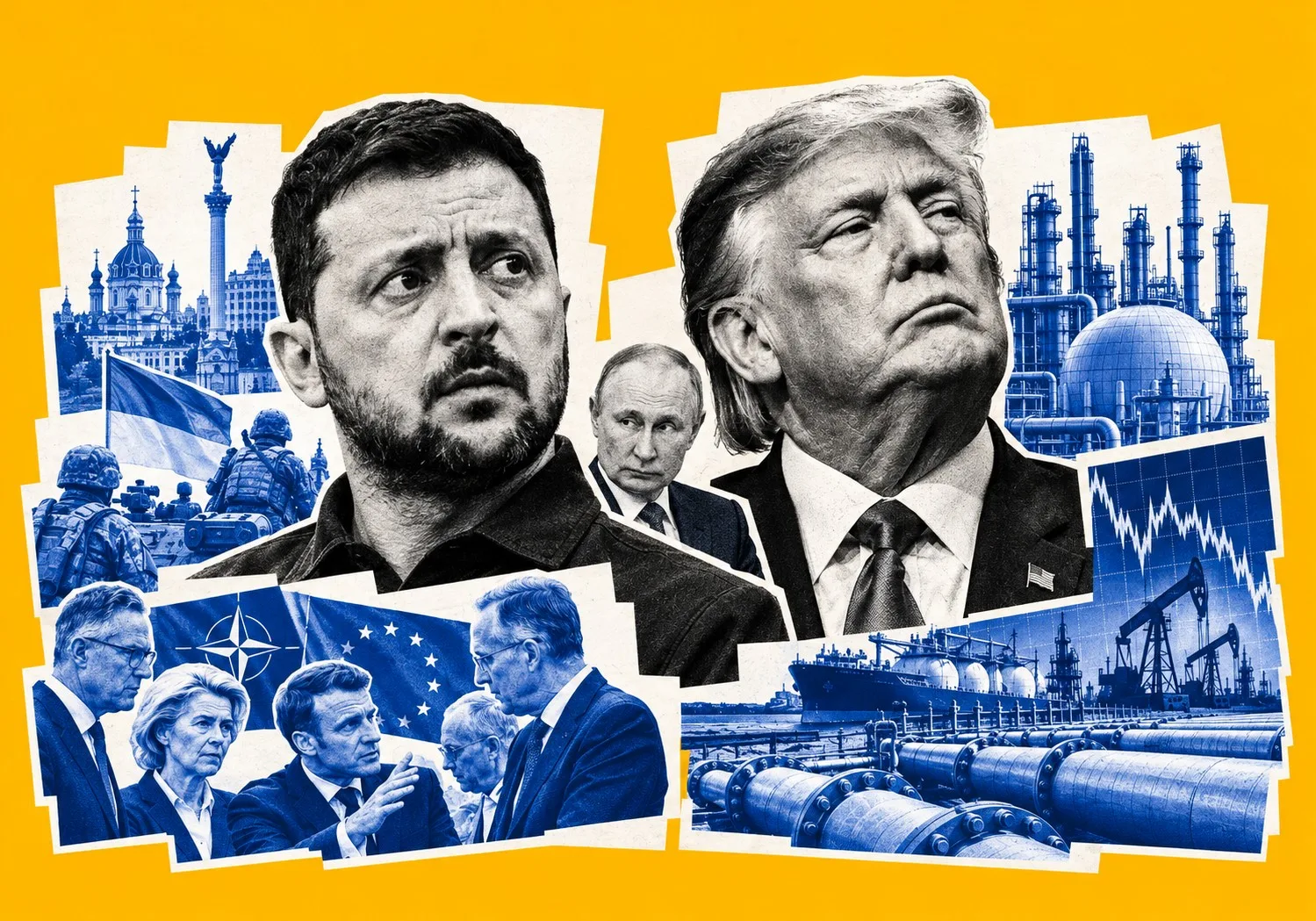
US President Donald Trump’s sudden announcement of an "energy ceasefire" between Russia and Ukraine has triggered widespread skepticism in Kyiv, resistance from European allies, and volatile movements across global fuel markets. Issued without prior consultation, Washington’s push for a mutual halt on refinery strikes—backed by threats to freeze U.S. weapons procurement mechanisms—collides directly with sustained Russian strikes on Ukrainian power grids and escalating tensions over Russian diesel supplies.
In Kyiv, the declaration on Truth Social that both parties had agreed to an immediate ceasefire was received as a complete surprise.

Volodymyr Zelensky, Ukraine’s president, told the news outlet Axios that Mr Trump’s announcement "was news for me", adding that "if Russians agree to an energy ceasefire, Ukraine will agree".
Speaking shortly afterwards, Zelensky noted: "If President Trump negotiated it with Vladimir Putin, please tell us when the ceasefire begins. We are ready, and we will accept it."
Ukrainian officials privately expressed skepticism that the Kremlin had offered binding assurances or even agreed to operational ground terms. Following the social media post, Ukrainian President held phone consultations with Canadian Prime Minister Mark Carney, Finnish President Alexander Stubb, and NATO Secretary-General Mark Rutte, later stating that Ukrainian authorities were "awaiting details from the American side".
 On the ground, military operations continued without pause.
Russian units launched strikes against power installations in Kyiv and targeted the CHP-5 thermal power station in Kharkiv, causing regional blackouts and cutting municipal water supplies.
Missiles and uncrewed aerial vehicles also struck residential neighborhoods and military facilities, including a drone attack in Ivano-Frankivsk that killed three servicemen and wounded three others, alongside a strike near a Kharkiv grocery store that killed three civilians—a 16-year-old boy, a 19-year-old woman, and a 51-year-old woman—and injured 25 people.
Ukrainian military planners recorded that over the preceding week, Russian forces deployed roughly 1,450 guided aerial bombs, 75 missiles, and more than 1,640 attack drones.
The Supply-Line Ultimatum and the PURL Mechanism
The public declaration on Sunday followed coercive communications sent by U.S. officials to Kyiv and European governments on October 10 and 11.
As reported by the Financial Times and Axios, Washington threatened to suspend Ukrainian access to the Prioritised Ukraine Requirements List (PURL)—the primary NATO-coordinated framework through which European and international partners purchase American military hardware from U.S. stockpiles for Ukrainian forces—and cut off real-time intelligence-sharing unless Ukrainian forces ceased deep strikes against Russian petroleum targets.
White House representatives clarified to Axios that Trump’s initiative was intended as a reciprocal moratorium specifically on oil refineries, framing it as an initial step toward protecting power generation.

Ukrainian defense officials pointed out the structural imbalance of a refinery-for-refinery agreement.
Ukraine has a single major petroleum refinery, which has been repeatedly damaged by Russian strikes and operates far below capacity. Russia, by contrast, operates an extensive refining network across multiple regions. Ukrainian negotiators emphasised that while Ukraine imports diesel and natural gas and needs protection for its civilian electrical grid, a narrow refinery moratorium would strip Kyiv of a critical economic counter-measure while providing no binding guarantees for its own power stations.
Global Energy Markets and Middle East Escalation
Global oil benchmarks registered modest declines on Monday morning following U.S. announcements regarding Russian fuel supplies and the proposed energy truce.
Brent crude futures fell 11 cents, or 0.11 per cent, to $104.61 a barrel, while U.S. West Texas Intermediate crude traded down 49 cents, or 0.53 per cent, at $91.36 a barrel.
Intercontinental Exchange gasoil futures dropped 3 per cent to $1,436 per metric ton after Mr Trump announced that Moscow had agreed to deliver 300,000 metric tons—roughly 2.25 million barrels—of diesel immediately, followed by 500,000 tons in November and 1 million tons shortly thereafter, set against a global daily diesel consumption forecast of nearly 29 million barrels by the International Energy Agency.
Tim Waterer, chief analyst at KCM Trade, noted: "Questions remain over the validity and longevity of any such ceasefire, and without clearer evidence that it will actually hold, the extent of the pullback is likely to stay limited."
Fatih Birol, Executive Director of the IEA, urged member states to review whether additional emergency diesel stock releases were required and called on countries to accelerate pledged distributions.
Concurrently, ongoing conflict in the Middle East kept Brent crude supported above $100 a barrel.
Houthi forces claimed responsibility for a strike on Riyadh’s international airport that killed 13 people and injured over 300, with Saudi authorities reporting further attacks on Sunday.
President Trump stated the U.S. was evaluating joining joint military operations with Saudi Arabia against Houthi targets, marking an expansion of the regional hostilities begun in February.
Maritime security bodies, including the United Kingdom Maritime Trade Operations, confirmed drone and projectile strikes on commercial tankers near Sohar, Oman, and in the Strait of Hormuz. Goldman Sachs analysts led by Daan Struyven raised their December Brent crude forecast to $90 a barrel, estimating that Middle Eastern supply risks accounted for a premium of slightly over $20 a barrel.
Midterm Politics and the Sanctions Dispute
The diplomatic push coincided with White House efforts to curb domestic retail fuel prices ahead of the U.S. midterm elections.
The unilateral sanctions decision and the pressure on Kyiv provoked sharp political backlash.
President Zelensky publicly called the U.S. agreement to permit Russian diesel exports a "weak decision" that directly funds the Kremlin’s war economy.
In Washington, a bipartisan group of seven U.S. senators, including four Republicans, released a joint statement describing the diesel arrangement as illegal under existing federal legislation.
Canadian Prime Minister Mark Carney held a bilateral call with Mr Zelensky, later declaring that the U.S.-Russia fuel arrangement "is in direct opposition to the efforts of Ukraine, Canada and our allies to create peace and stability in Europe."
The political dispute spilled into personal exchanges over governance.
In response to Zelensky’s criticism of the fuel deal, Trump stated on October 10 that it was "time for Ukraine to get a new president". Speaking to ABC News, Ukrainian president responded: "It's up to our society, up to our people to choose one or another leader." Addressing U.S. calls for elections, Zelensky added: "Tell Vladimir Putin, give us two months—60 days of total ceasefire, 60 days, and we will organise elections."
Following the public disagreement and the continued Russian strikes, U.S. special envoys Steve Witkoff and Jared Kushner postponed a planned diplomatic trip to Moscow.

Kremlin Silence vs European Backing for Kyiv
Official sources in Moscow gave no formal confirmation or endorsement of the ceasefire claim.
Igor Ananskikh, first deputy chair of a State Duma committee, questioned the announcement, telling domestic reporters: "We all know that Trump often says things to keep oil prices from rising."
European capitals moved to distance themselves from Washington’s pressure tactics and expressed support for the Ukrainian government. European Commission President Ursula von der Leyen issued a public statement backing Mr Zelensky’s leadership. German Foreign Minister Johann Wadephul stressed: "Europe needs stability, and that means that we are very clearly continuing to stay by the side of Ukraine and its government."
French President Emmanuel Macron endorsed a verifiable end to utility strikes while highlighting ongoing Russian attacks: "Currently, Russia continues to refuse that, by lately intensifying further its strikes on Ukrainian infrastructure. France will continue to stay by the side of Ukraine and President Zelensky."
British Prime Minister Andy Burnham voiced support for a halt to energy strikes while pointing to Russian state political interference across Europe. Referencing the 2016 referendum, Burnham stated: "These things are important now to put clearly on the record and, I believe, help voters in Germany and France understand that some of this politics is instigated via our enemies, namely Russia."
Asymmetric Warfare and Defense Supply Lines
The disagreement over energy targets highlights a divergence in military strategy between Kyiv and Washington.
To offset Russian attacks on its electrical grid, Ukraine has built up its domestic long-range drone capacity.
According to Ukrainian Ministry of Defense data, domestic uncrewed aerial vehicle production increased by 370 per cent in delivery volumes in 2026 compared to 2025, with procurement agencies contracting for 5.5 times as many units. Ukrainian units have systematically targeted Russian refineries to reduce Moscow’s state revenues and disrupt military fuel supplies.
The U.S. threat to freeze the PURL procurement pipeline and restrict intelligence-sharing exposes the strategic friction within the allied coalition. PURL remains a vital channel for acquiring Patriot interceptor missiles and artillery ammunition from American inventories using European funds.
By leveraging defense procurement to influence Ukrainian operational targeting for domestic market management, Washington has introduced new uncertainty into transatlantic security arrangements, leaving European governments to consider how to protect allied supply lines and maintain coalitional unity.
Sources: Zelenskyy/Official, Reuters, Axios, Financial Times, Euronews, The Kyiv Independent,