
France and Germany Discuss Hernández de Cos for ECB President

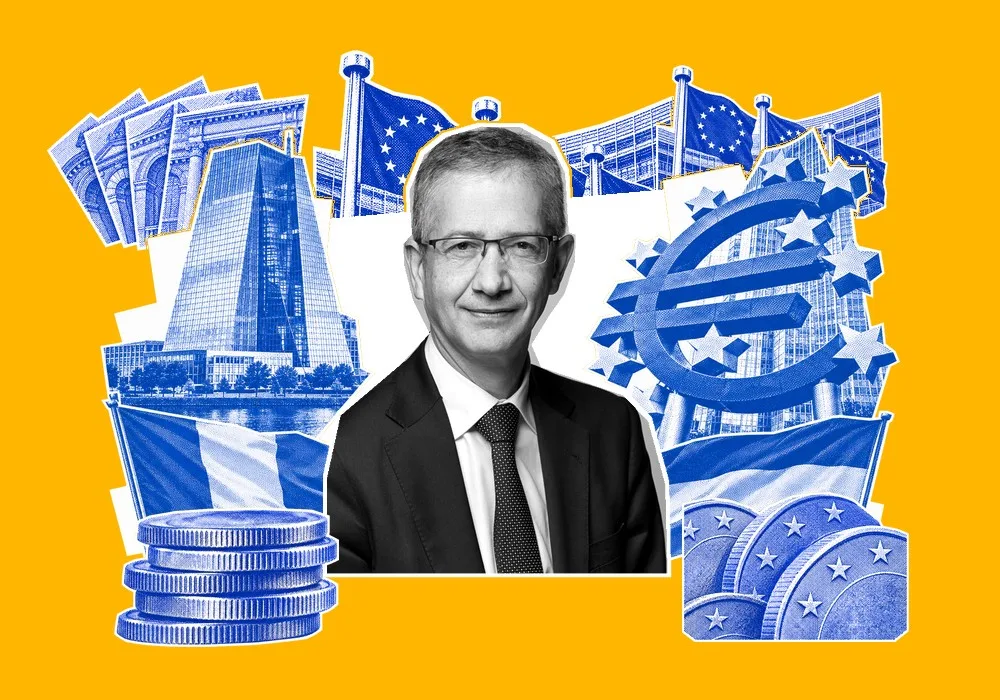
France and Germany are discussing whether to back Pablo Hernández de Cos as the next president of the European Central Bank (ECB). The former Bank of Spain governor and Dutch central banker Klaas Knot are the two candidates to succeed Christine Lagarde, who will step down on 7 February 2027.
In Dublin on Friday, Germany’s chancellor, Friedrich Merz, said he needed several more days to consult his coalition partners. The Financial Times reported that disagreements within the coalition had held up a deal.
The Eurogroup confirmed both nominations last week.
Three Seats on the Table
Two other members of the six-person Executive Board are due to leave in the first half of 2027.
Isabel Schnabel, who oversees market operations, steps down on 3 January.
Philip Lane, the bank’s chief economist, finishes his term on 31 May.
Reuters reported that eurozone finance ministers discussed the appointments earlier this week while waiting for national leaders to settle their positions.
Under one arrangement reported by Handelsblatt and cited by Euronews, Germany would get the chief economist’s role and France would take Schnabel’s seat if Hernández de Cos became president. Handelsblatt named Markus Brunnermeier, a Princeton economist, as the candidate favoured by Merz’s office.

Lane’s team assesses where prices are heading and how earlier rate decisions are affecting borrowing and spending. Schnabel oversees the operations that put those decisions into effect in financial markets. Both Executive Board members also vote on interest rates.
António Costa, the European Council president, briefed leaders in Dublin. Nominations for the two other board seats close on 18 November, Euronews reported, and Costa wants to move towards formal consultations at the summit on 26 November.
Under EU treaty rules, ministers recommend a candidate.
The European Parliament and the ECB’s Governing Council give their opinions before national leaders make the appointment by qualified majority. MEPs can question the candidate in a public hearing. The president serves a single eight-year term, and the same appointment rules apply to the other board members.
The Two Candidates
Hernández de Cos would be the ECB’s first Spanish president. As governor of the Bank of Spain from 2018 to 2024, he sat on the ECB’s Governing Council and chaired the Basel Committee on Banking Supervision from 2019 to 2024. He has run the Bank for International Settlements since July 2025. Spain’s economy minister, Carlos Cuerpo, told Euronews that Hernández de Cos’s ability to build consensus made him a strong candidate.
In a September interview published by the Bank for International Settlements, Hernández de Cos set out the dilemma facing central banks when an energy shock drives prices up and growth down. He argued that policymakers should watch for signs that higher energy costs are spreading to other goods and services, or changing what people expect inflation to be in the years ahead.
Knot spent 14 years running De Nederlandsche Bank. He joined the Governing Council in 2011, during the eurozone debt crisis, and stayed through the years of negative rates and the pandemic. He also chaired the Financial Stability Board from 2021 to 2025, coordinating work by national authorities and international regulators on risks to the financial system. At Knot’s farewell symposium in Amsterdam in October 2025, Lagarde credited him with helping the council reach agreement during the pandemic and the inflation surge that followed.
That is part of the job both men are seeking.
The president chairs the meetings at which national central bank governors and Executive Board members set rates, then explains the decision in public. EU treaty rules bar the ECB’s leaders from taking instructions from governments.
Higher Prices, Slower Growth
Eurostat’s October flash estimate put annual eurozone inflation at 4.0 per cent, up from 3.8 per cent in September. Energy prices were estimated to be 20.8 per cent higher than a year earlier. Excluding energy, food, alcohol and tobacco, inflation was 2.5 per cent. The ECB’s medium-term target is 2 per cent. Figures released on 13 November showed that growth slowed to 0.4 per cent in the third quarter from 0.6 per cent in the previous three months, while employment was unchanged on the quarter.
The ECB held its deposit rate at 2.50 per cent on 29 October.
By then, the bank said, the energy shock had grown larger and lasted longer. Underlying inflation had remained broadly stable, wage data showed little sign of a response and financing conditions had tightened since the previous meeting. The council said it would weigh the evidence afresh at each meeting.
For a manufacturer weighing an investment, higher energy bills make production more expensive. A rate rise would add to the cost of financing the investment. Higher rates can curb price pressures by slowing borrowing and spending, but that takes time. For firms already facing weaker demand, that could mean putting investment on hold.
The bank also has to consider how its decisions reach borrowers in different countries. A sharp rise in one government’s borrowing costs can make it more expensive for banks and businesses in that country to raise money, even when the ECB holds its deposit rate. In October the bank reiterated that it could buy securities to counter disorderly market moves that threaten to disrupt the way monetary policy works across the eurozone.
Sources: Euronews, El Pais, Financial Times,Eurostat