
Christine Lagarde to Step Down Early as ECB President: Why She Is Leaving and Who Could Replace Her

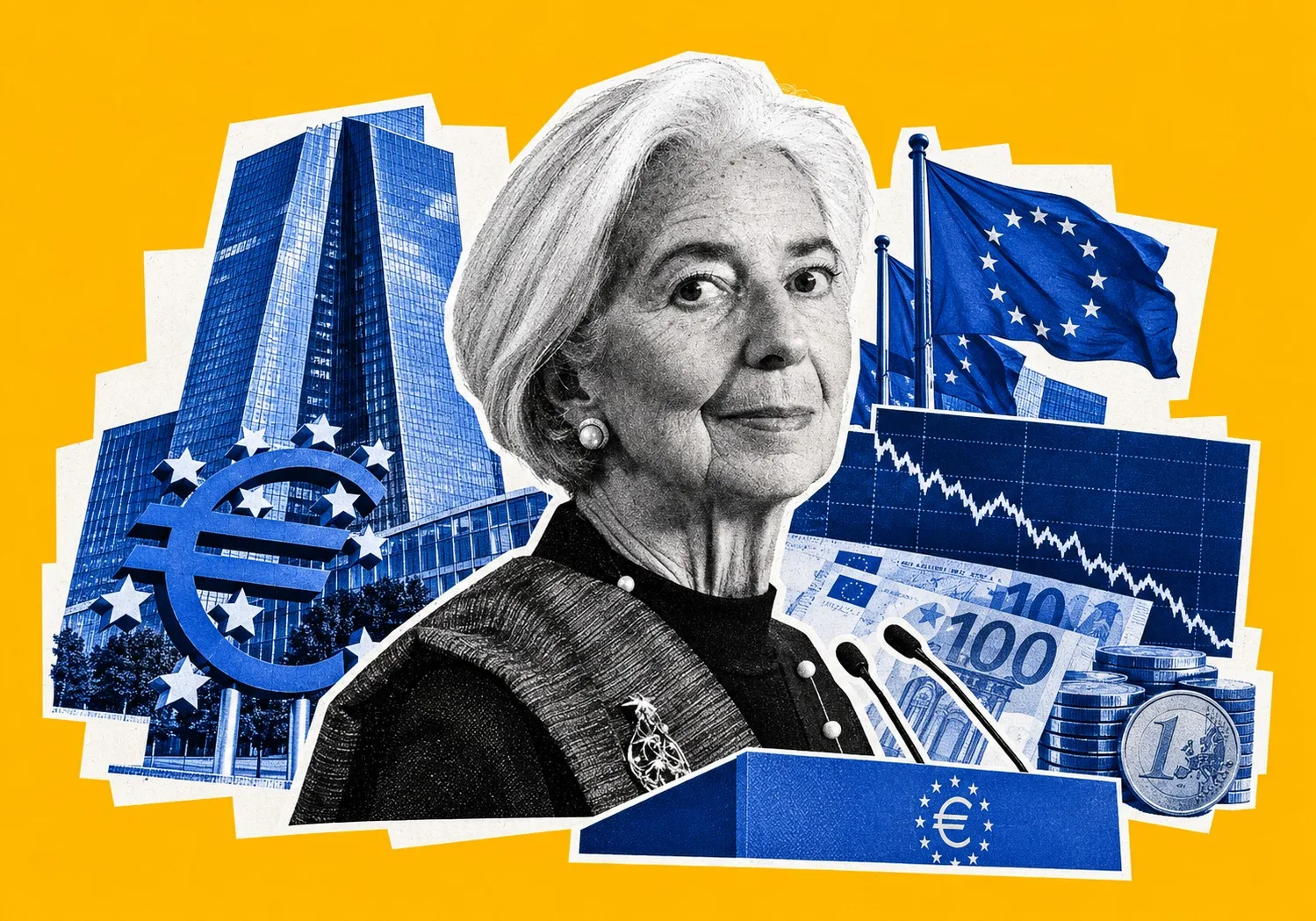
European Central Bank President Christine Lagarde has announced she will step down on 7 February 2027, nine months before the end of her eight-year term. The unexpected decision to leave early stems from her desire for freedom of speech on global affairs and comes as EU leaders prepare for a high-stakes race to choose her successor before the French presidential elections.Ahead of her public statements, Lagarde informed the ECB’s Governing Council, which sets monetary policy for the eurozone. She also notified European Council President António Costa of her decision. In a separate public statement issued following the decision, Lagarde stated that she was departing with a sense of a job "well done" and an ECB that was "fit for the future."
In an official statement detailing the meeting, the central bank noted: "The Governing Council thanked President Lagarde warmly and gave her a long standing ovation."
In her post-meeting press conference, Lagarde elaborated on the personal and professional considerations motivating her early departure. She explained that stepping down before the completion of her term was essential to her future plans.
"I want to have the freedom of speech, the freedom of expression and the freedom to engage on matters that are not monetary policy matters," Lagarde said.
She added that she cannot "remain neutral when she sees the developments taking place" in her own country and in the world.
Lagarde noted that strict rules of neutrality govern her role as ECB president, calling this obligation "the price we pay for being independent."
"I can be useful as a French national, European citizen and citizen of the world," Lagarde stated.
 Drawing on more than two decades in international economic roles, she stressed her interest in addressing global debates, noting: "I’m interested in the truth, and I see the truth being very often damaged, contradicted by misrepresentation."
The unexpected personal announcement concluded months of background speculation regarding Lagarde’s future at the central bank. Rumours concerning an early exit first emerged in February.
At that time, observers noted that an earlier departure would allow incumbent European leaders to oversee the selection process for her successor. This could occur prior to the French presidential election scheduled for April of the following year.
Prior reports linked Lagarde to potential roles such as chairing the World Economic Forum, the organization behind the annual Davos meetings. However, Lagarde stated in July that she was "not a candidate for anything," dispelling speculation regarding a run in French domestic elections.
European leaders responded to the surprise announcement with official statements acknowledging Lagarde’s tenure.
European Commission President Ursula von der Leyen thanked Lagarde for her service via a public message. "From the pandemic to Russia's war of aggression, your steady hand has helped keep our economy stable and resilient," von der Leyen stated.
European Council President António Costa similarly praised Lagarde’s "dedication as President of the European Central Bank since November 2019."
Costa explicitly outlined the next institutional steps to ensure stability. "To ensure a smooth transition to the next leadership of the ECB, the process for the appointment of her successor will be initiated today and will proceed without delay," Costa added.
French President Emmanuel Macron expressed "deep gratitude" for Lagarde’s commitment. He praised "the determined action she has led at the helm of the European Central Bank in service of the stability of the eurozone."
Macron also emphasized that the succession at the ECB must be prepared in "an orderly and balanced way" alongside European partners.
Greek Economy and Finance Minister Kyriakos Pierrakakis spoke on behalf of the Eurogroup of eurozone finance ministers. He stated that her time in charge had strengthened confidence in the single currency and credited her leadership through difficult economic cycles.
Monetary Stability Amid Fiscal Turbulence
The unexpected announcement occurred against a complex macroeconomic backdrop. This context is characterized by ongoing discussions over price stability, inflation metrics, and sovereign debt dynamics.
The announcement coincided with the central bank’s monetary policy decision to maintain its key deposit rate unchanged at 2.5%.
The ECB kept borrowing costs steady as market conditions across the eurozone remain subject to economic and financial variables.
During the press conference following the interest rate decision, Lagarde noted an important detail.
The Governing Council had actively debated a potential interest rate hike before ultimately choosing to hold the deposit rate at 2.5%. She also hinted at a potential policy review or move during the upcoming December meeting.
Eurozone inflation climbed to 3.8% in the month preceding the announcement. This figure represents the highest recorded level since September 2023.
Despite this above-target inflation figure, the central bank maintained its benchmark rate steady. This decision was influenced in part by financial market volatility and rising sovereign borrowing costs in key member states.
In particular, turbulence within the French bond market has generated upward pressure on borrowing costs throughout the wider eurozone.
Widening yield spreads between French sovereign debt and German benchmark securities have reached significant levels. They are now comparable to those observed during the sovereign debt crisis of the early 2010s.
Economic analysts have highlighted the fiscal challenges confronting the eurozone alongside the political calendar. Holger Schmieding, chief economist at Berenberg bank, pointed to the political calculations behind the early exit.
"The European Union is trying to guard itself at least somewhat against the risk that rightwing Marine Le Pen may win the French presidential election in April/May 2027," Schmieding noted. He added that Lagarde’s successor will be appointed while Emmanuel Macron, a "long-term political adversary of Le Pen," still resides in the Élysée Palace.
The structural challenges facing Lagarde’s successor contrast sharply with conditions at the start of her tenure in late 2019. At that time, the euro area debt crisis was largely historical.
Government debt metrics were improving. Meanwhile, the primary policy objective was raising inflation from just above 1% toward the central bank's medium-term target of 2%.
Shortly after Lagarde assumed office, the institution faced a sequence of systemic shocks. The onset of the COVID-19 pandemic in early 2020 triggered severe market fragmentation.
Investors rushed to seek safety in German debt rather than peripheral eurozone securities.
At first, Lagarde argued the ECB was "not here to close spreads," a suggestion markets did not take well. However, severe market stress ultimately led the ECB to deploy extensive asset purchase programmes to stabilize financial conditions.
A subsequent shock emerged from pandemic-related supply chain disruptions and energy market dislocations. These factors, combined with the economic fallout from Russia’s invasion of Ukraine, pushed eurozone inflation above 10% in 2022.
Initially, policymakers evaluated whether price pressures would prove transitory.
Following that period, the ECB executed a historic monetary tightening cycle. It raised interest rates by 4.5 percentage points between July 2022 and September 2023. These aggressive hikes successfully returned inflation toward the 2% target by late 2024.
However, the rapid escalation of borrowing costs generated subsequent pressures for heavily indebted member states. This prompted the introduction of specialized instruments designed to protect monetary transmission mechanisms across national borders.
As Lagarde reflected during her departure address, transition is built into the institution's core structure.
"There is never a good time to leave," Lagarde told reporters. "But it’s embedded in the governance of the ECB that presidents, board members have to leave because they cannot be up for renewal."
The Race for Frankfurt and the Rules of Succession
Under established European Union regulations, the appointment of the ECB president is conducted by the European Council. Selection occurs via a qualified majority vote based upon a formal recommendation from EU finance ministers.
This step follows mandatory consultations with both the European Parliament and the ECB’s Governing Council. The 21 member states that share the euro currency participate directly in the succession determination.
To ensure administrative continuity following her sudden announcement, Lagarde sought to reassure financial markets and bank staff. "Don’t worry about decision making in limbo — no, absolutely not," Lagarde emphasized.
She stated that a formal process was already underway to identify her successor, noting there were "plenty of excellent candidates." She described the central bank as "solid, strong, like a rock," adding that it would continue to be so.
Lagarde’s departure forms part of a broader, compressed structural transition across the ECB’s six-member Executive Board. This board manages the daily operations of the central bank.
In addition to the presidency, two other key seats on the board will transition within a five-month timeframe.
Isabel Schnabel is the German board member responsible for market operations. She is scheduled to leave her post on 3 January 2027 to join the International Monetary Fund.
Furthermore, the term of Chief Economist Philip Lane concludes shortly thereafter on 31 May 2027.
As a result, half of the Executive Board will change hands within a span of several months. Member state capitals are expected to negotiate these three positions as an interconnected package deal rather than treat them as isolated appointments.
National governments originally faced a deadline on Wednesday to submit candidates for Schnabel’s forthcoming vacancy. However, a spokesperson confirmed to media outlets that the nomination deadline has been officially extended until 27 November.
Historical precedents indicate that major economies maintain continuous representation on the executive body. These nations include France, Germany, and Italy. Meanwhile, other nations seek representation following previous rotations.
Spain, for example, aims to secure a board seat following a recent transition. This occurred when Luis de Guindos' former vice-presidency passed to Croatia's Boris Vujčić.
Diplomatic sources indicate that Germany is expected to prioritize retaining the market operations portfolio.
Conversely, France is anticipated to target the chief economist role rather than pursue a third consecutive French presidency of the ECB.
"France knows how to play the game so they are very likely not going to try for a third French ECB President," Carsten Brzeski, global head of macro at ING, noted regarding Paris's likely strategy.
The race to succeed Lagarde following her announcement has brought forward several prominent central banking figures and financial leaders. Two primary candidates currently lead discussions among member state capitals.
Pablo Hernández de Cos is a former governor of the Bank of Spain. He assumed leadership of the Basel-based Bank for International Settlements in 2025.
Madrid formally put him forward in July, marking Spain’s first-ever bid for the ECB presidency. Hernández de Cos also secured the domestic endorsement of Spain’s primary opposition leader, Alberto Núñez Feijóo. Feijóo's party leads major opinion polls ahead of scheduled national elections.
The leading alternative candidate is Klaas Knot. He served as president of the Dutch central bank from 2011 until 2025.
Knot is widely recognized within European financial circles for transitioning from a strict monetary policy hawk to an effective consensus-builder. Lagarde herself previously praised Knot, highlighting his "rare and very necessary" ability to foster inclusivity within policymaking bodies.
If Knot were selected for the presidency, institutional norms suggest an additional change. Fellow Dutch board member Frank Elderson would likely step down to maintain national representation limits.
Additional figures, such as Bundesbank President Joachim Nagel, have also been referenced in diplomatic discussions. However, Germany has never held the position of ECB president since the institution's founding.
Additional potential candidates mentioned in broader commentary include Nadia Calviño, president of the European Investment Bank.
During her press conference remarks, Lagarde also addressed her physical appearance, as she was wearing two plasters on her face. "Follow doctors’ orders and get your skin checked regularly," she advised, explaining that she had undergone "a small surgery earlier in the week."
Sources: European Central Banc, Reuters, CNN, Euronews, The Economist