
Finland Sentences Russian Captain Over Baltic Cable Damage

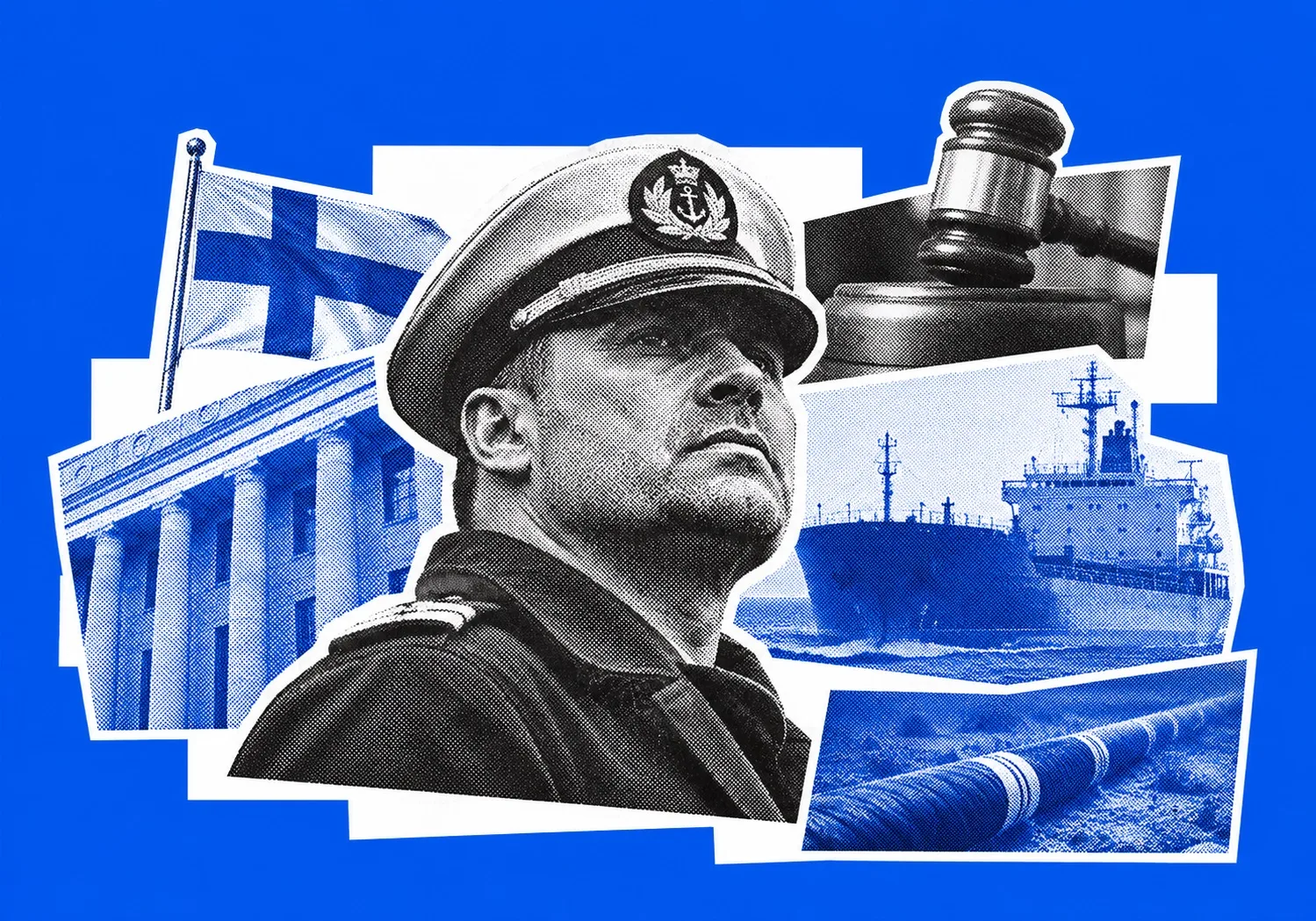
A Finnish court has sentenced the Russian captain and Azerbaijani boatswain of the cargo ship Fitburg for damaging underwater cables in the Gulf of Finland. The verdict sets a major precedent for protecting Europe's Baltic infrastructure outside territorial waters.
On November 5, 2026, a court in Helsinki sentenced the ship's Russian captain, Andrei Maksimenko, to three years and six months in prison. Azerbaijani boatswain Vusal Majidov received two years and ten months. Both were taken into custody immediately.
The sentences were harsher than prosecutors had requested. According to Finnish broadcaster Yle, prosecutors had sought prison terms of two years and six months.
The case centres on the cargo vessel Fitburg, which was sailing from St Petersburg to Israel when the incident occurred around New Year's Eve 2025. But it also raises a question that has become increasingly difficult for European authorities to ignore: what happens when vital infrastructure is damaged outside territorial waters, where the powers of national investigators and courts are more complicated?
A 130-Kilometre Trail Across the Seabed
The Fitburg left St Petersburg with its anchor equipment functioning properly, according to findings presented in court. At some point after departure, the anchor was lowered. The vessel continued its journey, dragging the equipment across the bottom of the Gulf of Finland.

The anchor and chain travelled approximately 130 kilometres along the seabed. Two telecommunications cables belonging to Finnish operator Elisa were damaged.
The route also crossed other infrastructure. According to the Helsinki District Court, seven additional telecommunications and electricity cables, along with a gas pipeline, were exposed to potential damage.
The fact that those connections remained intact became part of the court's assessment. Judges considered the danger considerably greater than the damage ultimately recorded.
Investigators did not establish that Maksimenko personally ordered the anchor lowered. Nor did prosecutors claim that Majidov had directly lowered it.
The court's findings instead focused on what the two men knew while the vessel was moving.
Judges concluded that both were aware the anchor was dragging and that the ship continued sailing despite the danger. The captain failed to stop the vessel, while the boatswain helped maintain its course after Finnish authorities made contact.
The defendants denied wrongdoing. The judgment can still be appealed.
Beyond the prison sentences, the two men were ordered to pay approximately €1.9 million in compensation. Maksimenko must also pay an additional €85,000, according to Reuters.
The payments relate to the costs of repairing the damaged infrastructure and investigating the incident.
Why the Location of the Incident Matters
One of the central disputes in the Fitburg case concerned where the damage occurred.
The vessel was operating outside Finland's territorial waters. That distinction matters because a coastal state's authority over foreign ships changes considerably once they move beyond the territorial sea.
International maritime law generally gives the ship's flag state jurisdiction over events on the high seas, subject to important exceptions. Coastal states also have specific rights concerning infrastructure and activities within their exclusive economic zones.
For Finnish prosecutors, the challenge was to establish why a court in Helsinki could hear a criminal case involving conduct outside Finland's territorial waters.

The defence disputed that jurisdiction.
The district court nevertheless found that Finnish criminal law could apply because the acts were intentional and their consequences were felt in Finland.
This aspect of the judgment could prove especially relevant to other European countries investigating damage to offshore cables.
The Baltic Sea contains infrastructure connecting several jurisdictions, and a vessel can cross maritime boundaries while passing over cables serving more than one country. Establishing where an offence occurred, which laws apply and which authorities may prosecute can become a substantial part of any investigation.
The Fitburg ruling offers one answer under Finnish law. Whether that reasoning will stand after a possible appeal remains to be seen.
The Earlier Eagle S Case Exposed the Same Legal Problem
Finland had already confronted similar questions following damage to the Estlink 2 electricity connection between Finland and Estonia on December 25, 2024.
The oil tanker Eagle S came under investigation after the interconnector and several telecommunications cables were damaged.
In October 2025, Helsinki District Court declined to hear the criminal charges against three crew members, concluding that Finland lacked jurisdiction.
That decision was later overturned.
In August 2026, the Helsinki Court of Appeal ruled that the case could proceed in Finland and returned it to the district court.
The appellate judges rejected the view that the alleged conduct was necessarily a navigational incident falling under the jurisdictional restrictions of the UN Convention on the Law of the Sea.
The Eagle S and Fitburg proceedings are separate cases, with different defendants and evidence. Neither should be used to presume the outcome of the other.
Together, however, they show why maritime jurisdiction has become a practical security issue for Finland.
Identifying a vessel suspected of damaging a cable is only the beginning. Investigators must also determine whether an offence can be prosecuted, what evidence establishes responsibility, and how international maritime rules interact with domestic criminal law.
Europe's Baltic Cable Problem Goes Beyond Finland
The Gulf of Finland is a narrow but important part of the Baltic Sea's infrastructure network.
Underwater telecommunications cables connect countries around the region, while electricity interconnectors allow power to move between national markets. Gas pipelines add another layer of infrastructure to the same maritime space.

A damaged connection does not necessarily mean a country loses internet access or electricity. Networks often have alternative routes, and operators can redirect traffic or adjust electricity flows.
But redundancy has limits. When several connections are damaged, remaining systems have to carry additional demand, while repairs at sea can be costly and time-consuming.
The wider dependence on submarine cables is substantial. The European Commission estimates that they carry around 99% of intercontinental data traffic.
The Fitburg incident involved regional cables rather than those major intercontinental routes. Even so, the underlying vulnerability is similar: essential infrastructure lies on the seabed, where it can be difficult to monitor continuously and relatively easy to damage with heavy maritime equipment.
The question of intent makes the problem more complicated.
Anchors can damage cables accidentally. Equipment failures, poor navigation and severe weather can all contribute to maritime incidents.
Deliberate interference is a different matter, requiring investigators to establish knowledge, intent and responsibility through evidence.
In the Fitburg case, the Finnish court found the defendants criminally responsible for intentional conduct. That finding does not, by itself, establish that the Russian government directed the incident.
The distinction is important amid broader European concerns about possible hybrid operations targeting critical infrastructure.
NATO Has Already Increased Its Baltic Sea Presence
The repeated disruption of underwater infrastructure has prompted a military response alongside national criminal investigations.
In January 2025, NATO launched Baltic Sentry, an initiative intended to improve surveillance and protection of critical infrastructure in the Baltic Sea.
The operation brings together naval vessels, maritime patrol aircraft and surveillance systems, including unmanned technology.
Its purpose is not to guard every kilometre of cable. The Baltic seabed is too extensive, and the number of commercial vessels moving through the region makes constant physical protection impractical.
Instead, NATO aims to improve awareness of maritime activity and make it easier to identify and respond to suspicious movements.
That approach depends heavily on information from national authorities and commercial shipping systems.
Vessel tracking data can reveal unusual routes or changes in speed, while patrol aircraft and ships can investigate activity requiring closer attention.
The United Kingdom has also supported regional monitoring through the Joint Expeditionary Force.
In January 2025, the UK-led group activated Nordic Warden, a system that analyses maritime information to identify potential threats to underwater infrastructure and monitor vessels associated with Russia's shadow fleet.
These efforts may improve the chances of detecting dangerous activity, but surveillance alone cannot determine criminal guilt.
That remains the responsibility of investigators and courts.
Brussels Is Spending More on Cable Protection and Repairs
The European Union is also putting money into infrastructure resilience.
In February 2026, the European Commission announced €347 million in investment for submarine cable security and related projects.
The package includes funding for new cable infrastructure, improved security measures and equipment that could help operators respond more quickly when connections are damaged.
A separate €20 million call was introduced to support deployable submarine cable repair modules.
The practical concern is straightforward. Repairing a damaged cable requires specialist equipment, trained crews and vessels capable of operating at sea. Availability can become a problem if several incidents occur close together or if repair ships are already working elsewhere.
The Commission has also developed a Cable Security Toolbox and identified projects considered important for Europe's communications resilience.
The EU's approach includes reducing the risk of damage, improving detection, preparing for repairs and strengthening deterrence.
For countries around the Baltic Sea, those measures have direct relevance. Even when a damaged cable can be repaired, an incident may disrupt services, require emergency coordination and leave operators facing substantial costs.
Additional routes and faster repairs can limit those consequences, although they cannot prevent every incident.
Will the Fitburg Verdict Change How Ships Operate in the Baltic?
The prison sentences imposed in Helsinki show that damage to underwater infrastructure can lead to personal criminal liability, not merely financial claims against shipowners or insurers.
For captains and senior crew members, the ruling places particular emphasis on responsibility for a vessel's movements and the risks created by its equipment.
Yet prosecution is only possible when investigators can identify suspects, gather sufficient evidence and establish jurisdiction.
That can be difficult in busy international waters, especially when the ship involved has already left the area.
There is also a difference between prosecuting crew members and proving the involvement of a foreign government. The latter would require additional evidence beyond the facts established in the Fitburg proceedings.
For European authorities, this leaves several tasks running in parallel: monitoring shipping activity, protecting vulnerable infrastructure, maintaining repair capacity and developing legal responses to deliberate damage.
The November 5 judgment adds a criminal conviction to that effort, subject to appeal.
Its longer-term legal importance will depend on how higher courts assess the case and whether similar reasoning is adopted in future proceedings.
For now, Finland has demonstrated that the location of an underwater cable outside territorial waters does not necessarily prevent a domestic court from holding those responsible for its damage to account.
Sources: Yle, Reuters, Helsinki District Court, Helsinki Court of Appeal, NATO, European Commission, UK Government