
Europe Seeks Greater Influence in Ukraine Peace Talks as ECB Succession Race Intensifies

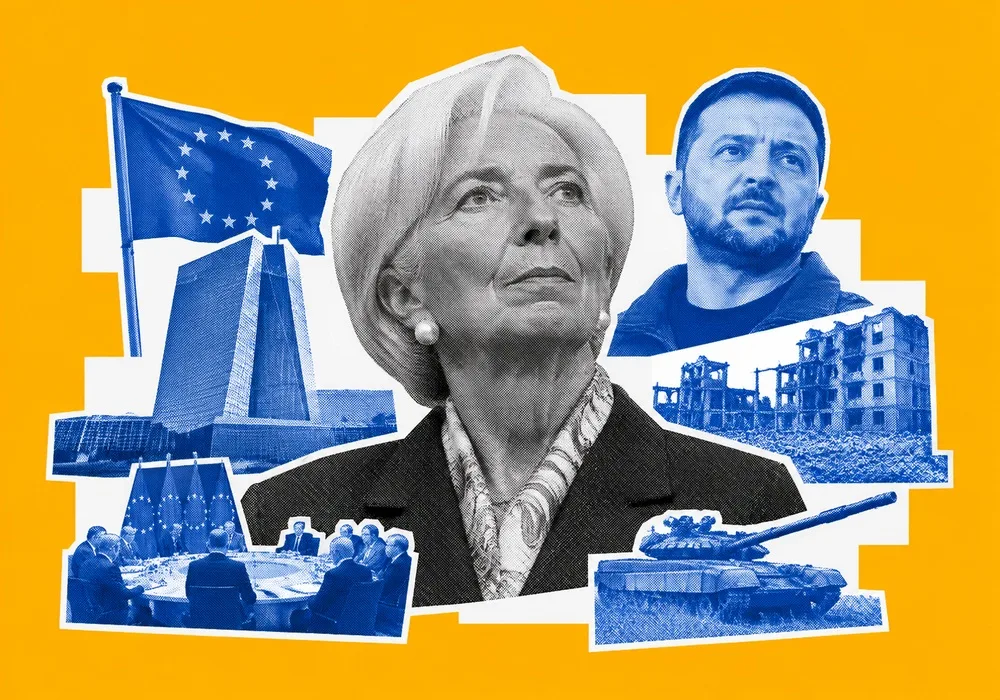
The EU is joining renewed US-mediated negotiations between Ukraine and Russia in Abu Dhabi, seeking to protect European security interests and secure a meaningful role in shaping a potential settlement. Meanwhile, competition to replace European Central Bank President Christine Lagarde is gaining momentum, with Spain promoting its candidate amid wider discussions about the future direction of eurozone monetary policy.
The European Union is preparing to take a more active role in diplomatic efforts to end Russia's war against Ukraine, as negotiations between Kyiv, Moscow and Washington resume in Abu Dhabi on 10–11 November. A joint team representing the European Commission and the European Council is attending the discussions alongside representatives from France, Germany and the United Kingdom. The renewed diplomatic engagement marks an important attempt by European governments to ensure that decisions affecting the continent's security are not made exclusively by Washington, Moscow and Kyiv.
The European delegation is led by Björn Seibert, head of European Commission President Ursula von der Leyen's cabinet, and Anna-Maria Boura, foreign policy adviser to European Council President António Costa. Their presence is intended to coordinate the EU's institutional position and maintain direct communication with Ukraine's partners. However, it remains uncertain whether European representatives will participate in the main negotiating sessions or conduct parallel discussions with the parties involved.
The diplomatic format reflects a broader disagreement over Europe's position in the peace process. Russia has opposed the direct participation of European governments, favouring negotiations limited to Ukraine, Russia and the United States. Washington's approach has also raised concerns among European officials, particularly following discussions about a possible post-war security framework involving the wider continent.
Italian Prime Minister Giorgia Meloni and Polish Foreign Minister Radosław Sikorski have called for a more coordinated European presence. Meloni has argued that the EU needs a dedicated representative capable of communicating a common position, while Sikorski has warned against Western European governments negotiating with Moscow without adequately consulting countries further east. These concerns expose the difficulty of reconciling different national priorities within the European security debate.
Security Guarantees Remain the Central Issue
The Abu Dhabi negotiations are expected to address security guarantees for Ukraine, the conditions for reducing hostilities, humanitarian arrangements and the broader framework for a potential settlement. Territorial questions remain among the most difficult obstacles. Moscow continues to demand Ukrainian territorial concessions, while Kyiv maintains that its sovereignty and territorial integrity cannot be sacrificed in exchange for an agreement that fails to provide credible protection against renewed aggression.
European governments have particular reasons to remain involved. Any settlement would have implications extending beyond Ukraine, including NATO's eastern flank, European defence planning, military assistance and the future relationship between Russia and European states. Discussions about a new European security architecture therefore raise questions about the continent's ability to determine its own strategic priorities.
The EU has also emphasised the importance of protecting critical infrastructure and commercial routes. Von der Leyen has reiterated support for a ceasefire covering food and energy infrastructure, while highlighting growing security concerns in the Black Sea. Attacks affecting shipping and energy facilities could have consequences for regional trade, agricultural exports and the security of EU member states bordering the Black Sea.
For Brussels, participation in the negotiations is consequently about more than diplomatic visibility. European governments have become major financial and military supporters of Ukraine, and any settlement will require substantial European involvement in reconstruction, long-term security arrangements and economic recovery. A negotiating process that excludes them from decisions could create a significant gap between the responsibilities Europe is expected to assume and its actual influence over the outcome.
The Race to Succeed Christine Lagarde
Alongside the diplomatic developments, the future leadership of the European Central Bank is emerging as another important issue for European policymakers. Competition to replace Christine Lagarde is intensifying as eurozone governments consider potential candidates for one of the continent's most influential economic positions. The succession process comes at a sensitive time for the eurozone, which continues to face uncertainty over energy prices, inflation, economic competitiveness and the cost of financing investment.
Spain is promoting Pablo Hernández de Cos, the former governor of the Bank of Spain, as a potential successor. His candidacy would strengthen Madrid's influence over European monetary policymaking and give Spain an opportunity to secure a prominent institutional position. Hernández de Cos has previously led the Bank of Spain and has experience within the international financial system, including through his work at the Bank for International Settlements.
Greece is also seeking to participate in the debate. Eurogroup President and Greek Finance Minister Kyriakos Pierrakakis has discussed the succession process and the economic challenges facing the eurozone, including rising energy prices. The selection is expected to involve negotiations among member states, reflecting the political and economic importance attached to the ECB presidency.
The next ECB president will inherit a demanding policy environment. Monetary authorities must balance inflation control against the need to support economic activity, while European governments are seeking greater investment in defence, energy infrastructure and industrial competitiveness. Decisions on interest rates and financial conditions will influence borrowing costs for businesses and households, government financing and the capacity of European economies to fund strategic priorities.
Cyprus Reunification Returns to the European Agenda
Another issue attracting renewed attention is the division of Cyprus. Discussions between the leaders of the island's two communities have returned to the diplomatic agenda following a meeting involving the United Nations envoy. The renewed engagement offers an opportunity to reconsider the prospects for negotiations after years of limited progress.
The division of Cyprus remains a longstanding challenge for European diplomacy. The Republic of Cyprus has been an EU member since 2004, while the northern part of the island remains outside the effective control of its internationally recognised government. The unresolved situation continues to affect relations between the EU and Türkiye, as well as the wider security and political environment in the eastern Mediterranean.
Any renewed negotiations will require overcoming disagreements over political arrangements, security guarantees and the status of the island's two communities. Progress could improve regional stability and create new opportunities for cooperation, although previous attempts have demonstrated how difficult it is to reach a mutually acceptable settlement.
Europe's Strategic Influence at a Critical Moment
The developments in Abu Dhabi, Brussels and the eastern Mediterranean illustrate the range of challenges facing European policymakers. The EU is attempting to strengthen its influence over Ukraine's future while managing internal disagreements about diplomatic representation. At the same time, the ECB succession process will shape the leadership responsible for navigating the eurozone through an uncertain economic period.
These issues are interconnected by a broader question of European strategic capacity. The continent's ability to influence peace negotiations, maintain economic stability and resolve longstanding political disputes depends not only on its institutional presence but also on coordination among member states. Without a sufficiently unified position, European governments risk remaining dependent on decisions shaped by external actors, even when the consequences directly affect their security and economic interests.
Sources: Euronews, Kyiv Independent