
EU sanctions Russian propaganda network and pro-Kremlin hackers over hybrid attacks

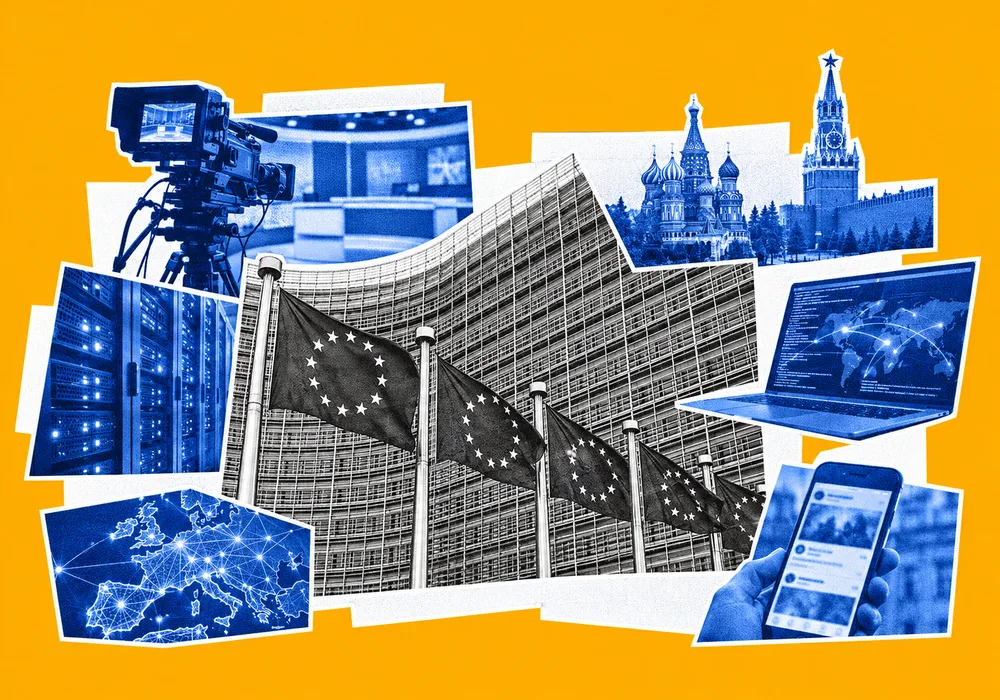
The European Union has imposed sanctions on 30 individuals and two entities involved in Russian foreign information manipulation and cyber operations. The measures target the Social Design Agency, several prominent propagandists and the pro-Russian hacker group NoName057(16), which has attacked government institutions and critical infrastructure across Europe, Ukraine and the United States.
The European Union has imposed restrictive measures on 30 individuals and two entities accused of participating in Russian foreign information manipulation and interference (FIMI) campaigns and malicious cyber activities. The decision, adopted by the Council of the EU on 16 November, targets organisations and individuals involved in spreading Kremlin propaganda, interfering in European information environments and conducting cyberattacks against public institutions and critical infrastructure. The latest measures reflect growing European concerns that Russia is using coordinated hybrid operations to undermine political stability, weaken public confidence in democratic institutions and influence political processes beyond its borders.
Moscow-based agency accused of coordinating disinformation campaigns
One of the central targets of the new sanctions is the Social Design Agency (SDA), a Moscow-based public relations and political technology company. According to the Council, the organisation conducts large-scale information manipulation operations funded, directed and supervised by the Russian Presidential Administration. Its activities involve systematically manipulating traditional and social media environments, disseminating pro-Russian propaganda and disinformation across multiple countries, and targeting EU member states and European institutions.
The agency's operations have included campaigns conducted in the context of the 2024 European Parliament elections, as well as dedicated activities targeting Germany and France. These efforts were intended to influence political debates, amplify divisions within European societies and undermine confidence in European institutions and policies. The Council has also sanctioned 24 individuals working for the Social Design Agency who contributed to developing and implementing the so-called European counter-campaign and Ukrainian counter-campaign.
The inclusion of both the organisation and its personnel demonstrates that the EU is seeking to target the operational structures behind Russian information manipulation rather than focusing exclusively on the public dissemination of propaganda. This approach also reflects the increasingly organised nature of foreign interference campaigns, which rely on coordinated networks of political consultants, media operators and online platforms.
Propagandists included in the sanctions list
The latest package also targets several individuals accused of disseminating narratives that legitimise Russia's war against Ukraine and advance the Kremlin's political objectives. Among those listed are Russian television figures Vitaly Eliseev and Petr Marchenko, Ukrainian-born blogger and military commentator Yurii Podoliaka, and Chay Bowes, associated with RT International. The Council considers their activities part of broader information manipulation efforts supporting Russian propaganda and undermining the information environment in Europe.
Targeting media personalities and commentators alongside employees of a political technology company highlights the different layers of Russia's influence operations. While organisations such as the Social Design Agency coordinate campaigns, public figures and online commentators help distribute their narratives to wider audiences. The sanctions therefore seek to disrupt both the organisational structures and the communication networks that sustain Kremlin-aligned information activities.
Pro-Russian hacker group targeted over attacks on critical infrastructure
The second major component of the sanctions concerns malicious cyber operations. The Council has listed NoName057(16), a pro-Russian hacker group that emerged in March 2022, shortly after Russia launched its full-scale invasion of Ukraine. The group has claimed responsibility for cyberattacks against government bodies, critical infrastructure and private companies in Ukraine, the United States and EU member states.
Its operations have primarily involved distributed denial-of-service (DDoS) attacks, which overwhelm websites and online services with excessive traffic, making them inaccessible to legitimate users. European targets have included organisations operating in strategically important sectors, particularly energy, finance and transport, as well as water supply facilities. Political parties and candidates have also been targeted during electoral processes, raising concerns about the potential use of cyber operations to interfere with democratic institutions.
The focus on these sectors highlights the potential consequences of cyber operations extending beyond temporary disruptions to online services. Attacks against energy networks, financial institutions and transport systems can undermine the reliability of essential services, while interference targeting political actors can create additional vulnerabilities during sensitive electoral periods. By sanctioning NoName057(16), the EU is seeking to increase the costs for organisations involved in cyber operations against European and allied infrastructure.
EU expands its response to Russian hybrid threats
All individuals and entities included in the latest listings are subject to an asset freeze and travel bans preventing them from entering or transiting through EU member states. EU citizens and companies are also prohibited from making funds or economic resources available to them, directly or indirectly. The decision expands the EU's existing sanctions frameworks addressing Russia's destabilising activities and cyberattacks.
The sanctions regime targeting Russian hybrid activities was established in October 2024, allowing the bloc to impose restrictive measures on those undermining democracy, the rule of law, stability and security in the EU, as well as in third countries and international organisations. Following the latest additions, this framework covers 111 individuals and 21 entities. Separately, the EU's horizontal cyber sanctions regime now applies to 27 individuals and 12 entities.
The latest decision signals a broader shift towards treating disinformation networks and politically motivated cyber operations as security threats requiring coordinated responses. Rather than addressing individual incidents in isolation, the EU is increasingly seeking to identify and sanction the organisations, personnel and infrastructure supporting Russia's hybrid activities. However, restrictive measures alone cannot prevent future cyberattacks or eliminate the circulation of disinformation.
Their effectiveness will depend on continued intelligence cooperation, stronger protection of critical infrastructure and improved resilience of democratic institutions. For European governments, the challenge is not only to impose consequences on those responsible for hybrid operations but also to reduce the vulnerabilities that allow such campaigns to succeed. The latest sanctions represent another step in this effort, placing Russia's information manipulation and cyber networks within the broader framework of European security policy.
Sources: Council of the EU