
EU-Sanctioned Russian Diesel Tankers Divert to Brazil as US Deal Stalls

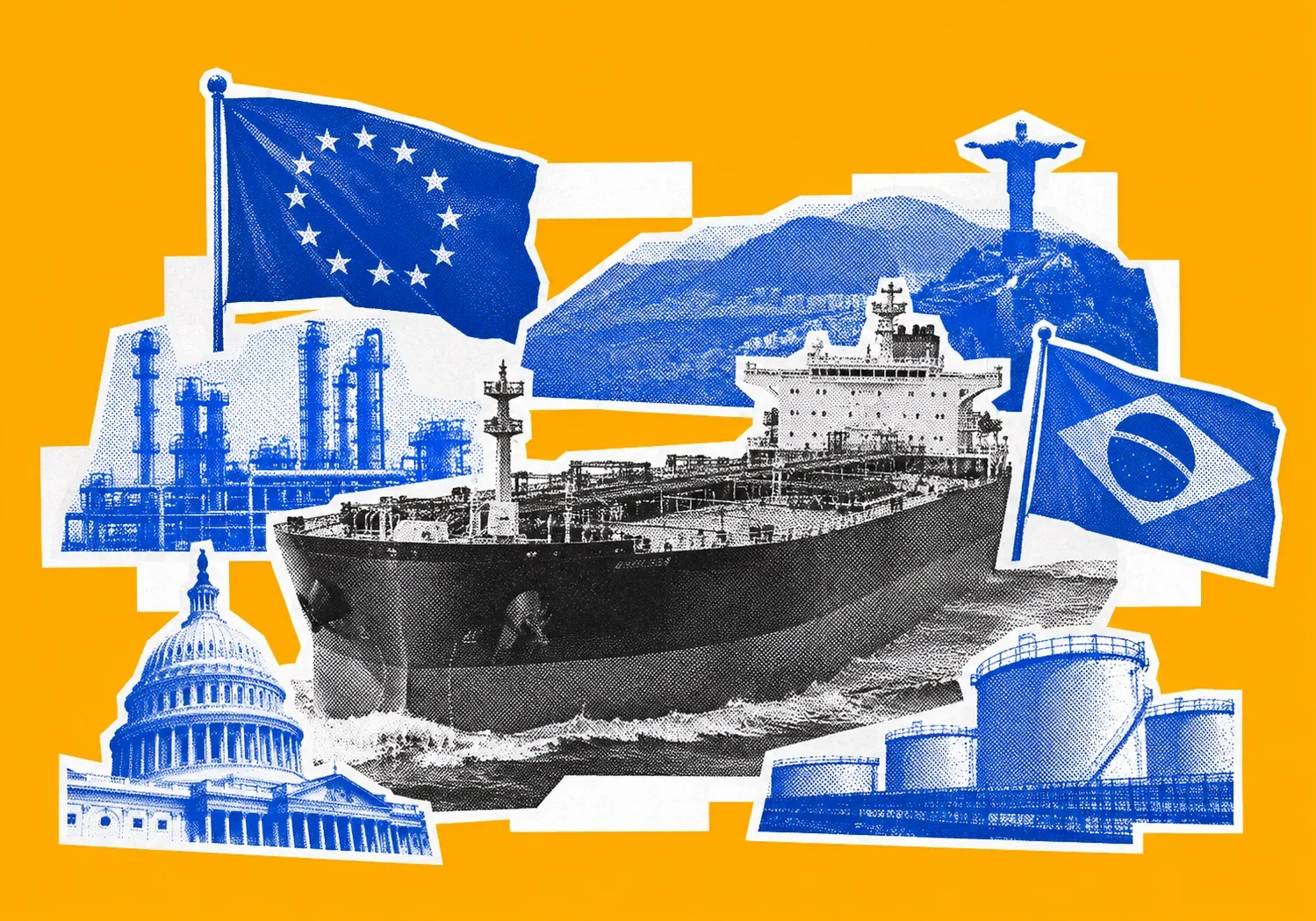
Two shadow fleet tankers carrying Russian diesel have docked in Brazil instead of the US after Washington’s supply deal stalled. The diversion highlights how Moscow bypasses EU and US sanctions to keep selling fuel.
While those two vessels have already reached South American waters, a third tanker is currently sailing along the coast awaiting instructions. All three had previously been identified as possible participants in a controversial agreement to supply Russian fuel to the United States - an arrangement that has failed to deliver a single shipment to an American port six weeks after Washington announced it.
The developments, reported by The Maritime Executive on November 19, raise questions about the future of the US-Russia deal and highlight a growing problem for European policymakers: restricting Russian energy imports does not prevent Moscow from finding buyers elsewhere.
Three tankers and an uncertain American deal
The first vessel to reach Brazil was Leruo, a Sierra Leone-flagged product tanker that had loaded diesel at the Russian Baltic port of Primorsk.
According to maritime tracking information cited by The Maritime Executive, the vessel arrived at the Itacoatiara anchorage before continuing along the Amazon River towards Manaus. It is believed to be carrying approximately 40,000 metric tonnes of diesel.
The Russian-flagged Primorye subsequently reached the same anchorage. A third tanker, Beast, sailing under the flag of Sierra Leone, was travelling along the South American coastline with its automatic identification system indicating that it was awaiting orders for Brazil.
The three vessels were among several tankers that analysts had linked to a possible resumption of Russian diesel deliveries to the United States.
That prospect emerged in October, when the Trump administration announced an arrangement intended to bring Russian diesel onto the American market amid shortages associated with disruptions to supplies from the Persian Gulf.
US officials suggested that as much as 300,000 metric tonnes could become available.
But the plan encountered political and legal resistance.

Members of Congress questioned the proposed imports, particularly because some vessels associated with the shipments were already subject to international sanctions.
New Jersey Governor Mikie Sherrill also warned terminal operators and fuel companies about potential legal consequences if they accepted the cargoes.
For American businesses, the question was not simply whether Russian diesel could be imported under a temporary authorisation. Companies also had to consider the sanctions status of individual vessels, their commercial relationships and the reputational consequences of handling Russian fuel.
The result has been a striking gap between the administration's announcement and actual deliveries.
As of November 20, none of the promised Russian diesel shipments had reached the United States.
It remains uncertain whether the arrangement will eventually produce deliveries or whether the vessels originally associated with it will continue seeking customers elsewhere.
Brazil offers Russia an established alternative
Brazil is not an unexpected destination for Russian diesel.
The South American country has continued purchasing Russian petroleum products despite the restrictions imposed by Western governments following Moscow's invasion of Ukraine.
According to figures cited by Brazilian newspaper Gazeta do Povo and reported by The Maritime Executive, Russian energy imports into Brazil reached approximately 5 billion reais, equivalent to around $840 million, during 2026.
Data attributed to the Centre for Research on Energy and Clean Air indicate that Brazil received 34 Russian diesel shipments carried by 28 vessels identified as part of Russia's shadow fleet.
Those deliveries totalled an estimated 1.11 million metric tonnes.
The figures illustrate why Brazil remains an important market for Russian exporters. Moscow can continue generating revenue from petroleum products even when particular destinations become commercially or politically difficult to access.
Brazil, meanwhile, has its own reasons for maintaining energy trade with Russia. Imported diesel is important to transport, agriculture and other parts of the Brazilian economy, making price and supply availability significant considerations for domestic buyers.
The arrival of Leruo and Primorye does not establish that their cargoes have already been discharged or sold. Nevertheless, their movements demonstrate the flexibility of international petroleum trading, where cargoes can be redirected before reaching their final customers.
Why Europe is directly involved
The European connection is particularly clear in the case of Leruo.
The European Union placed the tanker under sanctions in July 2025, with the United Kingdom following in October.
According to information cited by The Maritime Executive, Ukrainian authorities had previously raised concerns about the vessel's activities, including alleged interruptions to its automatic identification system and ship-to-ship cargo transfers.
Such practices have become a central concern for European regulators attempting to monitor Russian maritime exports.
The EU banned seaborne imports of Russian refined petroleum products in February 2023. It also introduced restrictions on maritime services associated with Russian oil trading, alongside measures targeting vessels suspected of helping Moscow circumvent sanctions.
By July 2026, the EU had listed more than 670 vessels under measures targeting Russia's shadow fleet.
These restrictions can prevent designated ships from accessing EU ports and certain European services. They do not, however, amount to a universal prohibition on Russian fuel exports.
Brazil is not required to apply EU sanctions simply because a tanker has been designated by Brussels.
That distinction is essential to understanding the current situation.
A vessel may be excluded from European commercial networks while continuing to operate on routes connecting Russia with countries outside the sanctions coalition.
The effectiveness of European restrictions therefore depends partly on whether sanctioned vessels can obtain alternative shipping, insurance, financing and port services.
The wider problem for European energy sanctions
For Brussels, the central objective of energy sanctions is to reduce the revenue Russia can obtain from fossil fuel exports while limiting disruption to international energy markets.
Those objectives are not always easy to reconcile.
Restrictions on Russian petroleum products have reshaped established trade routes. European buyers have increasingly relied on alternative suppliers, while Russian exporters have sought customers in Asia, Africa and Latin America.
This has created longer and more complicated trading networks.
It also raises questions about the extent to which sanctions reduce Russian export earnings rather than simply change the destinations of Russian cargoes.
The distinction matters because continued exports do not necessarily mean that sanctions have failed.
If Russian producers must accept lower prices, pay more for transportation or use less efficient trading arrangements, restrictions can still reduce their earnings.
But determining the actual financial impact requires evidence about sale prices, shipping costs and the revenues ultimately received by Russian companies.
The diversion of three tankers cannot establish those effects on its own.
What it does show is that Russia retains access to buyers outside the Western sanctions system.
For European governments, this reinforces the importance of monitoring maritime services, ownership structures and the networks supporting sanctioned vessels, rather than focusing exclusively on their declared destinations.
Russian refinery disruptions add another complication
The changing routes come as Russia's domestic oil industry faces pressure from Ukrainian attacks on refining infrastructure.
According to Reuters reporting cited by The Maritime Executive, Ukrainian strikes since late October have reduced combined crude processing volumes at Russian refineries by approximately 45%, with 15 of the country's 35 major refineries disrupted or forced to suspend operations.
These reported disruptions complicate Moscow's efforts to maintain both domestic fuel supplies and export commitments.
Russia had previously restricted international diesel and gasoline shipments while responding to attacks on its energy infrastructure.
The prospect of renewed exports to the United States therefore emerged against a backdrop of uncertainty over Russian refining capacity.
For European energy markets, the consequences depend on how these disruptions affect global supplies and prices.
A sustained reduction in Russian diesel production could tighten availability in markets that continue purchasing the fuel. Conversely, cargoes redirected from one destination to another could alter regional trading patterns without necessarily reducing total global supply.
Neither outcome can be assumed from the movements of Leruo, Primorye and Beast alone.
What happens to the remaining tankers?
The uncertainty extends beyond the three vessels approaching Brazil.
The Russian-flagged Talisman, another tanker previously associated with possible American deliveries, was subsequently reported near Egypt after entering the Mediterranean.
Meanwhile, the Malta-flagged Agioi Fanendes, a Greek-owned tanker not subject to the same sanctions, has reportedly remained in the Atlantic rather than proceeding to an American port.
Its tracking system has indicated that the vessel is awaiting orders.
These movements suggest that the commercial arrangements surrounding the proposed US imports remain unresolved.
For Washington, the immediate question is whether the administration can turn its announced agreement into actual fuel deliveries.
For Moscow, the issue is whether alternative markets can absorb exports that face political or commercial barriers elsewhere.
And for Europe, the episode provides another example of the difficulty of restricting Russian energy revenues in a global market where major buyers do not necessarily share the same sanctions policies.
The next significant development may not be another tanker changing course. It may be evidence of where these cargoes are ultimately discharged, who purchases them, and whether the transactions generate meaningful revenue for Russian exporters.
Those details will offer a clearer indication of how effectively Western sanctions are influencing the trade.
Sources: The Maritime Executive, Council of the European Union, Hromadske