
EU Leaders Choose Europe’s Team for Ukraine Peace Talks

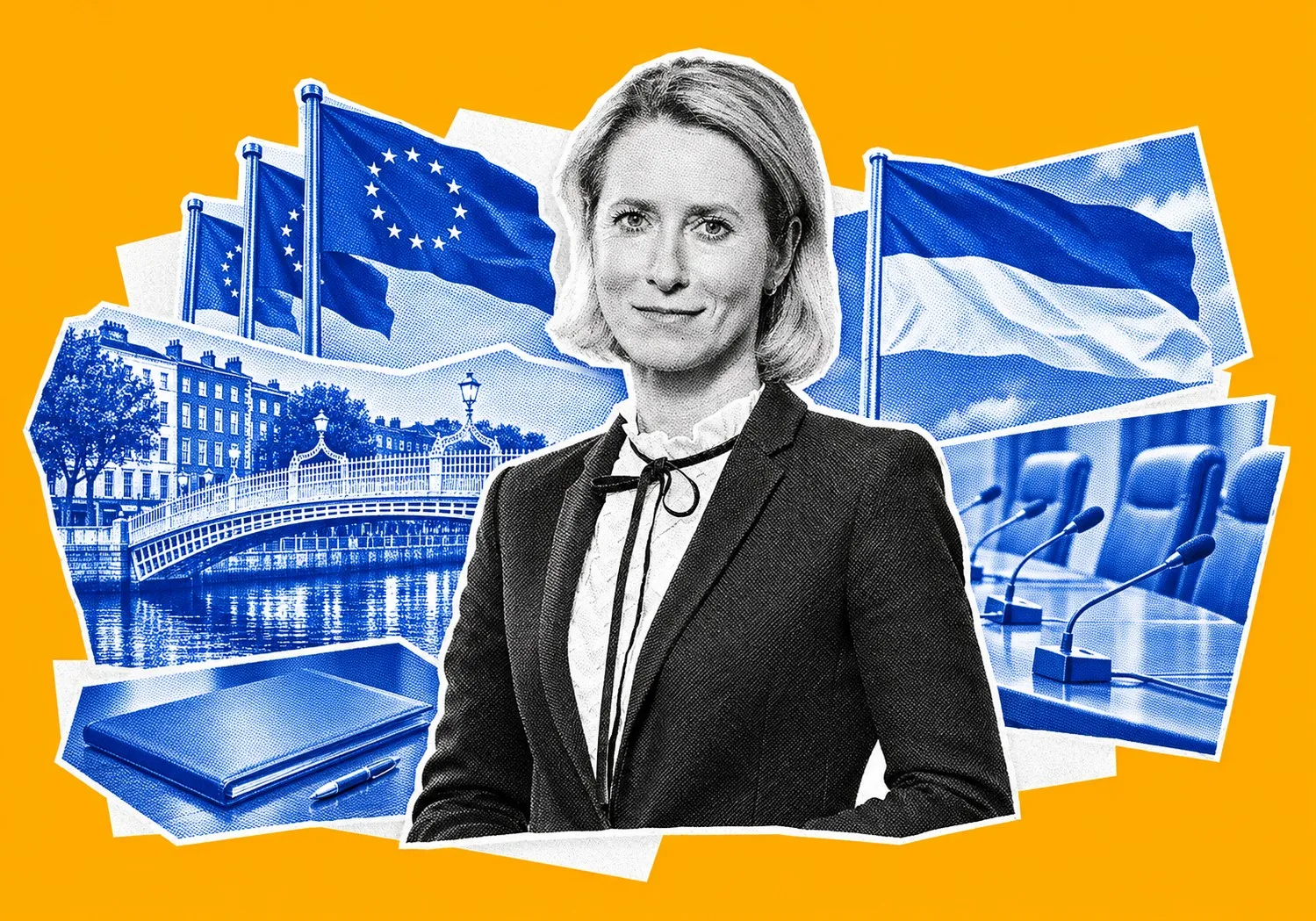
EU leaders agreed in Dublin on Friday that Britain, France, Germany, Italy and Poland would join EU institutions in a team to represent Europe in Ukraine peace talks. Spain was left out of the group. Moscow has yet to say whether it will meet the team directly.
European Council president António Costa announced the line-up after an informal summit originally called to discuss artificial intelligence. The five countries, known as the E5, come from the wider Coalition of the Willing, a group of governments supporting Ukraine and preparing security arrangements for any ceasefire or peace deal. Costa said the team would work with all EU member states.

Washington has pressed for European involvement in the US-led talks, and Kyiv wants the governments that could help protect Ukraine after the war involved in negotiating the terms. The choice made in Dublin gives those governments a way to co-ordinate their position while the US continues to broker talks with Russia.
How the Team Took Shape
Britain, France and Germany had already been co-ordinating their diplomacy as the E3. Italy took part in the preparatory meeting in Abu Dhabi earlier in the week. The Dublin agreement formalised its place and brought Poland into the group.
Britain’s involvement reflects its role in military support for Ukraine and in the Coalition of the Willing.
The European Commission and European Council will be able to bring questions of EU policy into the discussions, including Ukraine’s membership bid and the bloc’s financial support. The team will therefore bring together governments that can make national commitments and institutions that work on decisions for the wider EU.
Before the summit, Italian prime minister Giorgia Meloni had called for a single envoy, arguing that the number of European voices was making it harder to present a coherent position.
German chancellor Friedrich Merz defended the existing formats.
For Warsaw, the composition mattered as much as the number of people at the table. Poland had warned against western European capitals making decisions for countries farther east, where the implications of any agreement for NATO and regional security are especially acute.
The argument over a single envoy had also reached the Americans. Jared Kushner, one of Donald Trump’s envoys, had called for Europe to identify a representative during the Abu Dhabi round. Friday’s agreement settled which governments and institutions would be represented. The leaders left the choice of individual delegates open.
Merz pointed to the experience of the three-country group and said it already worked with Italy and Poland. His defence of the existing group made clear that Berlin saw value in keeping national governments directly involved.
Spain’s Place in the Wider Coalition
Madrid can put its views to the team through the wider EU consultations that Costa promised in Dublin. In announcing the line-up, he gave no country-by-country explanation of how the five were chosen.
Spain is involved in preparations for the security arrangements that could follow an agreement. Poland’s defence ministry lists Spain among the countries taking part in a Coalition of the Willing exercise in Poland, with a media day scheduled for 20 November. The exercise is designed to demonstrate the participating countries’ ability to assemble forces to support Ukraine in the event of a ceasefire or peace agreement.
The exercise involves countries including Belgium, Estonia, the Netherlands, Lithuania, Sweden and Turkey, alongside several E5 members. Poland’s defence ministry describes it as the first exercise for the coalition’s planned multinational force for Ukraine. It is a test of what the countries can assemble. Decisions about any deployment or national contribution would come separately.
Kaja Kallas Makes Her Case
Before the summit, Kaja Kallas argued that representing the EU in talks with Russia fell within the foreign and security policy remit that leaders gave her in 2024.
‘Russians do not want me,’ the EU’s foreign policy chief told reporters in Dublin. She asked whether the EU had any say in who represented Russia and said the choice of Europe’s representative belonged to the EU.
Dmitry Medvedev, deputy chair of Russia’s Security Council, responded in a post on the Russian messaging platform Max. He called Kallas ‘stupid’ and said the EU had yet to be invited to the talks.
EU leaders passed over the idea of a single envoy, leaving Kallas without the appointment she had sought. Her position as the EU’s high representative still gives her a possible role, depending on the format. So far, national security advisers and other senior officials have done much of the negotiating.
Costa pointed to the division of responsibilities under EU treaties. The European Council president represents the Union on common foreign and security policy at the level of heads of state and government. The Commission has its own responsibilities for external representation. Ursula von der Leyen, the Commission president, backed the collective arrangement agreed by the leaders. The division matters because representation at a leaders’ meeting and representation in day-to-day foreign policy fall under different EU roles.
From Abu Dhabi to Dublin
In Abu Dhabi on Tuesday, representatives of the EU, Britain, France, Germany, Italy and NATO met Ukrainian and US officials. They called for a settlement that respected Ukraine’s sovereignty and territorial integrity and gave the country credible security guarantees. The meeting took place ahead of a separate round involving Ukraine, Russia and the United States.
Donald Trump’s envoys, Steve Witkoff and Jared Kushner, then travelled to Moscow on Thursday for talks with Vladimir Putin. They went on to Dublin, where they met Ukrainian president Volodymyr Zelenskyy. Zelenskyy said afterwards that the week’s talks had produced an agreement to exchange prisoners. He said Ukraine expected it to be the largest exchange since the start of the war and that preparations for further multilateral meetings were under way.
Speaking at the European Political Community summit in Dublin on Thursday, Zelenskyy had welcomed the consultations with Europe in Abu Dhabi and called for European representatives to take part regularly in talks with Russia. He made a similar case in a meeting with Costa and Commission president Ursula von der Leyen, pointing to decisions about support for Ukraine and commitments that European governments would have to fulfil.
Kushner said after the meetings that Ukraine and Russia had agreed to include European partners in the next round. The Kremlin gave a more qualified account. Its spokesman, Dmitry Peskov, indicated that Moscow would assess European governments’ intentions before deciding whether to take part in a broader format. The two accounts left room for different interpretations of what European participation might entail. Officials could attend the same round of diplomacy while continuing to meet separately, as they did in Abu Dhabi.
The territorial dispute remains unresolved. Russia occupies around a fifth of Ukraine, and Kyiv rejects Moscow’s demand that it hand over the parts of the Donbas that Russian forces have failed to capture. Costa spelt out the limits of the new team’s role in that dispute. ‘Only Ukraine has the legitimacy to decide on matters concerning its territory and sovereignty,’ he said.
What Would Follow a Ceasefire
Russia has sought to widen the talks to cover Europe’s security arrangements. Kallas said in Dublin that taking up Moscow’s demands before a ceasefire would allow Russia to shift the focus away from ending the war. She set out the order she wanted to see: a ceasefire, a peace agreement and then wider negotiations.
For Kyiv, the question is what would happen if Russia attacked again after a ceasefire. Work on security guarantees is already under way within the Coalition of the Willing, in co-ordination with NATO. The Abu Dhabi statement also committed its signatories to keeping NATO central to collective defence in Europe. The governments involved have also discussed how existing European security agreements could help prevent a renewed conflict. The Abu Dhabi statement referred to ways of managing military risks and avoiding escalation. It gave no details of the forces or resources governments might provide under a settlement.
Zelenskyy’s discussions with Costa and von der Leyen also covered Ukraine’s immediate needs for the winter.
Kyiv expects further energy and humanitarian aid and help with shelters. The three discussed Ukraine’s EU membership bid, including opening the final two groups of chapters in its accession negotiations. Ukraine had already opened four of the six groups, Zelenskyy told European leaders in Dublin, and wanted to open the rest before the end of the year.
EU leaders will meet again on 26 and 27 November to discuss how to finance Ukraine in 2027 and beyond. The European Commission is preparing proposals for that meeting. Costa said military and financial assistance remained the EU’s most urgent priority.
Sources: European Council, El País, Euronews, Office of the President of Ukraine, Polish Ministry of National Defence , Dmitry Medvedev Post on Max responding to Kaja Kallas