
Estonia Closes a New Route for Russian Grain Through the Baltics

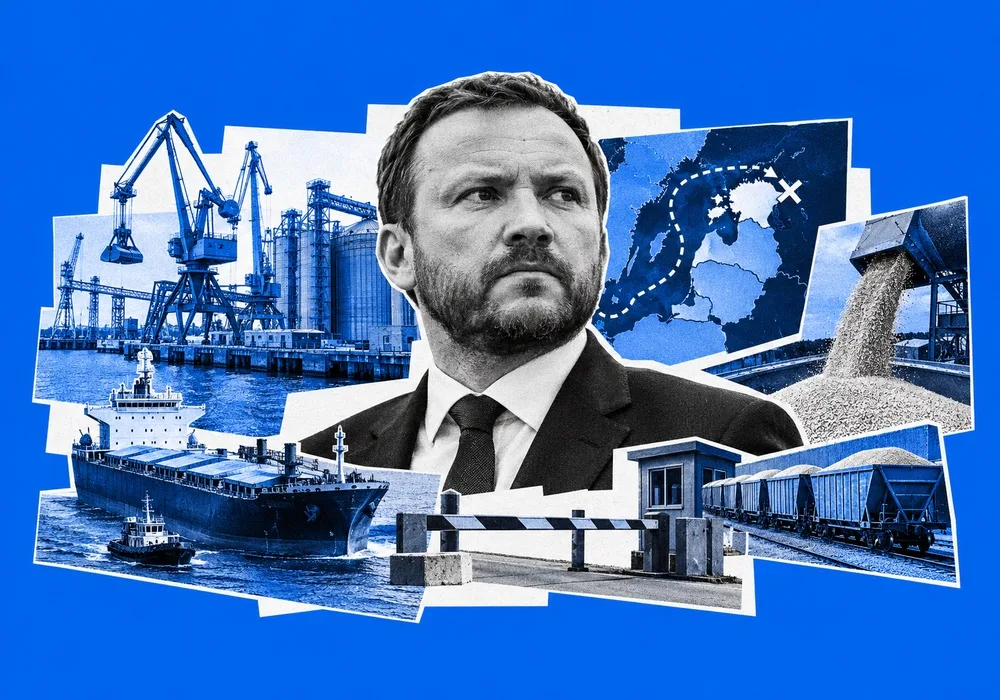
Estonia has banned the transit of Russian and Belarusian grain through its territory as Moscow seeks alternative export routes after disruptions to Black Sea shipping. The move highlights a broader Baltic effort to prevent European infrastructure from becoming part of Russia's wartime trade network.
Estonia has banned the transit of grain originating from Russia and Belarus through its territory, closing a potential alternative route for Russian agricultural exports as Moscow seeks to redirect cargo flows away from the Black Sea. The measure, announced by Foreign Minister Margus Tsahkna on October 1, comes after Russia began looking for additional capacity at its Baltic and Arctic ports following disruptions to Black Sea shipments.
The decision is significant because the issue is no longer limited to whether Russian grain can enter European markets. It concerns the infrastructure that allows Russian agricultural commodities to reach global customers in the first place. By targeting transit, Estonia is attempting to prevent its territory, railways and ports from becoming part of a logistics network that could help Russia compensate for the disruption of established export routes.
Baltic infrastructure becomes part of the sanctions debate
Estonia had already warned in September that it did not intend to become a new export corridor for Russian grain. At the time, Tallinn said that transit of Russian grain through the country was virtually non-existent but that Russia could seek to redirect exports towards Baltic infrastructure as alternatives to the Black Sea. Estonia also said it was prepared to introduce national restrictions if such pressure emerged.
That concern has now translated into a formal ban. Tallinn's position is that European infrastructure should not facilitate Russian trade while Russia continues its war against Ukraine. Tsahkna argued that Russia should not be able to use European territory to maintain commercial flows that generate revenue for its wartime economy.
The decision also fits into a broader Baltic effort to coordinate economic pressure on Moscow. Estonia has been discussing the issue with Latvia and Lithuania, arguing that restrictions on Russian grain transit would have greater effect if implemented across the region rather than through isolated national measures.
Russia is looking for alternatives to the Black Sea
The move comes as Russia's grain-export logistics are being reshaped by the deteriorating security environment around the Black Sea. According to Reuters, Russian companies have been repurposing terminals traditionally used for fertiliser, coal and other cargo at Baltic and Arctic ports to handle grain exports after Ukrainian drone attacks disrupted shipments through the Black Sea.
This creates a new strategic problem for European countries bordering Russia. Even where a commodity itself is not prohibited from reaching global markets, the infrastructure used to transport it can become politically and strategically important.
For Moscow, alternative routes reduce dependence on vulnerable maritime corridors. For countries such as Estonia, those same routes create the possibility that European transport infrastructure could indirectly help Russia absorb the consequences of the war and maintain export revenues.
The result is a gradual expansion of the economic-security debate from sanctions on individual goods to the physical networks that carry them. Railways, ports, storage facilities and transshipment terminals are increasingly being treated as strategic infrastructure rather than neutral commercial assets.
The issue extends beyond Russian grain
Belarus is included in Estonia's ban, reinforcing the broader approach taken by the Baltic states towards the economic networks connecting Minsk and Moscow. The decision also reflects Tallinn's concern over the possible movement of grain originating in occupied Ukrainian territories through Russian-controlled supply chains. Estonia has previously called for regional or EU-wide measures to prevent such exports from entering European logistics networks.
At the EU level, agricultural trade with Russia and Belarus remains a more complicated issue than a blanket prohibition on all food commodities. The European Commission continues to manage agricultural trade through tariffs, quotas and other instruments, while EU agricultural markets themselves remain exposed to wider pressures including higher input costs and trade uncertainty.
This leaves individual member states with a difficult balance. National restrictions can close specific logistical loopholes quickly, but fragmented rules can also create differences between neighbouring countries and encourage cargo to move towards the least restrictive route.
That is why Estonia's emphasis on cooperation with Latvia and Lithuania is important. The Baltic states are effectively trying to prevent a substitution effect in which cargo blocked in one country simply moves through another.
A test for Europe's economic-security policy
The grain decision illustrates a broader change in Europe's approach to trade with Russia. Since the beginning of the full-scale invasion, the focus has increasingly shifted from simply identifying sanctioned products to examining whether European markets and infrastructure can still provide indirect economic benefits to Moscow.
For Estonia, the calculation is particularly direct. The country shares a border with Russia and has spent years reducing its economic and energy dependence on its eastern neighbour. Blocking a potential grain corridor is therefore part of a wider effort to limit Russia's ability to use Baltic connectivity as an economic asset.
For the EU as a whole, however, the question is more complicated. Russian agricultural exports are connected to global food markets, while European transport infrastructure is integrated into wider international supply chains. Measures that restrict Russian access to European infrastructure therefore need to distinguish between cutting Moscow's logistical options and creating unintended disruptions to legitimate international trade.
Estonia's decision suggests that the Baltic states are prepared to move ahead nationally when they believe EU-wide restrictions are too slow or incomplete. The next question is whether Latvia and Lithuania will follow with comparable measures, and whether the issue will eventually become part of a common EU approach to Russian grain transit.
The immediate effect of the Estonian ban may be limited by the relatively small volume of Russian grain already moving through the country. Its larger significance lies in the signal it sends about European infrastructure: Tallinn is seeking to ensure that alternative Russian export routes do not simply replace the Black Sea corridor by passing through the Baltic region.
Sources: Reuters, Estonian Foreign Ministry