
Drone Strikes Hit Ships in Bulgaria NATO Waters: Cargo Vessel Sunk Off Black Sea Coast

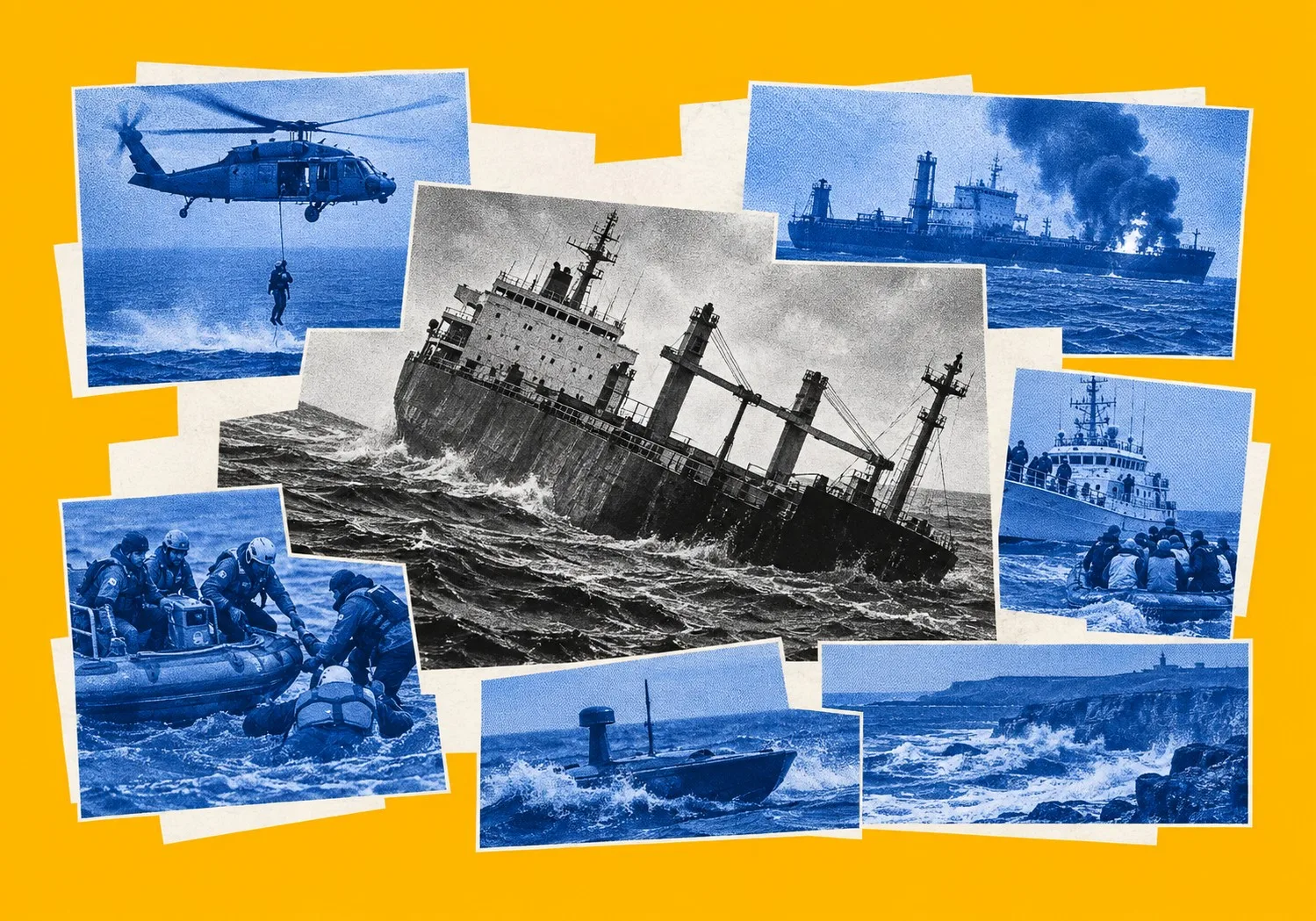
Two merchant vessels have been targeted in Bulgaria’s Exclusive Economic Zone, leaving one ship sunk and crew missing as Black Sea drone activity affects international shipping routes.
As of 11:00 AM on October 6, sea and aerial drones struck two commercial cargo vessels in Bulgaria’s Exclusive Economic Zone, resulting in the sinking of the bulk carrier Alfa Watan and a severe fire on board the Able.
The attack, occurring roughly 80 nautical miles east of Byala, prompted Bulgarian Prime Minister Rumen Radev to call an emergency security session regarding the violation of international maritime law.
 The incident follows a series of strikes on commercial logistics, including attacks in Romanian waters and near Ukrainian port infrastructure.
The strikes affect shipping routes in the maritime economic zones of Bulgaria, Romania, and Ukraine, which have served as alternative corridors for agricultural trade following the end of diplomatic shipping agreements.
Operational logistics in the Black Sea face increased risks, affecting maritime insurance parameters and commercial transit in the region.
Drone Strikes in Bulgaria's Exclusive Economic Zone
At approximately 03:00 local time on Tuesday, October 6, two Turkish-owned commercial vessels operating in international waters within Bulgaria’s Exclusive Economic Zone came under attack from aerial and maritime drones.
The Togo-flagged bulk carrier Alfa Watan, a 25,000-ton vessel heading north, sustained critical structural damage and sank.
The Bulgarian passenger ferry Dioscuria was diverted to the scene.
Search and rescue crews located three overturned life rafts and scattered life jackets; however, as of 11:00 AM on October 6, no crew members from the Alfa Watan have been recovered, and all personnel remain officially listed as missing off Cape St. Athanasius.
Simultaneously, a second vessel, the Palau-flagged Able, carrying a cargo of wheat southwards, was hit and caught fire.
All eighteen crew members—predominantly Turkish and Indian nationals—abandoned ship. They were rescued by the Dioscuria and transported to the port of Varna, where two injured sailors were evacuated to military medical facilities.
In Sofia, Prime Minister Radev convened representatives from the ministries of defence, interior, transport, and environment alongside security agencies.
Radev confirmed that the attack involved both sea and aerial drones, condemning the incident as "an absolutely unacceptable attack on commercial shipping and a flagrant violation of international maritime law."
Escalation in Regional Waters and Ukrainian Response
The attacks in Bulgarian economic waters follow a series of strike incidents on commercial logistics across the Black Sea basin over recent days.
On October 5, two Russian drones struck a Turkish-owned civilian vessel carrying corn in neutral waters.
Ukrainian President Volodymyr Zelenskyy confirmed the attack, noting that the vessel was crewed by citizens of Azerbaijan and India. Eleven crew members were rescued, with one injured sailor hospitalized.
The ship's captain was killed in the strike, while search efforts continue for one missing crew member.
Ukrainian President Volodymyr Zelenskyy also publicly attributed responsibility to Russia for a separate recent attack on the Turkish-owned cargo ship Royad Mammadov off the coast of Romania.

"Ukraine has repeatedly proposed concrete steps for de-escalation and guaranteeing safety in the Black Sea, and third countries have submitted similar proposals," Zelenskyy stated.
"However, Russia consistently chooses terror and the sinking of civilian vessels instead of normal navigation. Pressure is needed to restore global food security. Every party genuinely interested in stability must act."
Additionally, the Head of the Odesa Regional Military Administration, Oleh Kiper, reported a separate Russian attack drone strike on a commercial vessel flying the flag of the Marshall Islands. The ship, which was transporting rapeseed oil, suffered severe damage to its superstructure, resulting in a fire. One crew member was killed and seven others were injured.
Days earlier, on October 4, an attack took place within Romania’s Exclusive Economic Zone, nine nautical miles from the Pescăruș offshore gas platform. The Saint Kitts and Nevis-flagged cargo ship Royad Mammadov, carrying Ukrainian corn to Italy, was hit by two drones and sank, resulting in two confirmed deaths and one missing crew member.
Addressing the Valdai Discussion Club in Moscow, Russian President Vladimir Putin stated that military actions against shipping were responses to Ukrainian strikes on Russian tankers. Kremlin representatives reiterated that Ukraine "will pay a price" for targeting Russian maritime assets, adding that operations could extend to other international shipping lanes if Russian-flagged vessels face interference.
War Risk Zone Expansion and Insurance Impact
The sharp escalation in strikes within neutral waters and Exclusive Economic Zones has prompted immediate re-evaluations by international maritime regulators and marine insurers.
London's Joint War Committee (JWC) expanded the designated Black Sea high-risk area by nearly 2.4 times under updated circular guidance (JWLA-035). The high-risk zone now covers almost the entire Black Sea and the Sea of Azov, excluding only the 12-nautical-mile territorial waters of Bulgaria, Romania, Türkiye, and Georgia.
By reclassifying virtually all open waters across the basin as high-risk, commercial vessels face mandatory reporting requirements and significant additional war-risk premiums upon exiting territorial seas. Marine underwriters indicate that the expanded perimeter will directly increase freight costs and voyage expenses for bulk carriers operating along the western Black Sea corridors, placing further pressure on agricultural trade logistics from regional ports.
Security Operations on NATO's Maritime Flank
In response to growing hazards from sea mines, uncrewed systems, and stray munitions, regional NATO coastal states have expanded defensive countermeasures. Bulgaria, Türkiye, and Romania continue operating a joint Mine Countermeasures Group (MCM Black Sea) to secure commercial navigation routes and clear drifting explosive hazards.
Bulgarian naval forces have intercepted or destroyed more than 30 drones, missiles, and explosive debris items within their operational monitoring sector this year alone. However, the transition from passive hazards—such as naval mines—to active targeting by aerial and surface drones presents novel legal and tactical challenges for coastal defence forces.
Under international maritime frameworks, security within Exclusive Economic Zones remains the primary operational responsibility of individual coastal states. While national coast guards maintain surveillance around critical offshore infrastructure and shipping lanes, the targeting of neutral-flagged merchant ships in international airspace and waters is prompting ongoing discussions among NATO allies regarding potential escort mechanisms and enhanced air-defence integration across the eastern maritime flank.
Sources: Euronews, Turkiye Today, LB