
Cyprus Police Investigate Sanctioned Russian Billionaire Roman Abramovich and Deloitte Over Tax Evasion

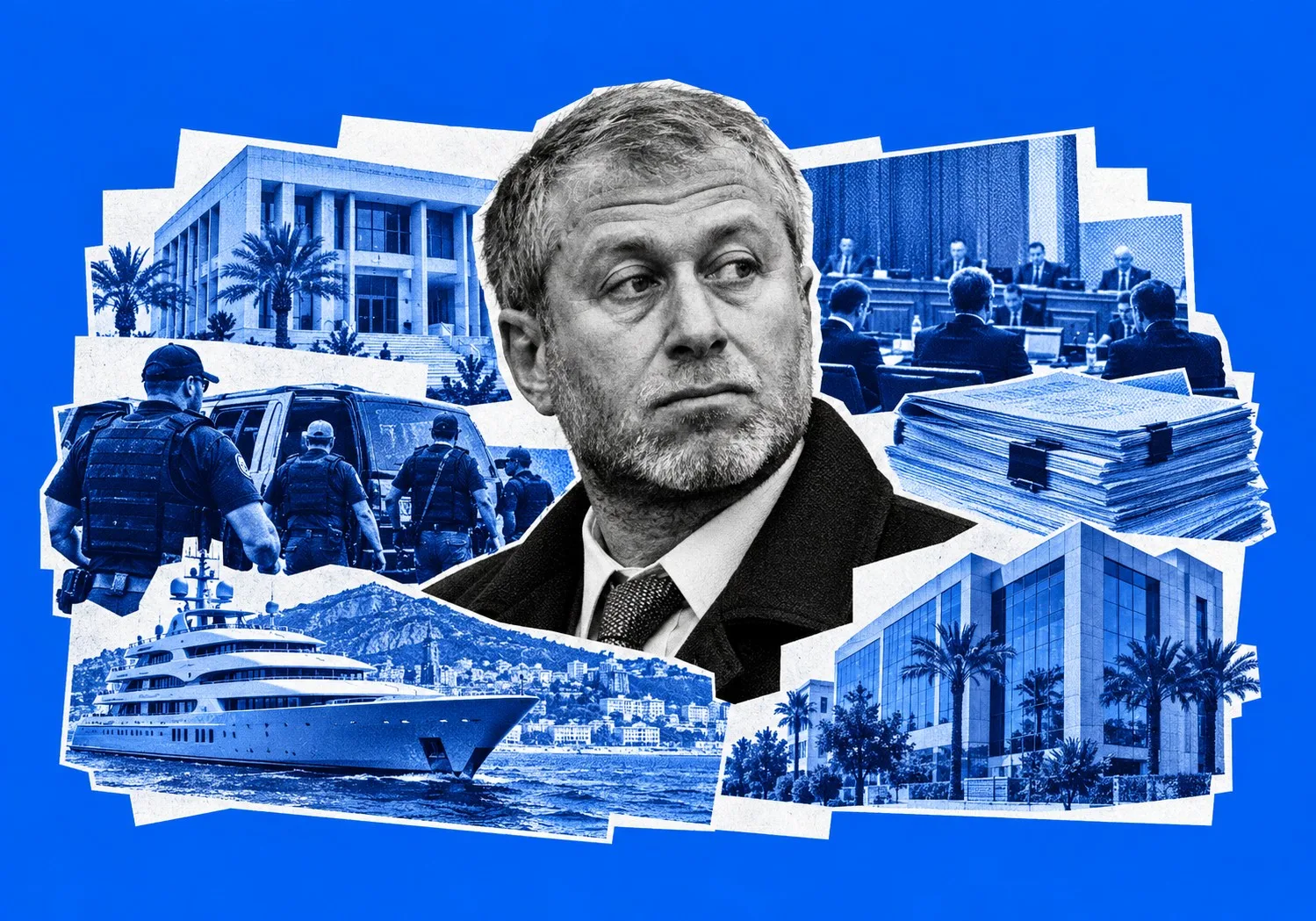
Police in Cyprus have launched a criminal investigation into Roman Abramovich and accounting giant Deloitte. The probe follows revelations that advisers backdated documents to conceal $672 million in luxury assets and evade taxes. The investigation in Nicosia focuses on an offshore network that masked wealth for the sanctioned Russian billionaire. Abramovich faces extensive sanctions from the EU, UK, US, and Switzerland due to his long-standing ties to Vladimir Putin. The new inquiry adds further pressure as he continues legal battles over frozen assets and the £2.5 billion proceeds from the sale of Chelsea FC.
Andreas Anastasiades, Assistant Director of the Crime Combating Department, confirmed the commencement of evidence-gathering. He announced the police action during a hearing of the Cypriot Parliamentary Committee on Institutions, Values, and the Commissioner for Administration in Nicosia.
The Financial Intelligence Unit and the Financial Crime Unit are jointly leading the inquiry.

Investigators are examining transactions executed between 2003 and 2006.
During this period, vast sums of Russian-linked capital flowed through corporate service providers in Limassol. Law enforcement officers are assessing whether advisers, administrators, and auditors committed indictable criminal offenses, including document falsification, fraud, and systematic tax evasion.
The decision to initiate police proceedings follows the public release of internal corporate records from the Cyprus Confidential investigation.
The leaked dataset contains over 500,000 files originating from Cypriot administrative firms and registries.
The material was analyzed by the International Consortium of Investigative Journalists alongside reporting partners, including the BBC, The Guardian, the Bureau of Investigative Journalism, Paper Trail Media, the Organised Crime and Corruption Reporting Project, and the Cyprus Investigative Reporting Network.
Vanishing Acts: How Big Four Accounting Erased Billions
The police inquiry concentrates on administrative and auditing services provided by MeritServus in coordination with Deloitte Cyprus. MeritServus operated as a direct subsidiary of Deloitte until 2005. It maintained close operational and administrative linkages with the auditing firm after its formal separation into an independent entity.
In 2006, the Parliament of Cyprus enacted statutory transparency regulations.
The law mandated that all businesses registered on the island file audited annual financial statements with the Registrar of Companies. The requirement applied retrospectively to previous unfinalized financial years. As a result, corporate administrators were forced to disclose beneficial ownership structures and asset valuations to public regulators.
Internal records demonstrate that professional advisers devised arrangements to remove multi-billion-dollar portfolios from public Cypriot registries before deadline filings were completed.
One specific corporate vehicle under review is Amiscan Investments, an entity registered in Cyprus and controlled by Abramovich.
Amiscan held legal title to a luxury asset portfolio valued at $672 million. The underlying assets included the superyacht Pelorus, valued at $147.5 million, private aircraft, helicopters, a residential property in London, the Château de la Croë estate in southern France, and the Fyning Hill estate in West Sussex.

To avoid disclosing property valuations and legal ownership on public registers, MeritServus and Deloitte Cyprus executed transfer agreements. They assigned beneficial ownership of the assets to a parent entity incorporated in the British Virgin Islands, where public filing obligations were non-existent.
The transfer paperwork was dated 2003 rather than 2006.
This created an administrative record indicating that the asset transfer had occurred three years earlier. When Deloitte Cyprus signed off on the revised 2003 accounts in 2006, Amiscan’s declared balance sheet dropped from $672 million to a nominal $75,000. This move effectively removed the underlying properties and vessels from public scrutiny.
A similar administrative structure was implemented for Electus Investments.
In 2006, internal communications acknowledged that Electus held $10 billion in core commercial assets on behalf of Abramovich. Advisers drafted contracts transferring beneficial ownership to an identical corporate entity in the British Virgin Islands bearing the same name.
The executed contracts were dated November 20, 2003.
This established an official record that the offshore entity had held the portfolio for the preceding three years. Consequently, when public accounting filings were submitted to Cypriot authorities, Electus declared a residual asset base of just $145,000.
Leaked communications also record adjustments made to corporate tax filings.
In 2003, Kravin Investments, another Cypriot entity managed within the network, held nearly $2 billion in liquid bank deposits. Under Cypriot tax legislation, interest income generated from corporate bank deposits was subject to national corporate income tax.
In August 2005, following direct technical consultations with Deloitte Cyprus, MeritServus communicated with Abramovich’s business representatives in Russia.
Advisers proposed a structural tax modification. They prepared backdated agreements asserting that Kravin held and invested the $2 billion bank deposits strictly as an intermediary agent for its parent firm in the British Virgin Islands.
Internal correspondence from September 2005 confirms that Deloitte adjusted bank balances, interest entries, and profit-and-loss declarations in its audit work to reflect the agency agreements. The adjustments enabled the submission of provisional tax returns declaring zero taxable corporate income for 2005.
In a separate legal proceeding regarding superyacht operating expenses, Cypriot judicial authorities previously indicted two former company directors. Both individuals face trial in Cyprus regarding €25 million in unpaid Value Added Tax.
Rigged Auctions and Kremlin Ties: The Making of an Empire
The corporate structures examined by Cypriot police represent the international extension of capital accumulated during the privatization of state-owned enterprises in the Russian Federation during the 1990s.
In 1995, Abramovich acquired control of state oil producer Sibneft for approximately $250 million through the shares-for-loans auction framework.
A 1997 official investigation by a committee of the Russian parliament concluded that the auction was structured to limit competition. The inquiry estimated a $2.7 billion loss in revenue to the state budget.
During a 2012 civil proceeding in the High Court of Justice in London, Abramovich testified under oath that the Sibneft auction had been arranged to guarantee his bid's success. He acknowledged in court testimony that he paid $10 million in cash to a senior government official to secure the transaction.
Yuri Skuratov, who served as Chief Prosecutor of the Russian Federation during the late 1990s, opened a formal criminal fraud inquiry into the privatization of Sibneft. However, the prosecution was halted when President Boris Yeltsin removed Skuratov from office in 1999 following political disputes concerning inquiries into government officials.
Abramovich significantly expanded his political and commercial standing through a long-standing personal and business relationship with Vladimir Putin.

This connection extends back to the transition of power in the Kremlin at the turn of the millennium. Unlike other first-generation tycoons who fell out of favor, Abramovich maintained direct access to Putin. He acted as a key corporate ally during the consolidation of state influence over strategic energy assets.
In 2002, he participated in the privatization of state energy firm Slavneft. In 2005, he sold his equity stake in Sibneft back to state-controlled gas monopoly Gazprom for $13 billion.
At Putin's direct request, Abramovich also assumed formal political duties. He served as Governor of the Chukotka Autonomous Okrug from 2000 to 2008, directing personal funds into regional infrastructure projects.
In 2003, Abramovich entered the British commercial sector by purchasing Chelsea Football Club.
Following the non-renewal of his British investor visa by UK authorities in 2018, he established alternative legal residencies. He obtained Israeli citizenship in 2018 and Portuguese citizenship under naturalization laws in 2021.
The Chelsea Standoff: Frozen Billions and Wartime Diplomacy
Following the Russian full-scale military invasion of Ukraine in February 2022, the United Kingdom, the European Union, Canada, Australia, and Switzerland added Abramovich to their financial sanctions lists.
Authorities cited his documented proximity to Putin and benefits derived from the Kremlin regime.
UK financial sanctions led to the forced sale of Chelsea Football Club in May 2022.
An investment consortium led by American businessman Todd Boehly acquired the club for an aggregate valuation of $5 billion. The transaction yielded £2.5 billion in net sale proceeds.
The £2.5 billion balance remains held in a frozen bank account in the United Kingdom under the name of Fordstam Ltd. This was the corporate entity through which Abramovich previously funded the football club's operations.
The final disposition of the frozen proceeds remains unresolved due to conflicting legal and policy positions.
The UK Government, represented by Foreign Secretary Yvette Cooper, maintains that the entire £2.5 billion net proceeds must be legally ringfenced and allocated exclusively for humanitarian reconstruction and assistance in Ukraine.
Conversely, legal representatives for Abramovich at Kobre & Kim contend that the cash assets remain the legal property of Fordstam Ltd. They argue that initial sale commitments specified distributing proceeds to victims of the conflict broadly, a definition that would allow allocating funds to entities inside the Russian Federation.
Concurrently, law enforcement authorities in the Channel Island of Jersey instituted asset freezing orders against £5.4 billion in assets linked to Abramovich. This step was taken as part of a separate long-term financial inquiry into corporate holding structures registered within their jurisdiction.
During the initial stages of the invasion in 2022, Abramovich publicly positioned himself as an informal mediator between Kyiv and Moscow.
He stated that he was acting as an intermediary to assist in peace negotiations and humanitarian efforts. He attended delegation meetings in Istanbul and assisted in negotiating high-profile prisoner-of-war exchanges involving hundreds of combatants and foreign nationals. He also held private discussions with Ukrainian President Volodymyr Zelensky in Kyiv.
The Reckoning: Legal Retorts and Police Next Steps
Representatives of the corporate entities and individuals cited in the police proceedings have issued formal statements addressing the allegations.
Legal counsel representing Abramovich stated that he has not committed tax evasion, document falsification, or illegal asset concealment. His legal team maintains that he did not participate in the day-to-day administrative operations of the Cypriot holding companies. Instead, he relied on professional tax advice and auditing sign-offs provided by independent accounting firms.
Deloitte Cyprus issued a statement asserting that its operations adhere to applicable legal frameworks. The accounting firm declined to address specific audit filings from the 2003–2006 period. Company representatives stated that historical records exceeding twenty years of age are no longer accessible within its active operational archives.
MeritServus formally terminated its business operations in 2023 following the international media publication of the Cyprus Confidential document leaks.
Cypriot police confirmed that the active Financial Crime Unit investigation will proceed over a period of several months due to the volume of administrative records involved.
Assistant Director Andreas Anastasiades stated that investigators will review all individuals, auditors, and corporate entities referenced in the materials to evaluate potential criminal liabilities under the national penal code of Cyprus.
*Read also: Leaked corporate financial records from the Cyprus Confidential investigation reveal that major accounting firm Deloitte Cyprus helped falsify documents to conceal $672 million in luxury assets and facilitate multi-million-dollar tax evasion for sanctioned Russian billionaire Roman Abramovich. According to a joint investigation by BBC Panorama and the Bureau of Investigative Journalism, Deloitte auditors worked with Limassol-based corporate services provider MeritServus to systematically backdate legal paperwork, erasing superyachts, private jets, and mansions from public accounts to bypass European transparency laws.***
Sources: The Guardian, BBC, Forbes