
How Deloitte and Cyprus Offshore Enablers Masked Abramovich’s Billions

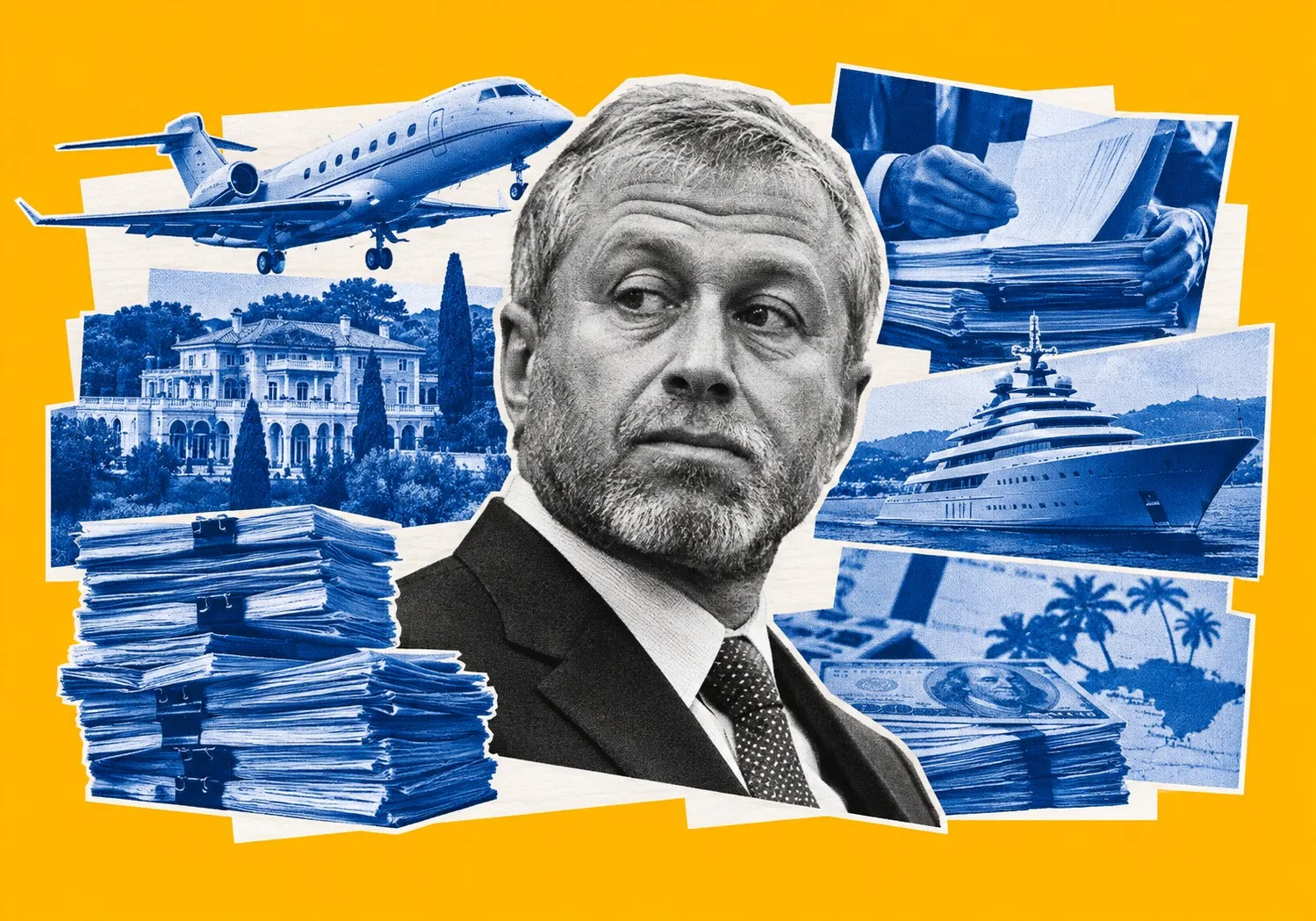
Leaked corporate financial records from the Cyprus Confidential investigation reveal that major accounting firm Deloitte Cyprus helped falsify documents to conceal $672 million in luxury assets and facilitate multi-million-dollar tax evasion for sanctioned Russian billionaire Roman Abramovich. According to a joint investigation by BBC Panorama and the Bureau of Investigative Journalism, Deloitte auditors worked with Limassol-based corporate services provider MeritServus to systematically backdate legal paperwork, erasing superyachts, private jets, and mansions from public accounts to bypass European transparency laws.
At stake was the corporate empire of Roman Abramovich. One of his registered Cypriot vehicles, Amiscan Investments, held $672 million in luxury assets. The portfolio was extensive. It included a mansion in West Sussex, an apartment in London, an estate in the south of France, helicopters, private jets, and a fleet of vessels featuring the $147.5 million superyacht Pelorus. Public reporting under the new statute meant exposing the true ownership and precise valuation of these holdings to regulators and the press.

To bypass disclosure requirements, corporate services firm MeritServus in Limassol collaborated with auditors at Deloitte Cyprus on an administrative workaround. Instead of declaring the property in the public record as required by law, advisers drafted documents transferring the assets to a parent company registered in the British Virgin Islands, where public filings were optional. Crucially, the paperwork was backdated by three years. The maneuver created the fiction that the transfer had taken place in 2003.
When Deloitte Cyprus signed off on the revised 2003 accounts in 2006, the properties, aircraft, and vessels vanished from Amiscan’s disclosures. The company’s declared balance sheet plummeted from over $672 million to a nominal $75,000. Accounting professionals altered financial histories, redrew balance sheets, and established parallel corporate entities across multiple secretive jurisdictions to keep the oligarch's wealth hidden.
Papering Over the Billions
The removal of luxury property from public view was merely one element of a broader financial strategy orchestrated through Cypriot corporate structures. Leaked files show that another Cypriot company controlled by Abramovich, Kravin Investments, held nearly $2 billion in liquid bank deposits during 2003. Those funds generated substantial interest income, triggering a heavy corporate tax liability under Cypriot law.
In August 2005, MeritServus dispatched an email to Abramovich’s business associates in Russia.
It proposed a tax avoidance strategy formulated after direct consultations with Deloitte. The correspondence stated that eliminating the accrued tax liability required altering financial statements and accounting records for both 2003 and 2004. Following written confirmation from a Russian associate, MeritServus generated backdated contracts asserting that Kravin held and invested the $2 billion solely as an agent for its British Virgin Islands parent company.
By September 2005, Deloitte confirmed in internal correspondence that specific adjustments to bank account balances, interest entries, and profit-and-loss figures were necessary to align official audits with the backdated contracts. Reclassifying Kravin as an intermediary rather than the beneficial owner allowed advisers to submit provisional tax returns for 2005 declaring zero taxable income. Millions of dollars in statutory taxes were successfully avoided.
Legal experts interviewed during the investigation condemned the operation. Financial services barrister Andrew Mitchell KC stated plainly that the creation of false records to evade statutory taxes constituted straightforward tax evasion.
"It couldn't be more blatant," Mitchell noted, adding that professionals involved were "prepared to bend and break the rules of their profession and therefore the law."
Lord Sikka, professor of accounting at the University of Sheffield, similarly characterized the manipulation of transaction dates as a clear "violation of a statutory duty" and described the practice as "pretty scandalous."
A third instance of record alteration involved Electus Investments, a Cypriot firm holding over $10 billion of Abramovich's core business assets.
In 2006, MeritServus acknowledged in internal emails that the multi-billion-dollar portfolio belonged to the Cypriot corporate entity. Advisers then proposed transferring beneficial ownership to a parallel entity bearing the exact same name incorporated in the British Virgin Islands.
MeritServus executed and backdated contracts asserting that the BVI entity had held the $10 billion since 20 November 2003. Consequently, when public accounts for the Cypriot firm were filed, its declared asset base stood at just $145,000.
Lawyers representing Roman Abramovich denied that he evaded tax or concealed assets.
They maintained that he was not involved in the day-to-day operations of these companies and properly relied on the advice of professional accountants and legal experts. Deloitte Cyprus stated it acts in accordance with applicable legal frameworks, declining to comment on specific claims because the underlying records were over twenty years old and no longer accessible.

From Siberian Oil to Wartime Envoys
Context clarifies the scale of these offshore operations. Abramovich amassed the core of his wealth during the privatization of post-Soviet state assets in the 1990s.
In 1995, Abramovich acquired the state-owned oil enterprise Sibneft for approximately $250 million through a state-run shares-for-loans auction.
A 1997 investigation by the Russian parliament concluded that the auction process was manipulated and that the state was underpaid by $2.7 billion.
During a 2012 High Court civil trial in London brought by his former business partner Boris Berezovsky, Abramovich testified under oath that the Sibneft auction was rigged in his favor. He admitted paying $10 million to a Kremlin official to secure the transaction.
Yuri Skuratov, Russia’s former Chief Prosecutor who investigated the privatization, independently confirmed that his office uncovered a fraudulent scheme.
"Basically, it was a fraudulent scheme, where those who took part in the privatisation formed one criminal group that allowed Abramovich and Berezovsky to trick the government and not pay the money that this company was really worth," Skuratov stated.
Smuggled Russian law enforcement documents obtained by investigators show that the Department of Economic Crimes prepared a criminal fraud case against Abramovich regarding Sibneft.
The prosecution stalled after President Boris Yeltsin intervened, transferred case files directly to the Kremlin, and dismissed Skuratov from office in 1999 following the release of a compromised video intended to discredit him. Skuratov asserted that his dismissal was entirely political because his inquiries approached the family of Boris Yeltsin.
Commercial access continued under President Vladimir Putin, who assumed office in 2000.
In 2002, Abramovich participated in the privatization of another state energy asset, Slavneft.
A competing bid submitted by the China National Petroleum Corporation, offering a substantially higher purchase price, was abruptly withdrawn after a member of the Chinese delegation was kidnapped upon arriving at a Moscow airport.
Former Russian Deputy Energy Minister Vladimir Milov stated that senior government figures had predetermined that Slavneft would be sold to Abramovich's partnership. In 2005, Abramovich sold Sibneft back to the state-owned gas monopoly Gazprom for $13 billion.
Relocating to the United Kingdom, Abramovich purchased Chelsea Football Club in London in 2003, maintaining an active presence in Western commercial circles for nearly two decades.
Following Russia’s full-scale invasion of Ukraine in March 2022, the UK government placed Abramovich under financial sanctions due to his documented connections to Vladimir Putin.
, pictured with Russian President Vladimir Putin in 2016, was sanctioned for what the EU said was \\"privileged access\\" to the Kremlin. Photo: TASS") The sanctions resulted in the freezing of his UK assets, his disqualification as a club director, and the forced sale of Chelsea FC.
The sanctions resulted in the freezing of his UK assets, his disqualification as a club director, and the forced sale of Chelsea FC.
Proceeds from the club's sale, totaling £2.5 billion, remain locked in UK bank accounts pending legal determinations regarding their distribution to victims of the war in Ukraine. In the Channel Island of Jersey, local authorities froze £5.4 billion of Abramovich's assets while conducting a four-year criminal investigation into his financial operations. Abramovich's legal representatives have stated that the Jersey proceedings are politically motivated.
Following the onset of the 2022 invasion, Abramovich assumed an informal role as a backchannel envoy between Kyiv and Moscow. He participated in early formal peace negotiations in Istanbul hosted by Turkish President Recep Tayyip Erdoğan, as well as behind-the-scenes discussions surrounding the UN-brokered Black Sea Grain Initiative and high-level prisoner-of-war exchanges.
Ukrainian President Volodymyr Zelensky confirmed that he met privately with Abramovich in Kyiv.
Zelensky used the contact to convey directly that Ukraine would not accept territorial cessions in the Donbas, declaring to the envoy that his side would never leave or surrender national territory. Russian President Vladimir Putin also publicly referenced the contact at the St. Petersburg International Economic Forum. Putin confirmed that he authorized the businessman to travel to Kyiv to receive messages, while maintaining that official agreements could only be negotiated by formal defense and diplomatic ministries.
Regulatory Blind Spots
The technical execution of these backdating schemes relied on specific structural features of the offshore corporate services industry in Cyprus.
MeritServus operated as a subsidiary of Deloitte until 2005. After the formal separation of the two entities, MeritServus and Deloitte Cyprus continued to coordinate administrative filings, corporate audits, and tax documentation for mutual high-net-worth clients.
When the Cypriot parliament passed transparency legislation in 2006, it mandated that all registered companies file audited annual accounts with the Registrar of Companies. The requirement applied retrospectively to previous financial years that had not yet been finalized. By preparing draft accounts, modifying internal agreement dates, and executing retrospective asset transfers, corporate administrators brought past filings into technical compliance with new public reporting standards without disclosing underlying asset movements.
In the case of Kravin Investments, the application of backdated agency agreements directly altered provisional tax assessments.
Under Cypriot tax law, local corporations are taxed on interest income accrued on bank deposits. Generating contracts stating that Kravin held $2 billion in trust for a BVI entity reattributed interest income to a jurisdiction carrying zero corporate income tax and no requirement to publish annual financial statements.
In 2023, following the initial publication of documents from the Cyprus Confidential leaks by the International Consortium of Investigative Journalists, MeritServus ceased operations. The leaked files encompassed thousands of emails, bank records, and internal audit drafts spanning from 1995 to 2022, detailing the management of offshore networks administered from Limassol.
Member of the Cypriot Parliament Christos Christofides stated that official reviews are required to determine whether state tax revenues were unlawfully withheld and whether criminal liability applies under national law.
"If tax has been evaded, then we have to see how we can get our money back and how, if some people are guilty, they have to pay the price according to our law," Christofides noted.
Sources: BBC, The Moscow Times