
Andy Burnham Puts EU Re-Entry and Single Market Back on the Table for UK

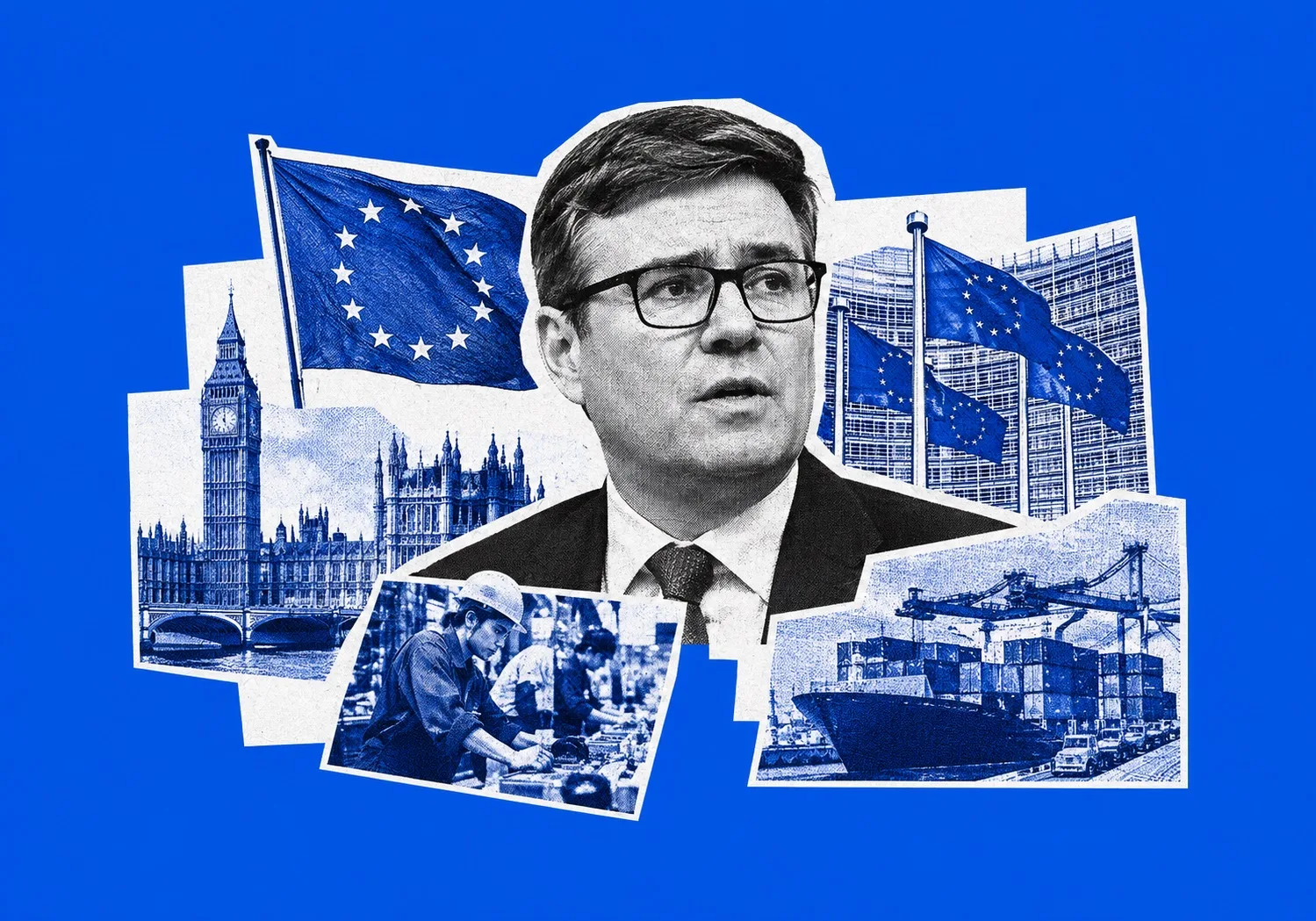
UK Prime Minister Andy Burnham has launched a comprehensive review of Britain’s relationship with the EU ahead of the November summit, putting Single Market access, a Customs Union, and full EU re-entry back on the table after declaring Brexit has “done more harm than good.”
The timing matters. With a UK-EU summit tentatively expected in Brussels in late November, London now has roughly two months to decide whether its post-Brexit strategy is still economically viable - or whether a decade of political separation has produced a model that increasingly constrains British industry.
Speaking on BBC Radio 4 on September 30, Burnham’s argument was unusually direct: the post-Brexit settlement had failed to deliver the promised restoration of control over either immigration or trade. That represents a significant departure from the politics of the past several years.
That is a significant departure from the politics of the past several years.
From the Brexit reset to a structural rethink
When Keir Starmer became prime minister, his government sought to make the Brexit settlement more workable without reopening its fundamental architecture. The approach was built around clear red lines: no return to the Single Market, no Customs Union and no restoration of freedom of movement.
Burnham has now removed those boundaries from the discussion.
The shift is particularly striking because it comes after years in which successive governments attempted to manage the consequences of Brexit through incremental changes. Administrative adjustments could reduce individual points of friction, but they could not remove the basic distinction between Britain and the EU internal market.
That distinction has become increasingly consequential for companies whose supply chains operate across the Channel.
British businesses face additional customs requirements, rules of origin, food certification procedures and border delays. The end of EU freedom of movement has also narrowed the available labour pool in sectors including hospitality, agriculture, food processing and logistics.
The political argument is therefore moving away from whether Brexit can be made to work more smoothly and towards a different question: how much structural integration with Europe is economically necessary?
That is a much harder question for Westminster.
The menu is broader than simply rejoining the EU
The options now under discussion do not amount to a binary choice between Brexit and full membership.
An EEA-style arrangement, modelled on Norway, would give Britain broad access to the Single Market while requiring acceptance of its four freedoms, including the movement of labour. The UK would gain market access but would not have direct voting rights over EU legislation.
A Swiss-style model would rely on bilateral arrangements and regulatory alignment, potentially allowing frictionless access in selected sectors without membership of the Customs Union. Such an arrangement would still require Britain to accept significant European rules and make financial contributions in relevant areas.
Associate Membership would offer a more customised relationship, with partial Single Market and Customs Union access and freedom of movement potentially negotiated rather than automatically applied. The model has been considered in relation to Ukraine and could provide a framework for a country seeking close integration without full EU membership.
Full re-entry would go furthest. It would restore complete participation in the Single Market and Customs Union and bring back freedom of movement, while requiring the UK to follow the normal accession process, contribute to the EU budget and secure agreement across the Union. The briefing estimates a potential GDP gain of 3 to 5 per cent relative to the current Trade and Cooperation Agreement model.
The EEA option is associated with a potential 2 to 3 per cent GDP improvement relative to the TCA, while the impact of Swiss-style and Associate Membership arrangements is less certain.
The figures matter less politically than the trade-offs behind them. Every model that offers substantially greater economic integration also requires Britain to surrender some of the regulatory autonomy that Brexit was designed to increase.
That is the unresolved bargain at the centre of Burnham’s review.
Europe’s industrial rules are changing the calculation
The pressure is not coming solely from Britain’s domestic economic performance.
The EU is developing industrial and supply-chain policies intended to strengthen European production and protect strategic sectors from external competition. The briefing identifies forthcoming “Made in Europe” measures as a particular concern for British companies if they remain outside the relevant regulatory frameworks.
For British manufacturers, the risk is not necessarily a sudden trade barrier. It is gradual exclusion from the systems through which European industry organises procurement, supply chains and investment.
That changes the economics of regulatory divergence.
The argument for maintaining separate British rules becomes harder to sustain if European markets increasingly reward companies operating within common standards. A country can preserve formal regulatory independence while discovering that its businesses are less able to participate in the industrial ecosystem surrounding its largest nearby market.
This is why the debate has moved beyond traditional arguments about customs paperwork.
Energy networks, emissions trading, research programmes, digital initiatives and defence-industrial cooperation all sit within the wider question of how closely Britain wants to remain connected to European systems.
For business, the label attached to the relationship may be less important than whether those connections actually function.
Brussels sees an opportunity - but not a blank cheque
The response from European capitals has so far been notably warmer than the rhetoric that accompanied Britain’s departure from the EU.
European Commission representatives, French President Emmanuel Macron and Spanish Prime Minister Pedro Sánchez have welcomed London’s change in tone. Areas identified for closer cooperation include simplified sanitary checks on food, emissions trading links, youth mobility and defence cooperation.
The distinction between political warmth and negotiating concessions will nevertheless be important.
The EU has spent years building a post-Brexit relationship around the existing settlement. If Britain now seeks deeper access, Brussels will have its own interests to protect. Greater British participation in European economic structures would give the EU additional leverage to insist on regulatory alignment and financial participation.
That is particularly relevant to any Associate Membership concept.
Such an arrangement could appeal to Britain because it promises proximity without the full political consequences of membership. But the more economic value it provides, the more difficult it becomes to avoid the rules that make that access possible.
Brexit’s central dilemma therefore reappears in a different form: sovereignty and market access remain connected.
Westminster’s old alliances are shifting
The domestic political reaction shows how quickly the issue is being rearranged.
The Conservatives have accused Burnham of using Brexit as a distraction from current economic problems. Reform UK has framed the review as an attempt to reverse the 2016 referendum through the “back door”, making defence of the referendum’s outcome central to its response.
Liberal Democrats have taken the opposite position, arguing that Britain should move more quickly towards Single Market membership rather than spend time reviewing the options.
Labour is more complicated. The broad reaction within the party is supportive, but there is a divide between those seeking immediate economic measures and pro-European MPs who favour full re-entry after the next general election.
The significance is not simply that parties have returned to familiar positions.
The economic circumstances have changed the terms of the argument. Businesses are now weighing the cost of regulatory friction against the political value of autonomy, while ministers have to consider whether incremental fixes can keep pace with changes taking place inside the EU.
The British Chambers of Commerce has called for a long-term arrangement that reduces red tape, stabilises supply chains and allows British companies to participate more effectively in European industrial frameworks. That is a commercial argument rather than an ideological one.
The November summit becomes a test of strategy
The late-November UK-EU summit, if confirmed, will therefore be more significant than another exercise in repairing bilateral relations.
Burnham has opened a process that will require the government to distinguish between several very different ambitions. Improved technical cooperation could be negotiated without rewriting the Brexit settlement. Deeper Single Market participation would require much more extensive regulatory alignment. Customs Union membership would address another layer of trade friction. Associate Membership would raise difficult questions about how much access Britain wants without the political rights of a member state.
Full re-entry would be a different category altogether.
The immediate deliverables are therefore likely to matter less than the framework London brings to Brussels. If the government enters the summit still treating structural integration as politically untouchable, Burnham’s announcement will amount largely to a change in rhetoric. If it arrives prepared to negotiate around Single Market access, customs arrangements, labour mobility and regulatory alignment, the post-Brexit settlement enters genuinely new territory.
Financial markets have so far reacted constructively. Sterling has risen to about $1.33, EUR/GBP has fallen below 0.856 and the FTSE 100 has gained more than 0.5 per cent, alongside upward GDP revisions and expectations of fiscal stabilisation.
Markets cannot settle Britain’s political argument over Europe.
They can, however, provide an early indication that closer economic integration is no longer being treated automatically as a threat to British economic independence. For a government that has just placed the entire architecture of its relationship with the EU back under review, that may be the most consequential signal of all.
Sources: Reuters, BBC, The Guardian, Bloomberg