
Amsterdam Gaza Protest: 200,000 Demand Israel Sanctions as Dutch PM Rob Jetten Faces Backlash

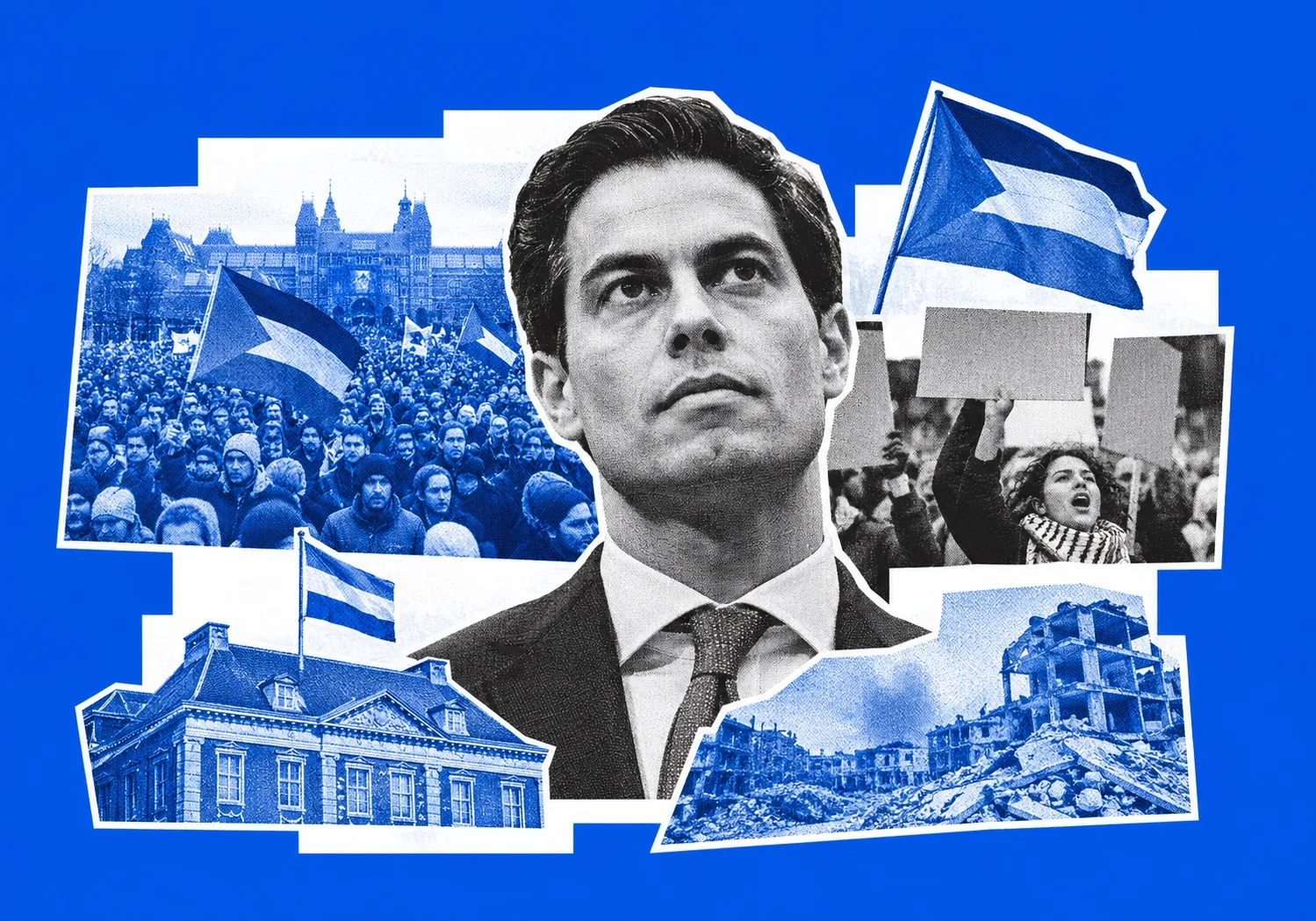
A massive demonstration of 200,000 people in Amsterdam has targeted the Dutch government, demanding an arms embargo on Israel and a ban on settlement goods. Prime Minister Rob Jetten now faces severe political pressure over his shifting stance - having previously joined the same protest movement before taking office.
Organised by the Dutch Red Line movement (known locally as Rode Lijn), Sunday's rally was their fourth major demonstration. The crowd estimate came from organisers and has not been independently confirmed by police. But the scale of the gathering was consistent with earlier marches, including one in October 2025 that reportedly attracted 250,000 people.
Jetten's decision to stay away has become part of a larger disagreement over the Dutch government's response to the war in Gaza. In May 2025, as leader of D66, he attended a Red Line demonstration and publicly used the word genocide. Now, as prime minister, he argues that his cabinet is already putting maximum diplomatic pressure on Israel.

The protesters want to see that pressure translated into restrictions on trade and military cooperation. Jetten must decide how far the Netherlands can act independently and how much political capital to spend seeking agreement from other EU governments.
What the protesters want from The Hague
Sunday's march followed a route around Vondelpark, beginning and ending at Museumplein. Demonstrators dressed in red carried Palestinian flags and placards calling for an end to Dutch support for Israel's policies.
The demonstration brought together 13 civil society organisations, among them Amnesty International, Oxfam Novib, Save the Children, PAX and The Rights Forum. Former ministers Job Cohen, Jozias van Aartsen and Lilianne Ploumen addressed the gathering, alongside Palestinian activist Omar Barghouti and Gaza-based journalist Amal Helles.
As reported by Dutch broadcaster NOS, police described the event as largely peaceful. There were some confrontations on the Overtoom, where officers used batons after attempting to arrest a demonstrator who had climbed onto a bus shelter and refused instructions to come down.
A separate group displayed banners supporting Hamas. Other protesters were heard chanting against Hamas, while organisers stressed that the demonstration was concerned with human rights. There is no reliable estimate of how many participants supported the extremist messages, and their presence cannot be taken as representative of the wider march.
The demands presented by the organising coalition were considerably more specific than a general call for a ceasefire.
Campaigners want the Dutch government to stop arms transfers to Israel, impose economic sanctions, prohibit trade in products originating from illegal settlements and officially recognise the actions in Gaza as genocide.
Each proposal raises a different question about what the Netherlands can do under its own authority.
Restrictions on military exports can involve national licensing decisions. A comprehensive economic sanctions regime, however, is more complicated because EU member states operate under a common trade framework. The Netherlands cannot independently rewrite the bloc's commercial policy.
A ban on settlement products is narrower in scope than a general trade embargo. It would target goods linked to settlements in occupied territory rather than commercial relations with Israel as a whole.
The demand for genocide recognition is different again. It concerns the Dutch government's official legal and political position, and should not be confused with a final judicial finding of responsibility.
For the organisations behind Red Line, these distinctions do not diminish the need for action. They are asking ministers to use the powers already available to them and pursue broader measures through European institutions.
Jetten's earlier words have become a political problem
Jetten's position is unusually exposed because his participation in the movement predates his premiership.
His appearance at the May 2025 demonstration associated him publicly with the campaign at a time when he was leading D66 rather than the government. His use of the term genocide also established a position against which his subsequent statements can be measured.
He has not attended the latest march, defending the decision on the grounds of his responsibilities as prime minister.

The cabinet, he says, is coordinating with European partners, maintaining diplomatic pressure on Israel and taking steps to restrict settlement goods. Jetten has also argued that Hamas must be pressed to meet security commitments.
Those arguments have not satisfied organisers who want a comprehensive arms embargo and stronger economic penalties.
There is a genuine difference between supporting a protest demand and being responsible for implementing it. A party leader can call for sanctions without securing agreement from other governments. A prime minister must negotiate those agreements and manage the consequences if negotiations fail.
But EU competence over trade does not account for every decision available to the Dutch cabinet. Ministers still have choices over national restrictions, diplomatic initiatives and the positions they advocate in Brussels.
That is where the disagreement becomes politically difficult for Jetten. Campaigners are unlikely to regard European disagreement as sufficient justification for inaction unless the government can show what it has attempted and why particular proposals have stalled.
The size of the demonstrations gives that disagreement considerable visibility. The movement has repeatedly brought large crowds onto Dutch streets, supported by established humanitarian organisations and former members of government.
There is no evidence in the briefing that these demonstrations have already changed the government's policy. Their recurrence does, however, mean that the issue has not faded despite previous official responses.
Israel's response has complicated Dutch diplomacy
The diplomatic costs of confrontation are no longer hypothetical.
Israel has withdrawn diplomatic privileges and immunities from Dutch representatives stationed in Ramallah, following tensions over Dutch policy and international pressure concerning Gaza.
Ramallah is an important location for international engagement with the Palestinian authorities. Changes to the status of diplomats working there can interfere with the conditions under which they carry out their duties.
The Israeli measure also gives the Dutch government a practical example of the consequences that may follow a deterioration in bilateral relations.
That does not establish that further sanctions would produce additional retaliation. Nor does it prove that diplomatic caution is the only available response.
It does mean that ministers must consider the position of Dutch representatives abroad when deciding how to escalate pressure.
The problem is particularly acute for a government seeking to work through European institutions. EU-wide sanctions require political agreement among member states, while the diplomatic repercussions of national statements or initiatives can arise before such agreement is reached.
The Netherlands may therefore face bilateral consequences for positions that have not yet become common European policy.
For protesters, the calculation is different. They want the government to accept greater diplomatic costs if that is necessary to change its approach towards Israel.
Neither side can determine the outcome alone. Dutch ministers cannot guarantee European support for their proposals, while organisers cannot establish through demonstrations which sanctions other governments will accept.
The argument has spread beyond government policy
The Netherlands' dispute over Israel is also affecting cultural institutions.
The country has withdrawn from the 2027 Eurovision Song Contest, following its absence in 2026. Ireland has taken a similar position, with the decisions linked to controversy surrounding Israeli participation.
The Dutch withdrawal involves a different set of institutions and decisions from those governing trade or diplomatic relations. Public broadcasters do not have the authority to impose economic sanctions, and participation in Eurovision has no direct bearing on arms exports.

Yet the boycotts show that the disagreement is no longer confined to government departments responsible for foreign affairs.
Broadcasters and cultural organisations are now making decisions in an environment where Israeli participation has become politically contentious. Their choices can provoke public arguments about representation and institutional responsibility even when they have no direct effect on the conflict.
The same tension is visible in the Red Line coalition. Its organisers are using established civic organisations, public demonstrations and prominent political figures to pursue objectives that remain dependent on government decisions.
Their capacity to mobilise large crowds is clear. Their ability to secure the full package of restrictions they seek is less certain.
For Jetten, the immediate challenge is to explain which parts of that package his government is prepared to pursue. A national ban on settlement goods, restrictions on arms transfers and EU-wide economic sanctions involve different legal powers and political negotiations.
The cabinet has defended its existing approach, but the protesters are asking for decisions that would go further. With Israeli retaliation already affecting Dutch diplomats in Ramallah, the government must determine which additional measures it is willing to support and whether it can persuade European partners to follow.
Sources: NOS, ABC, RTL, Jiji Press