
Why a Democratic Midterm Win Won’t Restrain Trump Abroad - and Could Make Him Worse for Europe

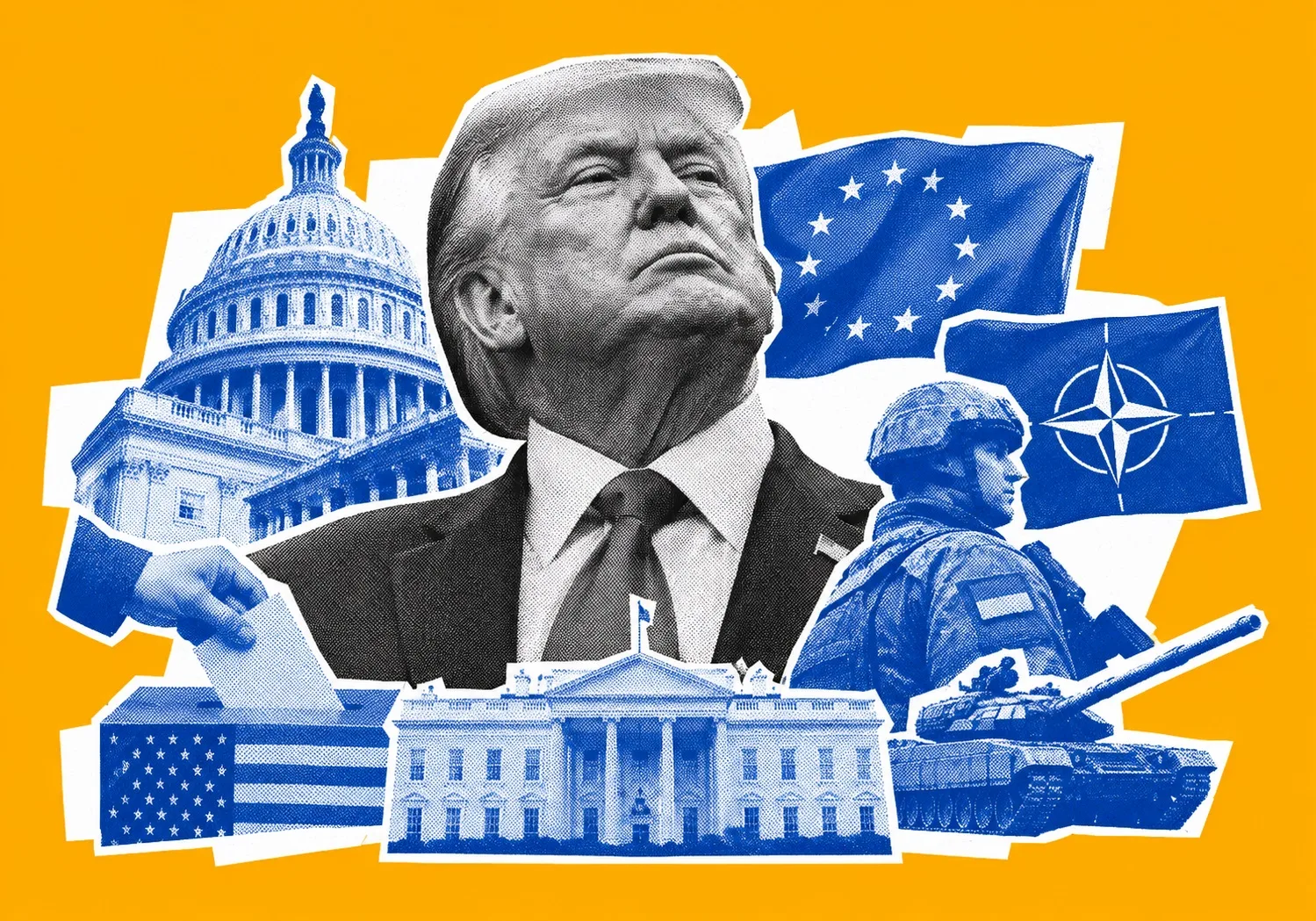
As millions of Americans vote in the 2026 midterms, European capitals are hoping a Democratic breakthrough in Congress will curb Donald Trump’s isolationist push. But a weakened White House at home may only force the president to exert his unrestrained authority abroad, leaving NATO allies and Ukraine in a far more unpredictable position
Those figures offer encouragement to Trump's opponents. They offer considerably less reassurance to governments that must negotiate with his administration.
Congress Can Obstruct Trump, but It Cannot Replace His Foreign Policy
The distinction matters because American elections produce different kinds of political power.
A Democratic majority in the House could investigate the administration, challenge its spending priorities and obstruct legislation. Control of the Senate would create additional opportunities to scrutinise appointments and influence the federal budget.
Neither outcome would transfer responsibility for American diplomacy to Congress.

The presidency retains extensive authority over international negotiations, diplomatic relationships and the implementation of trade policy. Congress can impose financial constraints and exercise oversight, but translating those powers into changes in foreign policy is neither automatic nor straightforward.
For European governments, this creates an uncomfortable possibility. A president frustrated by legislative opposition could become more inclined to pursue initiatives that require less congressional cooperation.
Trade disputes, defence commitments and relations with NATO allies would remain areas in which the White House could exert considerable influence.
Wolfgang Ischinger, the outgoing chair of the Munich Security Conference, has warned Europeans against celebrating a potential Democratic victory prematurely. His caution goes to the heart of the institutional problem: electoral defeat for the president's party does not necessarily translate into a softer American approach towards its allies.
Indeed, the incentives could run in the opposite direction.
An administration unable to advance much of its domestic programme may find greater political room for manoeuvre internationally. Foreign policy offers opportunities to exercise presidential authority even when legislative negotiations have stalled.
That does not guarantee a more confrontational Trump administration. But it makes the assumption that Democratic congressional gains would restore transatlantic stability particularly difficult to defend.
American Voters Are Thinking About Prices, Not NATO
The election itself is being fought largely on domestic concerns.
According to the polling data in the briefing, 84% of registered voters regard the economy and cost of living as critical issues. Fuel, groceries, housing and healthcare feature prominently in the concerns shaping voter decisions.
Immigration, corruption, confidence in government and the war with Iran also feature in the campaign.
For voters struggling with household expenses, the future of European defence arrangements is unlikely to be the decisive consideration when choosing a congressional representative.
This creates a gap between what the election means to Americans and what European governments hope it might achieve.
A Democratic victory could be interpreted domestically as dissatisfaction with economic management, inflation or the administration's broader political direction. European observers might instead read the same result as a rejection of Trump's approach to international alliances.
Those interpretations are not necessarily compatible.
Bronwen Maddox, director and chief executive of Chatham House, has emphasised the longer-term inward turn of the American electorate. That shift cannot simply be reversed by changing the congressional majority.
The domestic political pressures encouraging American leaders to prioritise national economic interests, question overseas obligations and demand more from allies would remain.
Nor is the ideological influence of American populism confined to Washington. Nathalie Tocci, a former adviser to EU foreign policy chiefs, has examined its resonance within European politics.
Even an electoral setback for Republicans would not necessarily diminish the appeal of nationalist arguments among European parties already sceptical of established transatlantic arrangements.
The Senate Could Decide How Much Resistance Trump Faces
The immediate question is how far Democrats can advance.
Republicans entered the election holding 53 Senate seats against 47 for Democrats. Competitive races extend across Alaska, Texas, Ohio, Iowa, Kansas, Maine, Michigan and North Carolina.
Democrats also need a net gain of at least three seats to regain control of the House.
The difference between a narrow House majority and control of both chambers would be significant for domestic governance. A divided Congress could complicate budget negotiations, while Democratic control of the Senate would increase scrutiny of administration appointments.
But the precise distribution of seats would also determine how effectively lawmakers could challenge the financial foundations of American foreign policy.

Congress controls appropriations. The administration, however, retains considerable influence over how authorised programmes are implemented.
Kurt Volker, a former US ambassador to NATO, has highlighted the use of executive mechanisms such as pocket rescissions, which can allow an administration to withhold funds under particular budgetary circumstances.
Such mechanisms matter because congressional approval does not always guarantee that money will be delivered on the timetable or under the conditions anticipated by lawmakers.
A hostile Congress could therefore produce two competing forces: stronger legislative attempts to protect spending commitments and greater executive efforts to control their implementation.
For foreign governments relying on American financial or military support, that conflict could prove more consequential than the election-night headlines.
Ukraine Faces a Problem of Predictability
Kyiv has particular reasons to follow the results closely.
American security assistance is not simply a question of political declarations. It depends on funding decisions, procurement arrangements and the administration's willingness to execute commitments.
The PURL procurement programme for Ukraine is one example of the mechanisms through which military requirements and international financing intersect.
A more assertive Democratic Congress might seek to preserve assistance or challenge attempts to restrict it. Yet legislative support would not eliminate uncertainty over implementation.
Budget disputes could delay decisions. Executive intervention could complicate the release of appropriated resources. Changes in Washington's negotiating posture could affect the assumptions underlying longer-term defence planning.
For Ukraine, the central difficulty is therefore not necessarily whether Congress supports continued assistance. It is whether political support can be converted into reliable deliveries and predictable procurement arrangements.
That distinction becomes especially important when military planning extends beyond a single budget cycle.
European governments face a related problem. If Washington becomes less predictable, they may have to assume greater responsibility for sustaining assistance even without a formal American decision to withdraw.
A Democratic majority could make unilateral restrictions more politically contentious. It would not necessarily make them impossible.
NATO's Difficult Negotiating Position
The same uncertainty extends to European security.
American military deployments, NATO commitments and the distribution of defence costs remain subjects on which the president can exert substantial pressure.
European governments could find themselves negotiating with an administration whose domestic political authority has weakened but whose capacity to challenge allied arrangements remains considerable.

In fact, congressional resistance might sharpen the distinction between Trump's domestic and international agendas.
A White House facing investigations and legislative obstruction could seek political victories through trade negotiations, demands for greater defence spending or changes in its approach to security commitments.
The prospect raises a difficult question for NATO members: how should they respond when congressional support for the alliance coexists with an executive branch prepared to use American security commitments as negotiating leverage?
The answer cannot depend entirely on which party controls the House.
European diplomats would still need to deal with the administration responsible for implementing American policy. Congressional allies could offer political support and potentially financial safeguards, but they could not conduct negotiations on the president's behalf.
The risk is not necessarily an immediate breakdown in transatlantic cooperation. A prolonged period of disputes over responsibilities, funding and political authority could be damaging enough.
The American Political Shift Goes Beyond One Election
The first polling stations are scheduled to close at 6 p.m. Eastern Time, or 1 a.m. in Kyiv on November 4. Close contests, postal ballots and possible recounts mean the final composition of the Senate may remain uncertain for days or even weeks.
For Democrats, the immediate objective is clear: turn dissatisfaction with the administration into congressional power.
For Europe, the implications are less straightforward.
American foreign policy has become increasingly exposed to domestic polarisation, while the presidency retains substantial freedom to act internationally even when Congress is divided.
That combination makes Washington difficult to read through conventional electoral calculations.
A Democratic victory might strengthen institutional resistance to Trump without weakening the political forces behind his approach to trade, alliances and American commitments abroad.
It could also leave European governments dealing with two competing centres of American political authority: a Congress seeking to constrain the administration and a White House determined to preserve control over foreign policy.
For NATO and Ukraine, the most difficult decisions may arise not from an absence of American support, but from uncertainty over which commitments Washington can consistently deliver when its elected institutions are pulling in different directions.
Sources: Politico, AP, Aljazeera, AFP