
US Terror Warning for Europe: Are Christmas Markets Safe in 2026 — and Why Is Moldova Included?

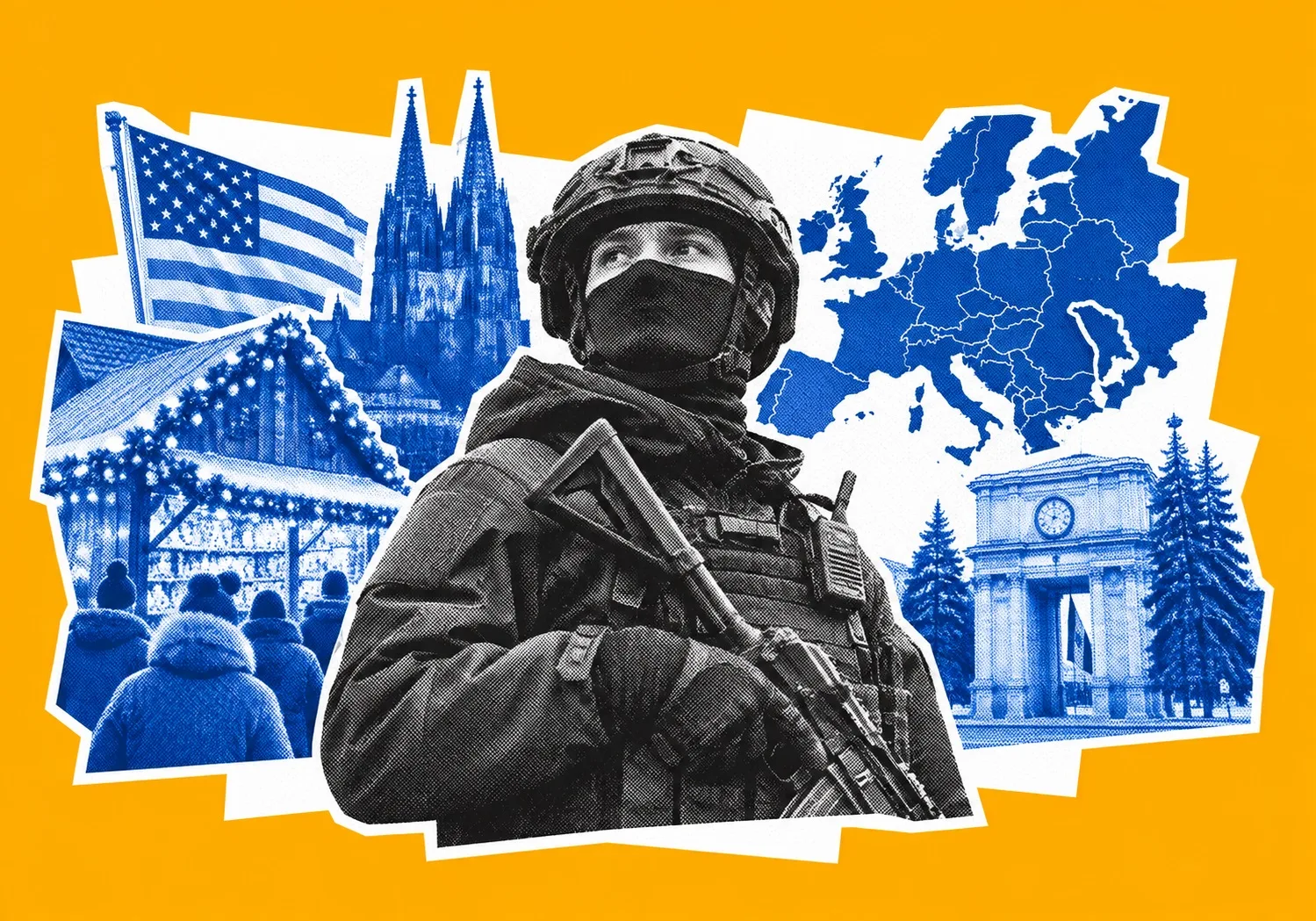
US embassies across Europe have issued coordinated security alerts warning of potential terrorist threats at Christmas markets, transport hubs and crowded venues this winter. While the notices cover multiple countries — including Moldova — Washington has shared no evidence of a specific or imminent plot.
Issued on November 16 through the State Department's diplomatic network rather than the FBI, the warnings arrive ahead of a period when millions of people gather at public celebrations across the continent. In Moldova, they also land against a backdrop of heightened security concerns linked to the war in neighbouring Ukraine and the continued presence of Russian forces in Transnistria.
What the US Security Alert Says: Christmas Markets, Airports and Crowds
The American notices identify Christmas markets, shopping malls, transport hubs, tourist attractions and places of worship as locations where large crowds could be vulnerable to an attack.
US citizens have been encouraged to monitor local news, remain aware of their surroundings and follow instructions from police and other authorities. The State Department also recommends enrolling in its Smart Traveler Enrollment Program, which allows Americans abroad to receive security information from diplomatic missions.
The warnings extend beyond terrorism. They also refer to demonstrations, transport disruptions and false bomb threats affecting European aviation.
The distinction is important. A bomb threat can shut down an airport or force an aircraft to divert even when investigators find no explosives. Such incidents create serious disruption, but they do not necessarily indicate that a terrorist organisation is preparing an attack.
The November notices provide no public evidence connecting these aviation incidents to a wider terrorist operation.
Nor do they amount to a recommendation that Americans avoid travelling to Europe altogether. The advice is to exercise caution, particularly in places where crowds make it difficult to identify suspicious activity or leave quickly during an emergency.
Christmas Markets Have Been Targeted Before
The concern about Christmas markets is rooted in previous attacks, particularly in Germany.
On December 19, 2016, Anis Amri drove a truck into a Christmas market at Berlin's Breitscheidplatz. Twelve people died in the immediate attack, and another victim later died from injuries sustained that night. Amri had pledged allegiance to Islamic State.
The attack led to changes in the way many European cities protect public celebrations. Concrete barriers, restricted vehicle access and additional police patrols became common around major seasonal events.
Yet those precautions did not eliminate the danger.
On December 20, 2024, a car was driven into a crowd at a Christmas market in Magdeburg, Germany. Six people were killed and more than 200 injured.
The Magdeburg attack differed from the Berlin case. Investigators examined the suspect's motives separately, and the incident should not be described as an Islamic State operation.
What the two cases share is the setting: a crowded public event where people had gathered for an ordinary evening out.
Christmas markets are particularly difficult to secure because they are generally held in open urban spaces. Visitors arrive from surrounding streets, public transport stations, restaurants and shops. Many markets operate for weeks rather than a single evening, making permanent restrictions impractical in some locations.
Security arrangements vary between cities, but the central problem remains much the same. Authorities must keep public spaces accessible while limiting opportunities for someone intending to cause harm.
The American warning does not indicate that the methods used in Berlin or Magdeburg are expected to be repeated. Those attacks nevertheless explain why holiday gatherings feature so prominently in security planning.
When an American Warning Preceded a Terrorist Attack
The United States has previously issued warnings that were followed by major attacks. The most widely discussed recent example was the assault on Crocus City Hall outside Moscow in March 2024.
On March 7, American officials warned Russian authorities about intelligence indicating a threat to large gatherings. The following day, the US Embassy in Moscow advised American citizens to avoid concerts and crowded venues.
Two weeks later, on March 22, armed attackers entered Crocus City Hall, opened fire on concertgoers and set parts of the building ablaze. More than 140 people were killed.
Islamic State Khorasan Province, commonly known as ISIS-K, claimed responsibility.
The attack raised questions about the Russian authorities' response to the information provided by Washington. US officials maintained that they had shared intelligence through established channels before the assault.
There is a significant difference between that episode and the latest European notices.
The March 2024 warning referred to a threat involving concerts and large gatherings in Moscow. The November 2026 alerts cover numerous countries and several categories of public venues. They contain no comparable public indication of a particular target.
That does not make the current advice irrelevant. It does mean that the Crocus City Hall attack cannot be used as evidence that another attack is imminent.
American diplomatic missions issue security notices for different reasons, including changes in local conditions, information received from security partners and broader assessments of potential threats. The level of detail made public can vary considerably.
In this case, the embassies have not explained what intelligence, if any, prompted the coordinated warnings.
Why Moldova Is Included
Moldova is not a member of the European Union or NATO, but it was included in the November security notices distributed by American diplomatic missions.
The warning issued in Chisinau did not identify a specific threat to the Moldovan capital. Its recommendations closely resembled those circulated elsewhere in Europe.
Moldova does, however, have security concerns that extend well beyond the possibility of attacks at crowded holiday events.
The country shares a long border with Ukraine and has experienced the consequences of Russia's full-scale invasion since February 2022. Russian missile and drone activity near Moldovan territory has repeatedly raised concerns about airspace security, while the war has placed additional pressure on the country's energy supplies and infrastructure.
Transnistria remains another source of uncertainty.
The separatist region broke away from Chisinau's control following the conflict of the early 1990s. Russian troops remain stationed there, and Moldova's government does not exercise effective authority over the territory.
The US State Department maintains a Level 2 travel advisory for Moldova, recommending that Americans exercise increased caution. Transnistria carries a separate Level 3 recommendation to reconsider travel.
These classifications concern the country's broader security environment. They were not introduced because of the November terrorism alert.
Washington has warned that conditions in Transnistria can be unpredictable and that American consular assistance may be limited in the region.
For travellers visiting Chisinau or other government-controlled parts of Moldova, the latest embassy notice therefore adds a warning about crowded public places to an existing set of travel precautions.
There is no public indication that US officials consider Moldova more likely to experience a terrorist attack than the other countries covered by the November notices.
Moldova's Other Security Problem: Russian Interference
Concerns about Moldova's stability have also featured in warnings issued by Western governments over Russian interference.
In June 2024, the United States, United Kingdom and Canada released a joint statement accusing Moscow of attempting to undermine Moldova's democratic institutions ahead of its presidential election and referendum on European integration.
The three governments described operations involving disinformation, covert political financing and efforts to exploit criminal networks.
They also warned that Russian-linked actors could seek to provoke unrest and weaken public confidence in Moldova's authorities.
A year earlier, Washington had sanctioned members of a Russian intelligence-linked group over alleged destabilisation activities targeting the country.
These accusations concern political interference and efforts to influence Moldova's domestic affairs. They are not evidence of a connection between Russia and the terrorist threats mentioned in the latest embassy notice.
That distinction matters because the security risks are different.
An attack against a Christmas market would require a response from police and counterterrorism services. Foreign interference in elections involves intelligence agencies, financial investigators, election authorities and institutions responsible for protecting democratic processes.
Moldova faces both categories of concern, but there is no basis in the published American notices for treating them as parts of the same operation.
What Happens Next
European police forces routinely increase their presence around major public events during the Christmas season. The extent of additional measures this year will depend on national threat assessments and decisions by local authorities.
Germany's experience has shown why vehicle barriers and controlled access remain important around seasonal markets. Other risks require different precautions, including police patrols, intelligence cooperation and emergency planning.
For airports and railway operators, responding to threats presents another challenge. Security officials cannot simply disregard a bomb warning because previous incidents turned out to be hoaxes. Even an unsubstantiated threat can require inspections, evacuations, or temporary closures.
The American notices leave several questions unanswered, particularly whether the embassies received new intelligence or issued the warnings as part of broader seasonal security precautions.
No specific terrorist plot has been disclosed in the published alerts, and Washington has not identified Moldova as an exceptional case.
For now, the advice to American travellers remains focused on vigilance rather than avoiding European destinations. Any change in that assessment would require further information from US officials or the security authorities of the countries concerned.
Sources: US Embassy Chisinau, Anadolu Agency, US Department of State, OSCE, Reuters, US, UK and Canada – Joint Statement on Russian Interference in Moldova, US Department of State