
US B-1 Bombers Evacuate RAF Fairford: How an Iranian Threat Exposed NATO’s Vulnerable Rear

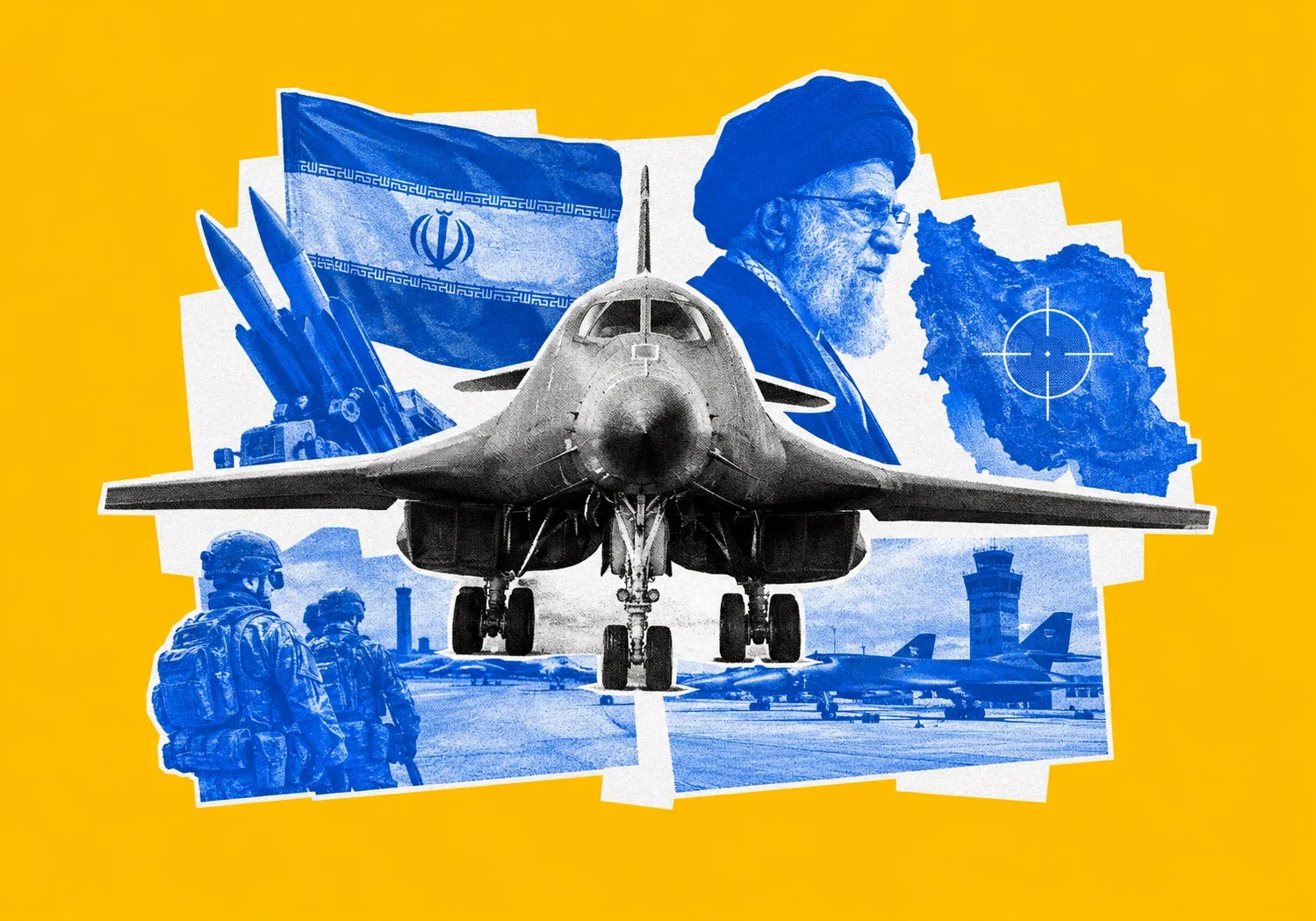
The US Air Force has abruptly withdrawn all 12 B-1B Lancer bombers from RAF Fairford to the continental United States following an urgent intelligence spike over a suspected Iranian-linked terror plot. While the emergency redeployment mitigates the immediate risk to high-value assets, it reveals a dangerous operational shift: hostile shadow warfare can now disrupt Allied long-range force projection without firing a single missile.
The speed and scale of the withdrawal matter more than the immediate question of what happened outside the base. Fairford has long been treated as a secure European platform for American long-range power. Its sudden evacuation indicates that the assumptions behind that model are changing.
US officials have not disclosed the intelligence that triggered the decision. A Pentagon official confirmed the withdrawal, while the Pentagon later acknowledged that all deployed B-1s had returned to US territory, citing operational security. British counter-terrorism investigators are continuing to examine a series of arrests around the base and in London.
For Washington, the calculation was evidently not simply whether Fairford could be defended. It was whether keeping a concentrated fleet of high-value aircraft there remained worth the risk.
When the rear area becomes part of the battlefield
RAF Fairford occupies an unusual place in the American military posture in Europe. Located about 160 kilometres west of London, it is operated by the US Air Force and is the only European airfield capable of supporting the heavy strategic bombers used by the alliance.
That makes the installation more than another military base. It is a key node in the system that allows Washington to project long-range conventional power into the Middle East without sending every aircraft from North America.
Fairford has served that function through successive conflicts, including the Gulf War, NATO's operations in the Balkans and the Iraq War. It has also supported continuing US operations in the Middle East. The logic has been straightforward: keep strategic aircraft close enough to potential theatres to maximise their usefulness while operating from territory protected by an allied state.
That logic is now under pressure.

On September 27, British counter-terrorism police detained five British nationals aged between 22 and 25 near the base. Officers searched several white vans carrying fuel, although no explosives were found. The suspects were held over suspected terrorism and explosive-related offences before being released on bail or without immediate charges.
Four days later, police arrested a 25-year-old dual British-Iranian national in central London in connection with the investigation. Six people have now been detained in total.
The absence of charges is significant, but not in the way political rhetoric might imply. Their release on bail does not establish that the suspected threat was fabricated, nor does it establish the suspects' guilt. It means the investigation has not produced sufficient admissible evidence for charges within the relevant detention period. Intelligence assessments, forensic work and surveillance can continue without a criminal case having been brought.
That distinction is particularly important because the political claims surrounding the incident have moved faster than the publicly available evidence.
Intelligence can move faster than the evidence
British authorities, including Prime Minister Andy Burnham, have said there are "strong indications" of Iranian state involvement or proxy networks. Tehran has rejected the accusation as baseless and malicious, summoned Britain's ambassador and pointed to the suspects' release as evidence that the allegations lack substance.
The public record therefore contains an unresolved gap: the security response is unmistakable, while much of the intelligence behind it remains classified.
According to US intelligence and media reports, warnings had emerged roughly three weeks before the withdrawal. What changed was the intensity of the warnings. Within the 24 hours before the October 4 evacuation, the threat picture became sufficiently urgent for American commanders to remove the entire bomber contingent.
That decision offers a clue to the nature of the concern.
Had the problem been regarded as a conventional attack that could simply be absorbed by additional guards, the response might have centred on reinforcement. Instead, Washington removed the most valuable assets from the location altogether.
The aircraft themselves were not necessarily the only concern. A strategic bomber parked on a predictable flight line is a high-value target for surveillance, intelligence collection, sabotage or other forms of disruption. Protecting the perimeter does not eliminate the vulnerability created by concentrating sophisticated aircraft at a fixed location.
That is the uncomfortable lesson of hybrid warfare: an adversary does not have to destroy an aircraft to make its deployment ineffective.
The economics of making America fly from home
Moving the B-1 fleet back to the United States does not eliminate America's ability to conduct long-range strikes. The B-1B is designed precisely for long-distance operations.
But geography imposes a price.
Aircraft launching from continental US bases must cover substantially greater distances before reaching the relevant theatre. That requires longer transit times and greater reliance on aerial refuelling. It increases flight hours and logistical demands while reducing the efficiency of a posture based on forward deployment.

The effect is not necessarily dramatic for a single mission. It becomes more consequential when sustained operations are required.
A forward base compresses the distance between aircraft and their operating area. Remove that base and the same military capability remains available, but with more fuel, more tanker support, more time in transit, and fewer opportunities to generate sorties efficiently.
The withdrawal therefore creates operational friction without a missile being fired.
That is precisely why hybrid pressure can be attractive to a state or proxy network. The cost of disrupting a conventional force may be measured not in destroyed equipment but in additional logistics, altered deployments and reduced freedom of action.
Britain’s basing dilemma
The British government faces a more complicated problem.
The UK has authorised Washington to use sovereign British military bases, including Fairford and Diego Garcia, for "defensive" strikes against Iranian targets and regional proxies. Tehran has previously warned that foreign military installations used to facilitate or support attacks against Iranian interests could be regarded as legitimate military targets.
That arrangement gives Britain strategic relevance to US operations while also making British territory part of the risk calculus.
The October security measures show how quickly that risk can spread beyond the original installation. RAF Lakenheath was placed under Force Protection Condition Charlie, the second-highest US Department of Defense threat level. Armed personnel, armoured vehicles, barriers and additional checkpoints were introduced at Lakenheath, Mildenhall and Fairford, with civilian access restricted around the perimeters.
There was no universal flight ban and no single NATO-wide alert status. Measures were instead adjusted according to the perceived threat at individual sites.
That is revealing in itself.
The problem is not a conventional military front that can be marked on a map. It is a distributed security threat capable of appearing around particular facilities, using local networks and exploiting the predictability of fixed infrastructure.
A different NATO rear area
For decades, Western European military installations could be treated as rear-area infrastructure even when the forces based there were deployed elsewhere. The distinction was operationally useful: the fighting might take place in the Middle East or elsewhere, while European bases remained protected platforms from which power could be projected.
That distinction is becoming harder to sustain.
The Fairford episode shows how a conflict can reach into the rear without crossing Europe's borders with conventional forces. A suspected surveillance or sabotage operation can force commanders to move aircraft. Counter-terrorism units can be diverted to military installations. Local authorities can impose security restrictions. Diplomats become involved. Communities around bases face heightened security.
The strategic perimeter expands without a formal declaration of war.
For NATO, that creates a difficult force-protection problem. Heavy bombers, command infrastructure and other high-value assets are concentrated at facilities whose locations are well known. Those bases remain indispensable, but their predictability makes them attractive targets for inexpensive forms of disruption.
The likely answer is not simply more fencing.
Western militaries may need greater dispersion, more persistent counter-sabotage capabilities and a larger role for long-range operations launched from outside the immediate threat environment. Maritime platforms and continental bases become more important when fixed forward installations can no longer be assumed to provide sanctuary.
That comes with a trade-off: dispersal can improve survivability while making operations more expensive and less efficient.
The strategic value of doing less
For Tehran, if Iranian-linked networks are ultimately established as responsible, the potential advantage lies precisely in the absence of a conventional attack.
A successful kinetic strike would invite an obvious military response. A covert operation that causes the target to move its own forces creates a different calculation. It can impose costs while preserving ambiguity over who planned or executed the activity.
That is the central challenge exposed by Fairford.
Western air forces retain overwhelming conventional capabilities. But those capabilities depend on an infrastructure system that is increasingly exposed to actors operating below the threshold of open warfare. Criminal networks, local proxies, surveillance operations and covert contacts can target the supporting architecture on which high-end military power depends.
The six suspects remain released on bail. The British investigation has not publicly established who was behind the suspected operation, and Tehran continues to deny involvement.
Yet the B-1s have already left.
That gap between what can be proved publicly and what commanders are willing to act on may become one of the defining features of Europe's new security environment: military decisions increasingly shaped not by a visible attack, but by intelligence indicating that one may be coming.
Sources: The Guardian, FT, ARAB NEWS, Reuters, BBC