
Ukraine’s Nuclear Accident Risk Rises as Russia Strikes Power Grid

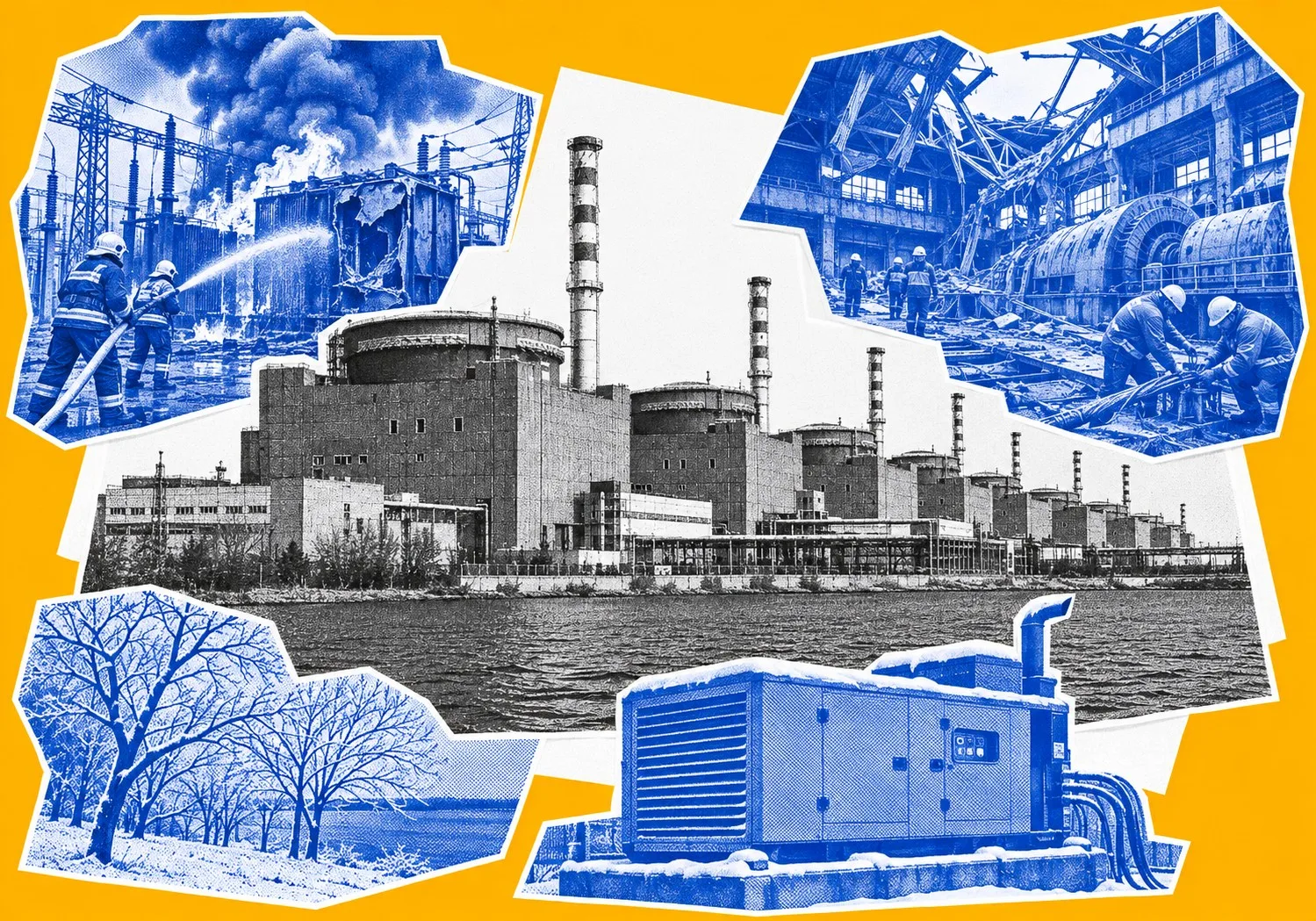
Nuclear safety regulators from 38 countries, including the UK, warned on Monday that Russian strikes on Ukraine’s power grid are increasing the risk of a nuclear accident this winter. They urged Moscow to halt attacks on infrastructure that supplies the electricity needed to cool nuclear fuel. Three groups issued the joint warning: WENRA, HERCA and the Nordic group NORA. Per Strand, who heads HERCA and NORA, told Reuters that a nationwide blackout was the worst case he envisaged. It could leave all nine reactors at Ukraine’s three generating nuclear sites relying on their own backup systems at the same time. He urged European countries to co-ordinate emergency preparations if the attacks continued.

How a Grid Strike Can Endanger a Reactor
A nuclear plant supplies electricity to the grid and also draws power from it for the equipment that keeps the plant safe. If the grid becomes unstable, operators may have to cut output. A reactor can also shut down automatically when its connection to the grid fails. The chain reaction stops, but the radioactive products left in the fuel continue to give off heat. That heat declines over time, and the plant still needs to remove it. Used fuel stored in pools also needs cooling.
Plants have several ways to keep essential equipment running.
If external power fails, emergency diesel generators can take over, while batteries can keep key instruments and controls working. The danger deepens if outside power stays down and backup equipment fails or cannot be kept running. If cooling is lost for long enough, fuel can be damaged and, in a severe accident, radioactive material could escape.
A switchyard or substation can serve several parts of the network, so damage outside a plant can remove more than one route for electricity. Repeated attacks also make it harder for crews to repair lines and restore reliable connections between outages. A nationwide failure would put multiple sites under pressure at once, with repair crews, fuel supplies and emergency services all facing competing demands.

Russian forces seized Europe’s largest nuclear power station in March 2022.
A fire broke out in its training complex during the assault.
That August, Ukraine reported that shelling had damaged power equipment and parts of the spent-fuel facility. The International Atomic Energy Agency (IAEA) established a permanent monitoring presence in September that year.
The plant came under a different kind of strain in June 2023, when the destruction of the Kakhovka dam drained the reservoir that had supplied it with water. The site continued to draw on other sources, including groundwater wells. In April 2024, international inspectors confirmed that a drone had struck the Unit 6 reactor dome, causing superficial damage.
A fire that August damaged one of the site’s cooling towers. The IAEA said the fire had no immediate effect on nuclear safety because the towers were out of use. Russia and Ukraine have accused each other of attacks on the plant and its power links.
All six reactors have been in cold shutdown since April 2024. They generate no electricity and give off far less heat than recently operating reactors, but still need power for cooling and other safety systems. The IAEA said damage to the plant’s only remaining external line left it without grid power for more than 12 hours on 8 November, its 27th complete loss of external power since the full-scale invasion began. Emergency diesel generators took over. The agency is working with both sides to restore a second connection.
That effort follows an IAEA-brokered local ceasefire in September that allowed engineers to restore power after a prolonged outage. The agency’s reporting to its board that month found that some of the basic conditions for nuclear safety and security were wholly or partly compromised at each of the five sites it monitors in Ukraine, including Chornobyl.
At Zaporizhzhia, restrictions on inspectors’ access continued to limit what they could verify. The UK told the board that essential repairs should never depend on temporary ceasefires.
At Chornobyl, a Russian drone struck the New Safe Confinement on 14 February 2025, according to the European Bank for Reconstruction and Development (EBRD).
The steel arch covers the remains of Reactor 4 and the concrete shelter hastily built after the 1986 disaster.
It is meant to contain radioactive material and provide a controlled environment in which workers can eventually dismantle the old shelter.
The strike pierced the arch, weakening its ability to contain radioactive material and leaving its steelwork more exposed to corrosion. Radiation readings stayed within acceptable limits afterwards, the EBRD said.
Temporary repairs are under way.
At a donor conference in Paris on 9 November, 14 countries and international organisations pledged €303 million towards restoration. The EBRD’s preliminary estimate puts full repairs at a minimum of €500 million. The bank says the arch needs to be fully functional again by 2030 to avert irreversible corrosion and deterioration.
Chornobyl stopped generating electricity in 2000, but the site still manages radioactive waste and spent fuel. In its November update, the IAEA said grid fluctuations had triggered emergency diesel generators at several facilities in the exclusion zone.
Nine Reactors Carry Ukraine Through the Winter
Ukraine’s generating nuclear fleet now consists of four reactors at Rivne, two at Khmelnytskyi and three at South Ukraine.
Energoatom, the state operator, scheduled maintenance and refuelling to have all nine available for the heating season. Reuters reported that the three stations were expected to supply roughly 80 per cent of the electricity Ukraine uses this winter.
The IAEA reported on 14 November that its teams at Rivne and Khmelnytskyi had taken shelter during air alerts and that drones had been detected near South Ukraine. Grid instability also forced some operating reactors to reduce output.
For households, the same pressure is visible in the schedules published by Ukrenergo, the national grid operator. It announced rolling cuts in parts of the country for 16 November and restrictions on how much power industrial users could draw, citing damage from Russian attacks.
Could Radioactive Fallout Reach Russia?
A major radioactive release from a Ukrainian nuclear plant could reach Russia if winds carried the plume east or north-east.
Westerly airflows are common at these latitudes, but the course of any release would depend on wind speed and direction at the time and at the height of the plume. How much radioactive material reached the ground would also depend on the scale and duration of the release and where rain fell as the plume passed.
Rivne and Khmelnytskyi are each about 410 km in a straight line from the nearest point on the internationally recognised land border between Ukraine and Russia. South Ukraine is about 430 km away, while the Russian-occupied Zaporizhzhia plant is closer, at about 270 km.
During the 1986 Chornobyl accident, winds shifted repeatedly, carrying radioactive material across parts of Europe. In what is now Russia, the OECD Nuclear Energy Agency identified two areas of substantial caesium-137 deposition, one in the Bryansk region near Belarus and another across parts of Kaluga, Tula and Oryol. Rain helped bring radioactive particles to the ground, producing heavily affected areas well beyond the immediate vicinity of the plant.
Sources: Reuters, Czech State Office for Nuclear Safety, IAEA, UK statement to the IAEA Board of Governors,EBRD, OECD Nuclear Energy Agency,Energoatom, LB.ua