
Super El Niño and Food Prices: How the 2026 Agricultural Shock Imposes a Climate Tax on European Monetary Policy

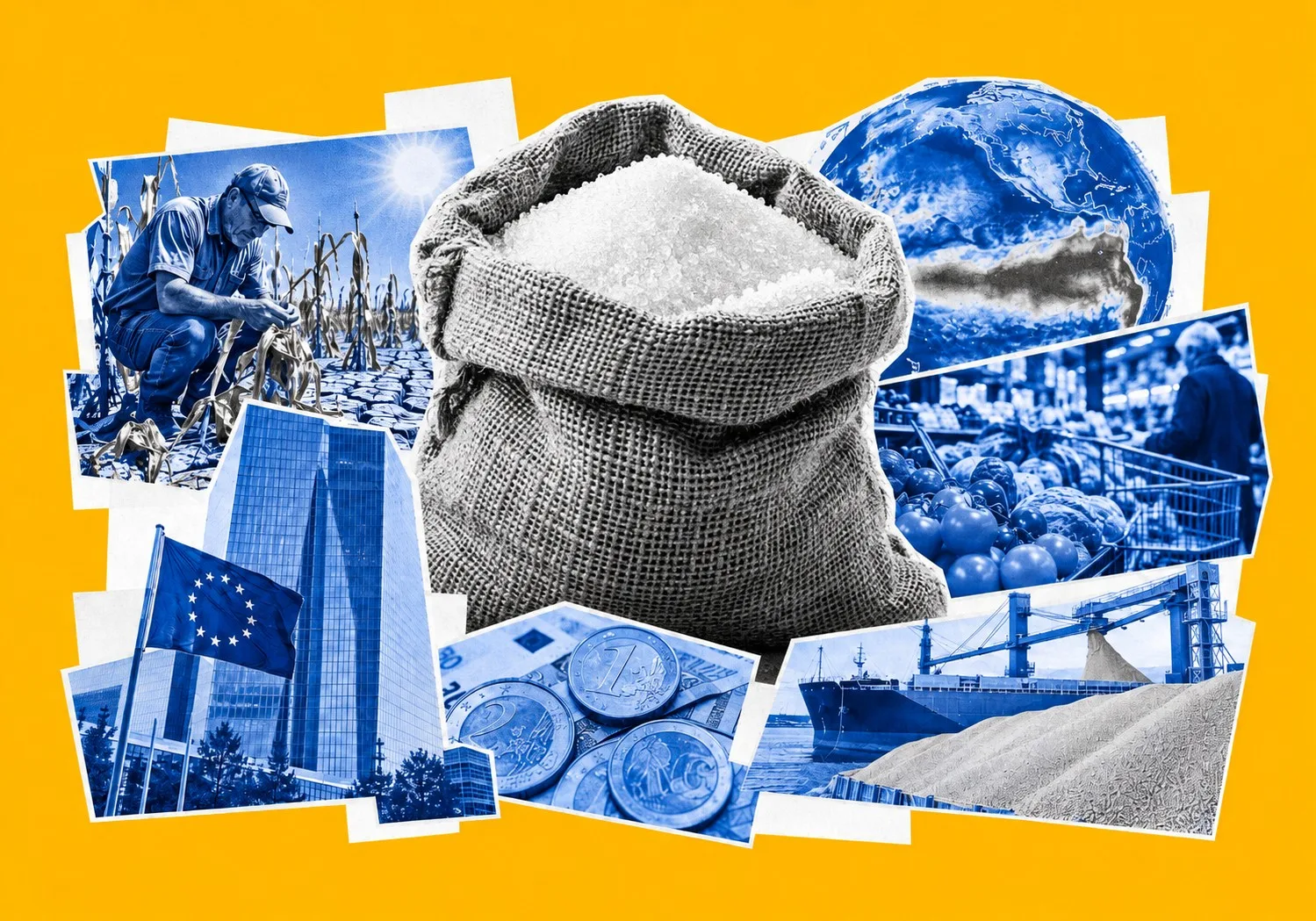
With raw sugar futures surging more than 25 per cent since July, a dramatic weather-driven shift is dismantling global market expectations. Straight off the bat, global crop models at the start of 2026 promised a comfortable supply glut, but an escalating Super El Niño has severely disrupted harvests across Brazil, India, and Thailand, abruptly flipping global forecasts into an acute structural deficit. With Goldman Sachs warning that the broader agricultural shock could drive a 15.8 per cent rise in food commodity prices, this sudden contraction threatens to derail European central bank plans to cut interest rates and impose a lasting climate tax on monetary policy through 2028.
Downpours in south-central Brazil stopped the sugarcane crushing overnight.
Just when mills planned extended runs to fill global gaps, rain killed the momentum. Meanwhile, severe drought linked directly to this intensifying Super El Niño wiped out sugarcane, wheat, and rice fields across India and Thailand simultaneously.
These three nations produce over half the world's sugar supply. When their output drops, the entire international balance sheet tips instantly into structural deficit.
It escalated quickly.
Beyond raw sweetener contracts trading in London and New York, the immediate fallout spreads everywhere.
Localized crop losses morphed into a systemic macroeconomic shock. Severe dry spells across Southeast Asia threaten palm oil and coffee output, while West African cocoa groves and Latin American soya bean fields face severe weather stress.
Ocean corridors offer zero relief.
Depleted reservoirs in the Panama Canal forced strict draught limits, locking cargo ships into long, costly delays that compound physical supply shortages across global destination ports.
Problematic timing is what European policymakers face today. Middle Eastern conflict had already injected volatility into energy markets, while post-pandemic supply chains remained fragile at best. On top of that fragile base, climate-driven supply contractions add structural cost pressure—a specific type of inflation that interest rate hikes cannot solve.

The Anomaly That Became a Structural Trend
Viewing this crisis purely as a routine agricultural setback misreads how climate dynamics reshape modern economic systems.
Data from NOAA and the Copernicus Marine Service indicate that "Super" El Niño events—like those recorded in 1982, 1997, 2015, and 2023—always disrupted historical weather patterns.
Yet the 2026–2027 cycle hits a global agricultural setup operating with zero safety margin.
Out of academic journals and straight into balance sheets comes the reality of "climateflation."
Inventory drawdowns or bumper crops in opposite hemispheres used to cushion localized crop failures. Not anymore. Today, compound climate anomalies hit key agricultural regions at the exact same moment. Monsoon rains in parts of India drop to half their seasonal average precisely when Brazilian fields drown under record rainfall.
Market mechanisms crack under that level of simultaneous pressure. Traditional hedging strategies and just-in-time sourcing fail to absorb shocks of this scale.
Price transmission moves fast and hits hard.
Current estimates from Goldman Sachs suggest this El Niño cycle could trigger a 15.8 per cent surge in global food commodity prices, with ripple effects extending well into late 2028.
Scenario modeling from Risilience goes further, showing that an extreme climate event of this magnitude can cut global agricultural output by up to 14.3 per cent. Research published by the European Central Bank reinforces that view: a severe El Niño cycle independently adds up to nine percentage points to food input costs.
Crucial baseline commodities like sugar, palm oil, wheat, and soya beans face direct price hikes, forcing fast-moving consumer goods companies into immediate margin compression.

The Central Bank Dilemma
Borrowing costs won't bring rain to Thailand. That simple reality sits at the center of the current central bank dilemma.
Monetary officials spent three long years attempting to steer policy rates back toward neutral settings as headline inflation numbers cooled. Yet traditional monetary tightening does nothing to dry out flooded sugarcane fields in São Paulo or restore ruined wheat crops in South Asia.
When supply-side climate shocks drive inflation rather than excess domestic demand, raising interest rates cannot restore physical yields. Conversely, cutting rates prematurely while basic grocery prices jump risks unmooring long-term inflation expectations entirely.
Central bankers face a stark choice: keep borrowing costs elevated simply to anchor core inflation, accepting slower overall economic growth as the price of climate-induced volatility.
Baseline assumptions have shifted permanently. Climate variability no longer sits in peripheral environmental reports; it dictates monthly rate decisions inside central banks.
Political fallout across Europe and international markets followed rapidly. In the United Kingdom, government officials went as far as advising households to store emergency food rations against potential supply disruptions and extreme weather events. Officially framed as precautionary advice, such announcements highlight how fragile public confidence becomes when basic supply chains fracture repeatedly.
The Geopolitical Divide
Economic consequences from this climate shock do not fall evenly across borders. Strategic winners and losers emerge clearly across global markets.
On one side stand specialized trading houses, global agribusiness groups, and producers operating inside unaffected temperate zones. Companies with the agility to navigate wild price swings, execute market arbitrage, or supply alternative inputs stand to capture substantial margins. On the other side sit consumer goods manufacturers and lower-income households.
Food processors face a brutal choice: absorb soaring raw material costs or push retail prices higher in markets where consumers already suffer severe purchasing-power fatigue.
Developing nations reliant on food imports bear the heaviest burden. Soaring import bills, depreciating local currencies, and rising grain costs push vulnerable economies toward severe financial distress.
Humanitarian groups warn that 50 million people could face acute food insecurity over the next 18 months as regional supplies collapse.
In response, several major food-producing nations are considering domestic supply controls and export restrictions—actions that restrict trade flows further and accelerate food-based trade protectionism globally.
A Lasting Implication for European Markets
Unfolding across 2026 and 2027, this Super El Niño marks a permanent shift in how financial markets price climate risk. Going from a predicted sugar surplus to a deep structural deficit within weeks proves that historical commodity models no longer offer reliable guidance for future price stability.
For European businesses and fiscal authorities, managing secondary inflation shocks presents the primary challenge over the next two years.
As input costs travel up supply chains and central banks contend with persistent supply bottlenecks, the belief that climate disruptions are brief, isolated anomalies has evaporated.
Permanent integration of climate volatility into baseline inflation projections means elevated borrowing costs, volatile food prices, and trade friction will define the European economic landscape through 2028 and beyond.
Sources: Bloomberg, The Times, Reuters