
South Korea Fuel Shipments to Russia Expose Gaps in Western Sanctions

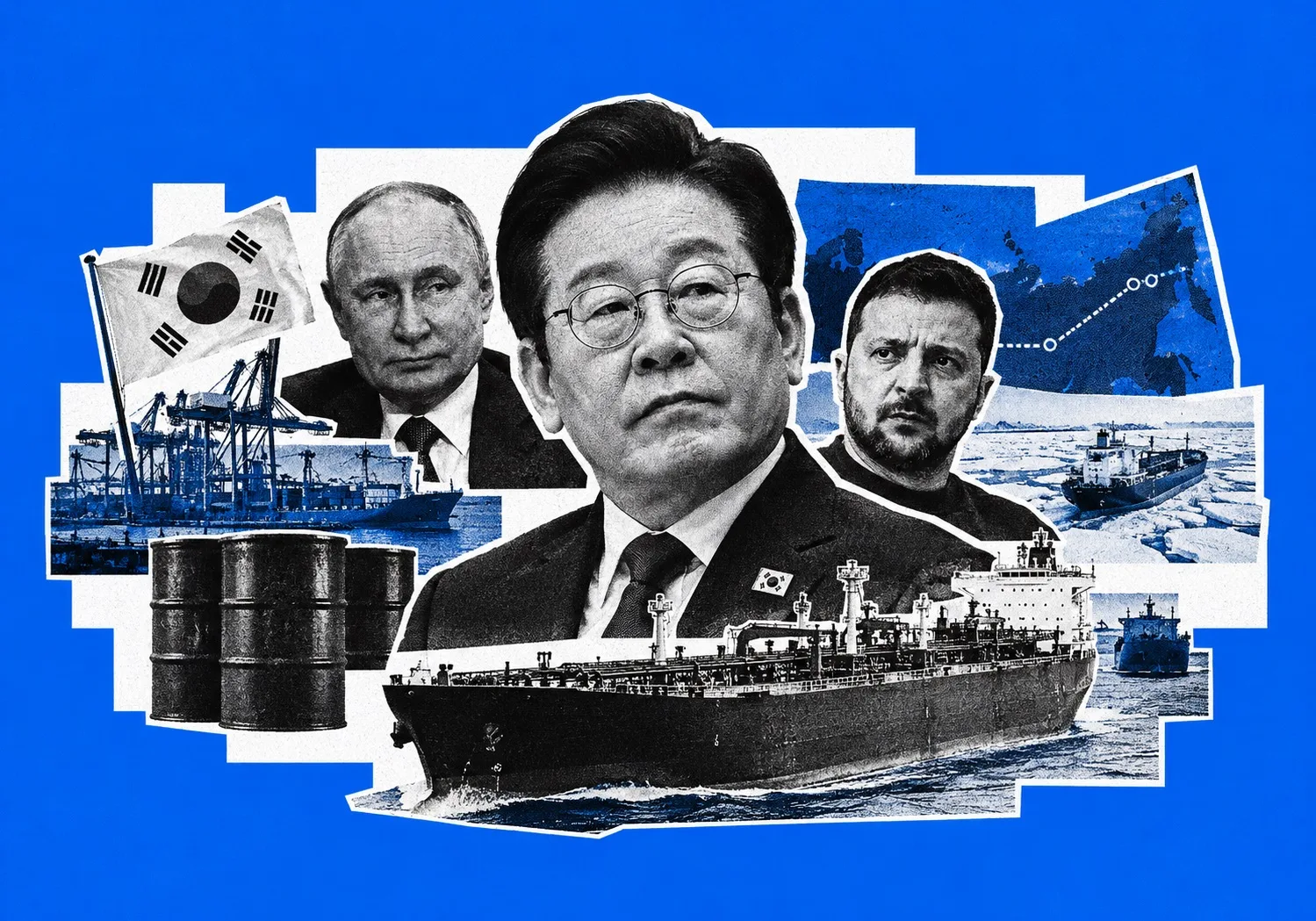
More than 176,000 tonnes of South Korean petroleum products reached Russia in mid-2026 aboard Western-sanctioned tankers, raising sharp questions in Brussels and Washington over sanctions enforcement. As Seoul quietly restores commercial ties with Moscow, these shipments are undermining Western efforts to restrict Russian energy supplies and sparking diplomatic friction with Ukraine.
Seven vessels made 14 voyages from ports including Ulsan and Yeosu to Russia's Far East, mainly Vladivostok. Most of the cargo was diesel, a commodity Russia urgently needed after Ukrainian attacks damaged its domestic refining capacity.
Three of the tankers, Layla, Astoria and Chongchon, were already subject to sanctions imposed by Britain, the European Union or Australia. Some vessels had initially listed Japan or Singapore as their destination before sailing to Russia.
Seoul denies authorising direct fuel exports to Russia and says its customs records show no such trade. Yet the shipping movements raise a separate question: how effectively can Western sanctions restrict Russian commerce when vessels targeted by those measures continue operating through the ports of countries closely aligned with the West?
The controversy comes as President Lee Jae-myung pursues a cautious reopening of relations with Moscow. South Korea has also recalled its ambassador from Ukraine following a dispute over two captured North Korean soldiers, adding a diplomatic crisis to what was already becoming a difficult relationship.
The Cargoes That Customs Records Did Not Capture
The discrepancy between shipping movements and South Korean export figures sits at the centre of the controversy.
According to Seoul, official customs statistics recorded no direct exports of diesel, petrol or aviation fuel to Russia from 2025 through August 2026. The government has argued that petroleum products loaded at domestic ports do not necessarily constitute exports prohibited under South Korean law.
Authorities are investigating whether the vessels' declared destinations were inaccurate.
The distinction is more than a technicality. Cargo can move through a port without its ultimate destination appearing in the country's direct export statistics. Intermediaries and shipping arrangements can complicate the identification of the final buyer, while changes to a vessel's stated destination may require further scrutiny.
The available information does not establish who owned the cargoes, which companies arranged the shipments or whether South Korean export regulations were breached. Nor does a vessel's inclusion on a British or European sanctions list necessarily make every transaction involving it illegal under South Korean legislation.
Those uncertainties are precisely what make the case significant.
Western governments have spent years targeting vessels associated with Russian petroleum trading. But a designation imposed in London or Brussels cannot guarantee that a ship will be prevented from loading cargo elsewhere.
For sanctions to work across international shipping networks, the countries controlling major ports must either impose comparable restrictions or cooperate closely enough to prevent prohibited transactions from shifting between jurisdictions.
South Korea says it complies with international sanctions standards. The tanker movements have made the practical meaning of that commitment a matter of considerable interest to European governments.
Russia’s Fuel Shortages Created an Opening
The shipments were particularly useful to Moscow because of the disruption to its refining industry.
Ukrainian drone and missile strikes had caused serious fuel shortages inside Russia during the summer. Diesel deliveries from abroad offered a way to supplement domestic supplies while refinery operations remained under pressure.
Vladyslav Vlasiuk, Ukraine's presidential commissioner for sanctions policy, has said the fuel arriving from South Korea helped Russia alleviate those shortages.
It is not possible to determine from the available figures how much of the refinery disruption was offset. The total shipment volume includes petroleum products other than diesel, and there are no corresponding figures for Russian production losses or domestic fuel consumption.
Even so, the commercial relationship has an obvious military and economic dimension.
Ukraine has invested resources in attacking the infrastructure that supplies fuel to Russia's economy. The effectiveness of those operations depends partly on how easily Moscow can replace lost production.
Imported fuel cannot repair a damaged refinery. It can, however, reduce the immediate pressure caused by shortages.
For Kyiv, the prospect of such supplies arriving through South Korean ports is particularly troubling. Seoul joined Western export controls after the full-scale invasion in 2022, and trade between South Korea and Russia fell by more than half.
Ukraine now faces the possibility that commercial activity in a partner country is helping Russia manage the consequences of Ukrainian military operations.
Lee’s Government Reopens Channels to Moscow
The fuel shipments have attracted greater attention because they coincide with a change in South Korea's diplomatic approach.
President Lee Jae-myung has been gradually restoring contacts with Moscow, without formally withdrawing South Korea's support for Ukraine or renouncing its existing sanctions commitments.
His appointment of Song Young-gil as adviser on peace diplomacy has added to questions about the administration's intentions. Song previously received Russia's Order of Friendship from Vladimir Putin and has established political connections with Moscow.
The appointment does not amount to a change of alliance. South Korea remains closely tied to the United States, and its security interests are not interchangeable with those of Russia.
Lee's government nevertheless appears interested in preserving more room for commercial engagement than Seoul allowed itself during the earlier years of the war.
That calculation has an economic basis. Russia remains a potential market for South Korean businesses, while its geographical position offers possibilities for transport connections between Asia and Europe.
The administration may also see value in maintaining diplomatic channels that could become more important if the war eventually ends.
There is a difference, however, between preparing for future commercial opportunities and allowing trade that helps Moscow withstand current economic pressure.
European diplomats are increasingly concerned that Seoul's approach risks blurring that boundary.
An Arctic Voyage Offers a Glimpse of Seoul’s Commercial Ambitions
On 22 August, the South Korean container ship PanStar Acro left Busan on a trial voyage using the Russian-controlled Northern Sea Route.
It returned on 11 October after travelling to Europe and back.
The journey was an exploratory commercial operation, not the launch of a regular service. It nevertheless provided a concrete example of why South Korean businesses may be interested in maintaining relations with Russia.
For exporters moving goods between Asia and Europe, Arctic shipping offers the possibility of shorter routes under suitable operating conditions. Whether those advantages justify the costs and practical difficulties of regular operations remains a separate question.
The pilot voyage alone cannot answer it.
What it does establish is that South Korean commercial interests are examining transport infrastructure dependent on cooperation with Russia.
That could create a longer-term incentive for engagement with Moscow, irrespective of the immediate political relationship between Russia and Western governments.
The implications are different from those surrounding the diesel shipments. A trial container voyage along the Northern Sea Route is not evidence of sanctions evasion.
It does, however, belong to the same broader change in Seoul's economic thinking: Russia is again being considered as a country with which certain forms of business may be worth pursuing.
For Moscow, interest from a major Asian trading economy is valuable even before regular commercial activity develops. It provides another potential connection to international markets at a time when European governments are seeking to limit such links.
A Prisoner Dispute Deepens the Rift with Ukraine
South Korea's relations with Kyiv have meanwhile deteriorated over the handling of two North Korean prisoners of war.
The soldiers were captured by Ukrainian forces in Russia's Kursk region in January 2025. On 23 September 2026, President Volodymyr Zelenskyy announced at the UN General Assembly that Ukraine had transferred them to South Korea.
Seoul accused Kyiv of breaching a confidentiality agreement intended to protect the prisoners and their families in North Korea.
The government summoned Ukraine's ambassador, demanded explanations and apologies, and subsequently recalled its own ambassador from Kyiv on 8 October. South Korea also reduced its diplomatic presence in Ukraine.
The precise terms of the confidentiality agreement have not been made available in the briefing, leaving the extent of any alleged breach unclear.
The diplomatic consequences, however, are evident.
The two governments had an important common interest in the case. North Korean soldiers were fighting alongside Russian forces, making their capture relevant to both Ukrainian security and South Korea's concerns about Pyongyang.
Instead, the transfer became a dispute over trust and the handling of sensitive information.
The ambassador's recall does not necessarily mean that Seoul intends to reduce humanitarian assistance or abandon future reconstruction cooperation. No decisions to that effect have been established.
It does make political coordination more difficult at a moment when Ukraine is seeking to maintain close relationships with countries beyond Europe.
The dispute has also made South Korea's renewed engagement with Moscow more conspicuous. Although the prisoner controversy and the commercial developments have different origins, their convergence has reinforced concerns in Kyiv about Seoul's direction.
How Much Pressure Can Europe Apply?
The reaction among Western partners has so far been uneven.
European diplomats have expressed alarm about the apparent warming of relations between Seoul and Moscow. In the United States, Republican Representative Joe Wilson has publicly criticised the shift.
There is no confirmed evidence in the briefing of a coordinated response by Washington and European capitals, or of new punitive measures being prepared against South Korea.
That leaves Western governments with a difficult diplomatic calculation.
South Korea is an important US ally and a significant economic partner for Europe. Treating its commercial engagement with Russia as equivalent to deliberate support for Moscow would go beyond what the available evidence establishes.
Ignoring the tanker movements would create a different problem.
If vessels sanctioned by Western governments can continue transporting petroleum products to Russia from allied ports, the restrictions risk becoming dependent on where a transaction takes place rather than on the activity they were intended to prevent.
The South Korean investigation into cargo declarations may clarify whether domestic laws were violated. It cannot, by itself, resolve the differences between national sanctions systems.
Even a finding that the shipments complied with South Korean law would leave European governments confronting the commercial consequences.
Lee's administration has not announced a break with the Western position on Ukraine. Its emerging approach instead appears to preserve political alignment while allowing selected economic relationships with Russia to develop.
That is a distinction Seoul may consider manageable. For Kyiv, facing Russian fuel shortages as an opportunity to increase pressure on Moscow, it is much harder to accept.
The question for Brussels and London is whether they can persuade an important Asian partner to restrict activities that may be legal under its own rules but run against the purpose of their sanctions.
South Korea's handling of the seven tankers will provide an early indication of how far that persuasion can reach.
Sources: The Bell, CSIS, DW, Yonhap, Intellinews