
Russia’s Aviation Crisis Deepens as Moscow Seeks Aircraft from Vietnam

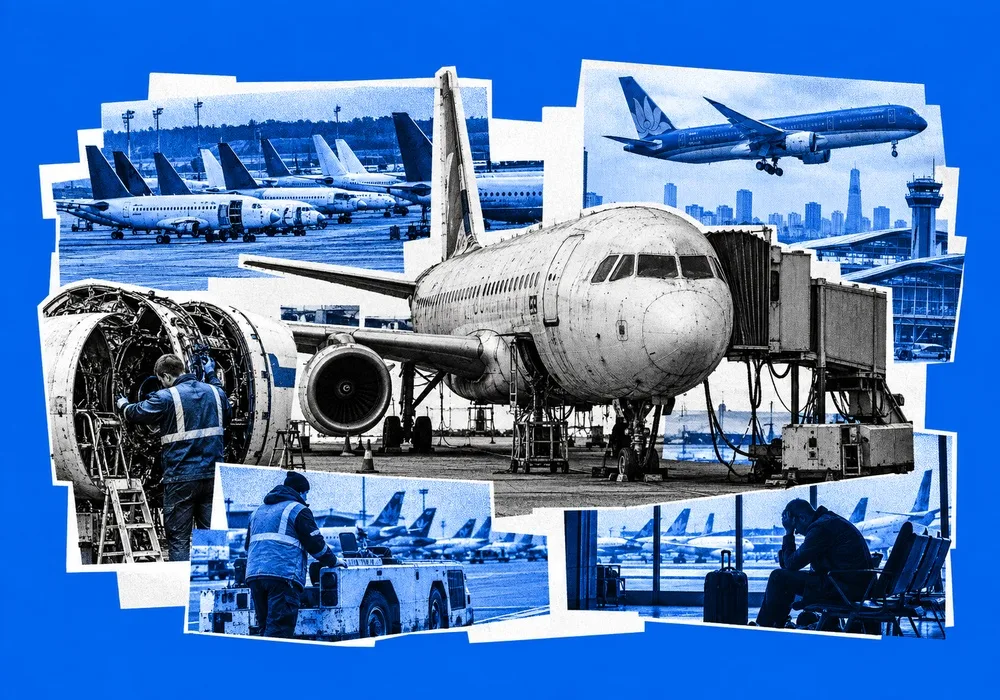
Russia's request for Vietnamese passenger aircraft highlights the growing pressure on its civilian economy after more than four years of war and Western sanctions. While Moscow continues to sustain large-scale military operations and launch repeated missile and drone attacks against Ukraine, its commercial aviation sector is increasingly dependent on cannibalised Western aircraft, alternative parts and attempts to secure foreign capacity.
Russia is increasingly struggling to maintain the civilian aviation system that once depended heavily on Western aircraft, spare parts and maintenance networks. Moscow has asked Vietnam to provide passenger jets to Russian airlines under wet-lease arrangements, including aircraft, crews, maintenance and insurance, as nearly one-fifth of the fleet operated by the country’s largest airlines is now grounded.
The request comes as Russia continues to devote substantial resources to its war against Ukraine. On 7 October, Russian forces launched one of their largest attacks in months, firing around 70 missiles and deploying drones against Ukrainian cities and energy infrastructure. At least 11 people were initially reported killed, while later reports put the civilian death toll higher; residential buildings were among the sites hit.
The juxtaposition is increasingly important for understanding the wider economic effects of the war. Moscow has been able to sustain large-scale military operations and repeated long-range attacks against Ukraine, but maintaining ordinary civilian infrastructure is becoming more difficult in sectors that depend on international technology and supply chains.
Russia’s Western-built fleet is running out of options
Before the full-scale invasion, Russia's commercial aviation system was overwhelmingly dependent on foreign-made aircraft. Around 850 of the country's roughly 900 commercial aircraft were Boeing or Airbus planes, with about 85% of them leased from foreign companies. When Western sanctions were imposed in 2022, Russia prevented hundreds of leased aircraft from being returned and re-registered more than 400 of them domestically.
That decision allowed airlines to continue flying, but it created a long-term technical problem. International aviation rules prohibit dual registration of an aircraft, while components used in internationally operated aircraft are expected to have a certified and traceable maintenance history. Western sanctions have cut Russian carriers off from much of the original supply and maintenance ecosystem.
Russian airlines have consequently been increasingly forced to cannibalise aircraft for spare parts. Components are removed from grounded planes and transferred to aircraft that remain operational. Russia's aviation regulator can issue its own certificates for some of these components, but those certificates are not recognised by Western aviation authorities.
The result is already visible in fleet availability. Russian industry data cited by Euronews shows that 130 of 673 aircraft operated by the country's 11 largest airlines were not in service. That is almost 20%, compared with a normal downtime rate of roughly 10%. Outside the Aeroflot group, nearly one-third of aircraft were reportedly idle.
Moscow is now looking abroad for a temporary solution
Vietnam has become one of the countries Moscow is turning to as it searches for additional capacity. Russia has proposed that Vietnamese carriers transfer aircraft to Russian airlines under wet leases, which would include crews and maintenance rather than simply handing over the aircraft.
The proposal, however, exposes the limits of Russia's strategy. Vietnam's main airlines operate Airbus and Boeing aircraft, meaning that any large-scale transfer would involve precisely the Western-made planes and technologies that Moscow has struggled to maintain independently.
There is also a risk of secondary sanctions. Russia has previously approached other countries about similar arrangements, but Ethiopia rejected a proposal partly because of concerns over US sanctions. No comparable foreign wet-lease arrangement has yet become a significant alternative for Russian airlines.
This makes the Vietnamese request more than an aviation story. It is an example of the growing difficulty Russia faces in replacing Western technological ecosystems simply by redirecting trade towards countries outside the sanctions coalition.
The war is consuming resources while civilian systems deteriorate
Russia's aviation problems are developing alongside an expanding military burden. The country is maintaining a large-scale war effort while repeatedly using expensive missiles and drones against Ukrainian cities, industrial facilities and energy infrastructure.
The civilian consequences in Ukraine have continued to increase. UN human rights monitors recorded 2,222 civilians killed and 13,058 injured in Ukraine during the first eight months of 2026, a 55% increase in casualties compared with the same period of 2025. Long-range missiles and drones accounted for 47% of civilian casualties in August, with many of those casualties occurring in urban areas far from the frontline.
The scale of Russia's October 7 attack again demonstrated how the military campaign is affecting civilian life. Russian missiles and drones struck several Ukrainian regions, including residential areas and energy infrastructure, causing deaths, injuries and power disruptions.
For Ukraine, these attacks represent a direct and continuing threat to civilian life and critical infrastructure. For Russia, they also underline the contradiction at the centre of its wartime economy: Moscow continues to mobilise resources for military production and long-range strikes while increasingly struggling to maintain parts of the civilian economy that depend on imported technology.
Fuel shortages add another layer of pressure
The aviation problem is no longer limited to aircraft and spare parts. Russia is also experiencing pressure on aviation fuel supplies.
According to Euronews, restrictions on refuelling have been introduced at at least 26 major airports. Several major airports have reportedly been limiting fuel to the amount required for a single flight, while restrictions have been particularly severe in parts of southern Russia. Ukrainian strikes on Russian oil refineries have contributed to lower fuel production, while Moscow has responded with restrictions on fuel exports.
That creates an unusual situation for a country with a large domestic energy industry: Russia has abundant hydrocarbon resources but is increasingly vulnerable to disruptions in the infrastructure needed to turn those resources into reliable aviation fuel and distribute it across the country.
The government is also discussing a new passenger levy of up to 500 roubles on domestic tickets and 1,000 roubles on international flights to help finance the acquisition and operation of domestically produced aircraft. That would effectively shift part of the cost of replacing the sanctioned Western fleet onto passengers.
Domestic aircraft cannot yet fill the gap
Russia's strategic answer is supposed to be the expansion of domestic aircraft production, particularly the MC-21 and Tu-214. But production remains insufficient to replace the hundreds of Western aircraft on which the Russian passenger system was built.
The problem is not simply the number of aircraft Russia can manufacture. Modern aviation depends on an entire ecosystem of certified components, software, engines, maintenance organisations and international regulatory recognition. Recreating that ecosystem under sanctions is considerably harder than assembling an aircraft domestically.
The MC-21 illustrates the problem. Western sanctions forced Russia to replace foreign components and redesign parts of the aircraft, increasing the technological and industrial burden of producing it. Meanwhile, Russian airlines still need a much larger number of aircraft than domestic manufacturers can currently supply.
A wider cost of Russia’s isolation
The aviation crisis therefore offers a useful measure of how the war is changing Russia's economy beyond the defence sector.
Moscow has succeeded in keeping much of its Western-built fleet in the air for several years through re-registration, parts substitution, cannibalisation and alternative supply channels. But these measures are increasingly becoming a substitute for a functioning international maintenance system rather than a permanent solution.
At the same time, Russia continues to use substantial quantities of missiles and drones against Ukraine, including attacks that kill civilians and damage energy infrastructure. The war is therefore producing a widening asymmetry: military mobilisation remains a central state priority, while some civilian sectors are being forced into increasingly expensive and improvised forms of survival.
Russia's request for Vietnamese aircraft is significant precisely because it exposes that tension. Moscow is not yet facing the collapse of commercial aviation, but it is increasingly dependent on extraordinary measures to preserve a system that was built around Western technology. The longer the war and sanctions continue, the more difficult it becomes to treat these measures as temporary workarounds rather than evidence of a structural transformation of the Russian economy.
Sources: European Union Aviation Safety Agency (EASA), Council of the European Union, Russian Ministry of Transport, Vietnam Civil Aviation Authority