
Russia Tells Diplomats to Leave Kyiv After Strikes Damage Austrian and Dutch Embassies

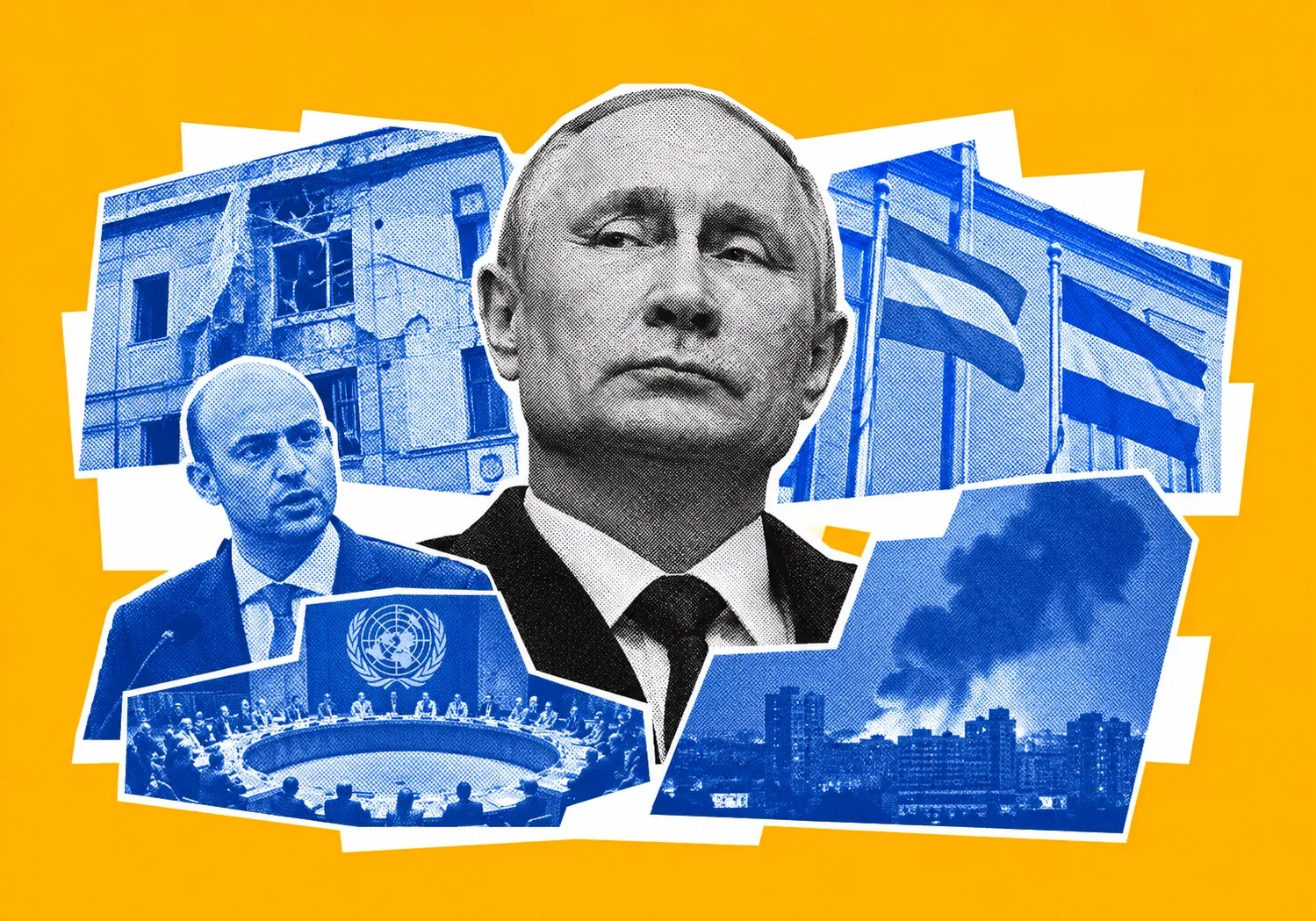
France has called an emergency UN Security Council meeting and the EU has summoned Moscow's envoy after Russian attacks on Kyiv damaged the Austrian and Dutch embassies. In response, Russia warned foreign diplomats they should have left the Ukrainian capital earlier.
The damage to the two diplomatic missions has triggered a wider European backlash. Alongside the EU's response, the Netherlands has summoned Russia's ambassador, and Sweden has announced a similar diplomatic protest.
Russia's response has drawn particular attention. Rather than limiting its statement to the circumstances of the attacks, Moscow reminded foreign governments that it had warned them in October about plans for large-scale strikes on Kyiv. Those who ignored the warning, Russian officials argued, were responsible for the consequences.

The exchange raises an uncomfortable question for European governments: what happens when a country hosting their embassies comes under sustained attack, and the attacking state suggests that foreign diplomats should simply leave?
European embassies caught in the attacks
The Austrian and Dutch diplomatic missions were damaged during Russian strikes on Kyiv on November 19. Neither country reported injuries among its embassy staff.
Austrian Chancellor Christian Stocker confirmed that approximately ten employees had been inside the Austrian embassy when the attack occurred. In the Netherlands, Prime Minister Rob Jetten said his country would not be intimidated.
Dutch Foreign Minister Tom Berendsen summoned the Russian ambassador to protest the damage. The Netherlands has remained one of Ukraine's important European military supporters, providing assistance that includes air defence equipment and other weapons.

There is, however, an important distinction between an embassy being damaged during an attack and an embassy being deliberately targeted.
Dutch broadcaster NOS reported, citing a Ukrainian air defence source, that the damage to the Dutch embassy may have resulted from the interception of a Russian attack drone. There has been no publicly established evidence that the diplomatic mission itself was the intended target.
That distinction matters when assessing the incident under international law. It does not change the fact that the buildings were damaged during Russian attacks, but it does affect what can be concluded about the circumstances.
France takes the dispute to the United Nations
French Foreign Minister Jean-Noël Barrot announced on November 20 that France had requested a meeting of the UN Security Council.
He condemned the strikes, expressed solidarity with Ukraine and the affected European countries, and said Russia must be held accountable.
The European Union also responded. EU foreign policy chief Kaja Kallas announced that Russia's ambassador to the bloc would be summoned, stressing the international legal protections afforded to diplomatic premises.
Sweden joined the protests after an explosion near its embassy in Kyiv. Foreign Minister Maria Malmer Stenergard said Stockholm intended to summon the Russian ambassador.
The diplomatic concern was not confined to the Ukrainian capital. In a statement delivered to the Organization for Security and Co-operation in Europe on November 20, British ambassador Neil Holland also referred to damage sustained by Austria's honorary consulate in Dnipro during Russian attacks on November 18.
Britain condemned the strikes and expressed solidarity with the affected countries.
The French initiative gives European governments another opportunity to raise the issue internationally. But a Security Council meeting is not, by itself, a mechanism for imposing penalties.

Russia is a permanent member of the Council and can veto substantive resolutions. Any attempt to secure binding measures against Moscow would therefore face a familiar obstacle.
Moscow's warning to foreign diplomats
The Russian response to the Dutch diplomatic protest was unusually direct.
Russia's embassy in the Netherlands referred to warnings issued in October advising foreign nationals to leave Kyiv ahead of anticipated large-scale attacks.
The Russian Foreign Ministry argued that not everyone had followed those warnings and that responsibility for negative consequences rested with those who ignored them.
The message effectively presented departure from Kyiv as the appropriate response to the danger created by Russian military operations.
Moscow also accused the Netherlands of becoming increasingly involved in the war through its support for Ukraine.
The remarks came against a backdrop of continuing tensions over European military assistance. Dutch-based defence technology company Destinus has been linked in reporting to weapons used by Ukraine against Russian targets, including the Kerch Bridge.
There is no established connection between those activities and the damage to the Dutch embassy, however. Nor is there evidence that the embassy was struck in retaliation for Dutch assistance to Ukraine.
Russia's statements should therefore be understood as its diplomatic and political position, not as proof of a deliberate attack on the Netherlands' diplomatic mission.
What international law says about embassy security
Diplomatic missions receive special protection under the 1961 Vienna Convention on Diplomatic Relations.
Article 22 establishes the inviolability of mission premises and requires the receiving state to take appropriate steps to protect them against intrusion or damage.
In Kyiv, the receiving state is Ukraine. But Ukraine's obligations to protect foreign embassies do not mean that Russia is free of its own responsibilities under international humanitarian law.
The conduct of hostilities is governed by separate rules, including the obligation to distinguish between military objectives and civilian objects, and prohibitions on indiscriminate or disproportionate attacks.
Embassy buildings are ordinarily civilian objects. Their protection does not depend on whether diplomats have been advised to evacuate.
An advance warning also does not automatically make a subsequent attack lawful. Whether an attack violated international humanitarian law depends on factors including the intended military objective, the means used and the foreseeable risk to civilians and civilian property.
For European governments, this is the central legal issue. Moscow's warning may explain why it believes diplomats should have left Kyiv, but it does not transfer responsibility for the lawful conduct of military operations to the people who remained.
Why the dispute matters beyond Kyiv
European embassies in Ukraine have continued operating through years of missile and drone attacks. Their presence allows governments to maintain direct diplomatic contact with Kyiv, coordinate assistance and monitor developments on the ground.
Leaving the capital would therefore be more than a routine security precaution. Depending on the scale and duration of a withdrawal, it could complicate diplomatic work and reduce the physical presence of European governments in Ukraine.
That is why the Russian response has significance beyond the immediate damage.
If foreign missions were expected to withdraw whenever Moscow announced another wave of strikes, Russia's military campaign could also become a means of disrupting diplomatic activity in the Ukrainian capital.

This does not establish that such disruption was the purpose of the November 19 attacks. It does, however, explain why European governments are treating the issue as more than property damage.
For now, the response has centred on diplomatic protests and France's request for Security Council discussions. The question of accountability remains unresolved, as does the precise sequence of events that led to the damage at the embassies.
Meanwhile, European diplomats continue to work in a capital where the danger of further attacks remains part of daily life.