
Russia-Linked Plot to Kill Rapper Kyivstoner Exposes Gang Ties in Denmark

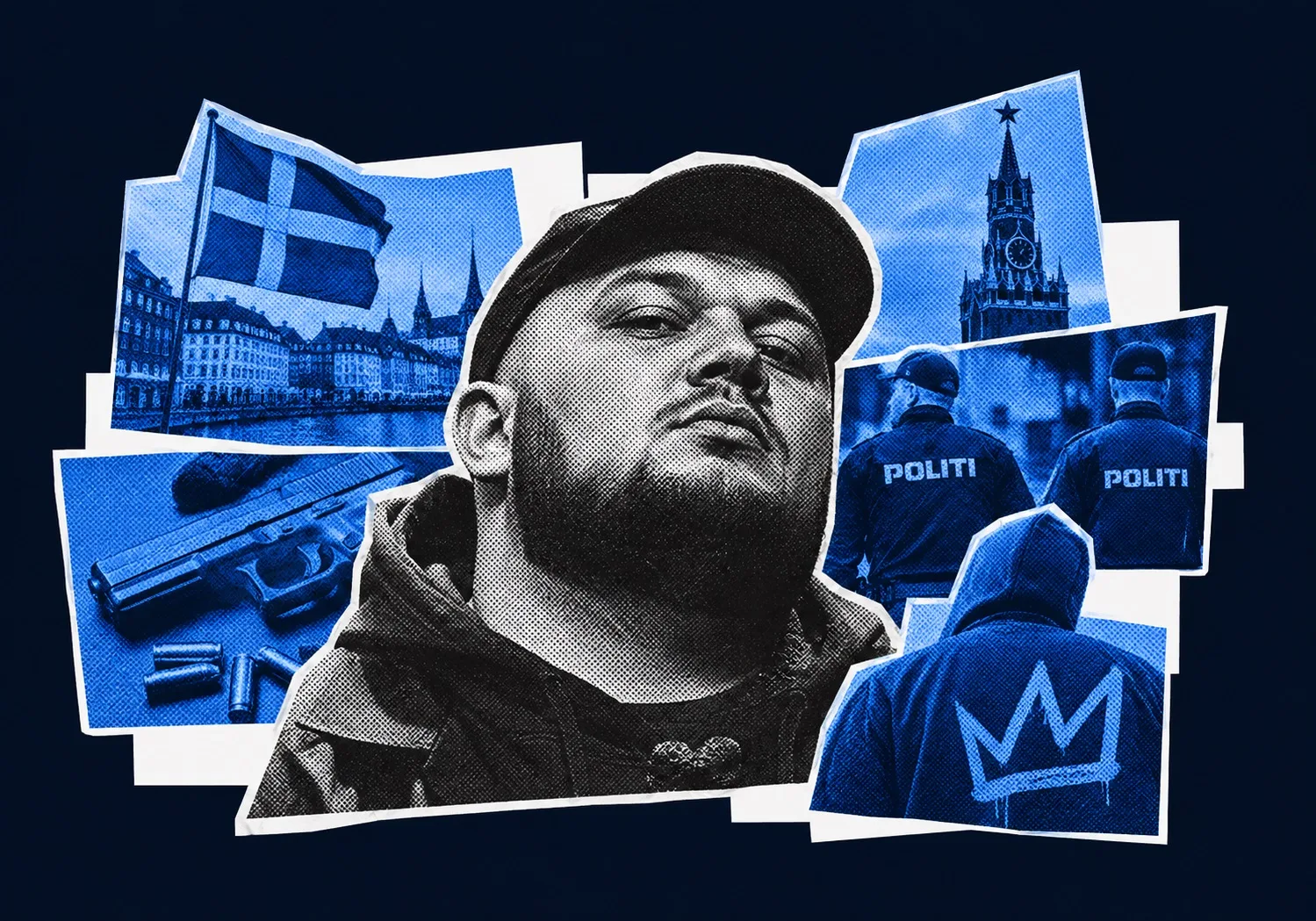
Two Danish men with reported links to the banned gang Loyal to Familia allegedly agreed to murder Ukrainian-American rapper Kyivstoner in Copenhagen on behalf of Russian intelligence — highlighting Moscow's growing use of European criminal networks.
On 25 September, Ukrainian-American rapper Kyivstoner was supposed to take the stage near Copenhagen. Instead, Danish police arrested two men carrying weapons in a car a short distance from the venue. The concert was cancelled.
For almost two months, the arrests remained primarily a weapons case. Then, at a court hearing in Lyngby on 20 November, prosecutors disclosed a far more serious allegation: the men had been recruited by Russian intelligence to murder the musician.
Two Pistols, Two Knives and a Concert Ticket
Kyivstoner, whose real name is Albert Vasyliev, had been due to perform at Skovriderkroen in Charlottenlund, north of Copenhagen. The former member of Ukrainian rap group Griby has built a large online following and was travelling through Europe for a series of performances.
Police intercepted the suspects in Hellerup, around two kilometres from the venue. According to Danish reporting, officers found two loaded pistols and two knives inside their vehicle. One suspect reportedly had a ticket to the concert.
The arrests took place shortly before the scheduled performance on 25 September.
 / Danske Radio") The men remained in custody, but the suspected assassination plan became public only on 20 November, when prosecutors sought to expand the grounds for their detention.
According to Reuters, citing Danish media, investigators believe the suspects had agreed to kill Vasyliev on behalf of a Russian intelligence service.
The hearing took place partly behind closed doors. Neither the alleged recruitment arrangements nor the evidence connecting the suspects to Russian intelligence has been fully disclosed.
Two other men have been detained in connection with the weapons investigation, although they are not accused of taking part in the alleged murder plot.
The suspects have denied wrongdoing. Their continued detention is not a finding of guilt.
The Loyal to Familia Connection
Loyal to Familia, or LTF, is not an intelligence organisation. It is a Danish criminal network associated with gang violence and drug trafficking. Denmark banned the group following years of conflict involving organised crime.
Its appearance in the Kyivstoner investigation is therefore unusual.
DR reported that one suspect was known to police as an LTF member, while the second had links to the organisation. There is no public evidence that LTF as a group agreed to cooperate with Russian intelligence or authorised an attack.
The distinction matters. An individual with gang connections can be recruited without the knowledge of the wider organisation.
Still, the reported links are relevant to an issue that European intelligence agencies have been confronting for several years: Russia's alleged use of people with criminal backgrounds to carry out operations abroad.
Such recruits may already know how to obtain weapons, move around a city without attracting attention or contact others willing to commit crimes. They do not need to be trained intelligence officers.
In Denmark, the allegation is particularly serious because the suspected target was not a military facility or an industrial site. It was a musician preparing to perform in front of an audience.
A Previous Arrest in Warsaw
The Copenhagen case was not the first reported threat against Vasyliev.
On 13 August, Polish Prime Minister Donald Tusk announced that authorities had arrested a Russian citizen suspected of preparing to kill a person holding both Ukrainian and American citizenship in Warsaw.
Tusk said the alleged assassination had been ordered by Russian intelligence. He did not identify the intended victim.
On 14 August, Polish broadcaster RMF24 reported that the target was Kyivstoner.
The suspect was a 29-year-old Russian citizen originally from Donbas, according to Polish reporting. He had been detained on 7 August and placed in pre-trial custody.
The two cases have obvious similarities. Both concern a suspected Russian-directed killing, both involve a Ukrainian-American citizen, and both were interrupted before the alleged plan could be carried out.
But there is no publicly established operational link between the Polish suspect and the men arrested in Denmark. Investigators have not disclosed evidence that the cases shared organisers, financing or instructions.
What makes the chronology particularly notable is that the first arrest came only weeks after Russia's FSB publicly accused Kyivstoner of participating in a planned drone attack.
The FSB Accusation That Preceded the Arrests
On 14 July, Russia's Federal Security Service announced that it had prevented an attack involving 35 FPV drones intended for a strategic enterprise in the Moscow region.
The FSB claimed that the drones had been assembled in Kyiv, concealed in a shipment of ceramic tiles and prepared for transportation through Slovakia, Poland and Belarus.
The agency named Vasyliev as one of the people allegedly involved in organising the operation.
Kyivstoner rejected the accusations, denying that he had helped Ukrainian intelligence or coordinated drone deliveries.
Russia subsequently added him to its domestic list of individuals associated with terrorism or extremism.
There is no independent verification of the FSB's account. Nor has evidence been made public establishing that the Russian accusations were connected to the later alleged assassination plots.
Nevertheless, the order of events is clear.
First came the FSB announcement in July. Then the Polish arrest in August. In September, Danish police detained two armed men shortly before Kyivstoner's concert. The suspected Russian intelligence connection in Denmark was disclosed publicly in November.
Russian state television also reportedly repeated the accusations against the rapper. Some accounts describe threatening language directed at him during coverage on Rossiya-1, but the available material does not include a verifiable recording or exact quotation. Those reported threats remain unconfirmed.
Denmark's Wider Russian Security Problem
The Kyivstoner investigation comes as Danish intelligence has been warning about Russian activity inside the country.
In September, Denmark's Security and Intelligence Service, PET, said Russia was recruiting Danish citizens to assist with preparations for sabotage against defence companies connected to Ukraine.
The warning concerned a different type of operation, but it helps explain why the alleged recruitment of two Danish residents for a killing would attract attention from the country's security services.
European authorities have increasingly investigated cases in which people with no formal intelligence background are suspected of carrying out tasks for Russian handlers.
Some operations involve surveillance or gathering information about potential targets. Others concern arson, sabotage or damage to infrastructure.
The Danish allegations involve something more direct: the suspected murder of a named individual during a European concert tour.
Kyivstoner reportedly said that Danish intelligence officials met him at Copenhagen airport and informed him that the performance could not go ahead because of a threat to his safety.
He also reported cancellations affecting other European tour dates. The precise intelligence assessments behind those decisions have not been made public.
On 20 November, PET and Denmark's National Police scheduled a briefing on changes in the threat landscape involving Russia. Foreign Minister Lars Løkke Rasmussen and Justice Minister Nicolai Wammen were also due to address the matter separately.
The available reporting does not establish what additional information was subsequently disclosed at those briefings.
A Killing Planned Inside a NATO Country
The investigation has implications beyond the music industry.
If Danish prosecutors can demonstrate that Russian intelligence recruited local criminals to murder Kyivstoner, the case would add to evidence of Moscow's willingness to pursue individuals outside Russia through intermediaries.
It would also place the alleged operation alongside other security incidents that European governments have attributed to Russian-linked actors.
The use of local recruits complicates investigations. A person hired to carry out an attack may know little about the ultimate organiser, while communications and payments can pass through several intermediaries.
But those are possibilities, not facts about the Copenhagen case.
Investigators still need to determine who contacted the suspects, whether money changed hands and how the alleged Russian intelligence connection operated. The reported LTF ties also require closer examination before they can be described as part of an organised recruitment network.
For Vasyliev, the consequences have already been tangible. A concert was cancelled, his European tour was disrupted, and his name appeared in two separate investigations involving alleged assassination plans.
For Denmark, the case presents a different concern: whether individuals already involved in domestic organised crime can be recruited to carry out violence on behalf of a foreign intelligence service.
The allegations were presented at a court hearing on 20 November. Both principal suspects deny wrongdoing, and no court has established that Russia directed a murder conspiracy against Kyivstoner.
Sources: Reuters, DR, The Copenhagen Post, Euronews, The Kyiv Independent, Kyiv Post