
Putin Reshuffles Russia’s Government as Economic Pressures Mount

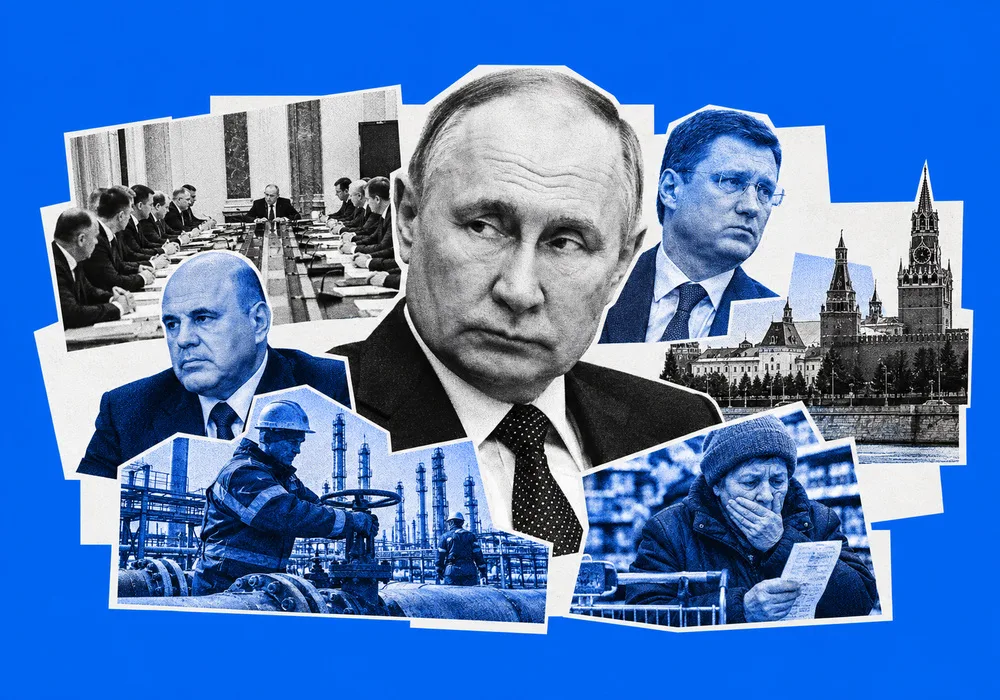
Vladimir Putin has approved changes to Russia’s government leadership as the Kremlin faces a widening budget deficit, higher taxes and persistently high interest rates. The reshuffle comes after September’s parliamentary elections and signals an effort to adjust the government’s economic management without changing the country’s broader political direction.
Russian President Vladimir Putin approved a government reshuffle proposed by Prime Minister Mikhail Mishustin on 19 October, following a meeting focused on the country’s social and economic development. The changes come after September’s parliamentary elections and are intended to adjust the composition of the executive at a time when the government faces mounting pressure to sustain growth, manage public finances and maintain the functioning of strategically important sectors. Although the reshuffle appears limited in scope, its timing highlights the economic challenges facing the Kremlin as it attempts to preserve stability while continuing to finance its military priorities.
The Russian government is confronting a difficult combination of fiscal and monetary pressures. The budget deficit has exceeded earlier plans, higher taxes are placing additional demands on businesses and households, and elevated interest rates are making borrowing more expensive. These pressures constrain the government’s ability to stimulate economic activity without adding to inflation or increasing the cost of servicing public debt. The search for new sources of growth has consequently become a central challenge for Mishustin’s administration, which must balance the demands of state spending with the need to maintain investment and productive capacity.
The reshuffle does not amount to a fundamental change in Russia’s political direction. Instead, it suggests an attempt to adjust the existing administrative structure to meet increasingly difficult economic conditions. Putin retains ultimate authority over the executive, while Mishustin remains responsible for coordinating the government’s work. The personnel changes therefore point towards continuity in the Kremlin’s political system, even as the government faces growing pressure to improve the effectiveness of its economic policies.
Finance Ministry Gains a More Prominent Role
One of the most significant changes concerns Finance Minister Anton Siluanov, who is set to retain his ministerial position while taking on the additional role of deputy prime minister. Siluanov has led the Finance Ministry since 2011, giving him extensive experience in managing Russia’s public finances through economic crises, sanctions and the expansion of state spending associated with the war against Ukraine. His elevation would strengthen the institutional position of the official responsible for the federal budget at a time when decisions over revenue, borrowing and expenditure have become increasingly consequential.

The additional responsibility could improve coordination between fiscal policy and the wider work of the government. Russia needs to maintain financing for defence, security and public commitments while responding to weaker economic momentum and higher borrowing costs. A more prominent role for the finance minister could help bring budgetary considerations into government decision-making earlier and more directly. However, administrative changes cannot eliminate the underlying tension between competing spending priorities, particularly when the state must accommodate military requirements alongside infrastructure investment and domestic economic needs.
The budget outlook illustrates the scale of the challenge. In September, Siluanov said Russia expected its 2026 budget deficit to reach around 3% of gross domestic product, significantly above the original target of 1.6%. He attributed the deterioration partly to increased military expenditure, including spending on air defence, as well as measures to address fuel shortages. The government has relied on additional borrowing and available reserves to cover the shortfall, while higher oil revenues and a weaker rouble have offered some support. Nevertheless, borrowing becomes more expensive when interest rates remain elevated, making the management of the deficit a central test for the Finance Ministry.
The pressure is not solely a question of accounting. A larger deficit increases the importance of decisions over which sectors receive state funding and which activities are expected to operate with less support. If military and security expenditure continues to absorb a substantial share of public resources, the government may have less flexibility to finance civilian investment or respond to economic weakness. Higher taxes can increase revenue, but they can also reduce the financial room available to companies and consumers. Siluanov’s expanded role therefore places him closer to the centre of the political decisions required to reconcile these competing demands.
Transport Leadership Moves Closer to the Centre of Government
The reshuffle also involves the transport sector. Transport Minister Andrei Nikitin has been nominated for the position of deputy prime minister responsible for transport and related areas, while Dmitry Yadrov, currently head of the Federal Air Transport Agency, has been nominated to succeed him as transport minister. The appointments remain subject to parliamentary approval, but they indicate an intention to reorganise responsibility for a sector that is essential to Russia’s domestic economy and international trade.
Transport infrastructure has become particularly important as Russia adapts to restrictions on its economic relations with Western countries and redirects trade towards alternative markets. Railways, ports, roads and aviation networks support the movement of raw materials, industrial goods and consumer products across a country with exceptionally large distances between production centres and markets. Maintaining these systems requires sustained investment, reliable logistics and coordination between federal authorities and regional administrations. Disruptions or deteriorating infrastructure can raise costs for businesses and complicate the movement of goods, undermining the government’s broader efforts to sustain economic activity.
The sector also operates in a more difficult external environment than before Russia’s full-scale invasion of Ukraine. Sanctions, restrictions on international aviation and changes in established trade routes have forced Russian companies to adjust supply chains and transport arrangements. The government has sought to expand alternative connections and preserve links with non-Western markets, but these adjustments do not necessarily replace the efficiency or capacity of previous arrangements. The effectiveness of the new leadership will depend on its ability to address practical bottlenecks rather than simply reorganise ministerial responsibilities.
Nikitin’s proposed move to the deputy premiership would place transport policy at a higher level of government coordination. This could facilitate decisions involving several ministries and major infrastructure programmes. Yadrov’s nomination, meanwhile, would bring an official with experience in civil aviation regulation into the ministerial position. The appointments alone, however, do not establish whether funding will increase, infrastructure projects will accelerate or operational problems will be resolved. Their significance will become clearer through the policies and spending decisions that follow.
The War Continues to Shape Economic Choices
Russia’s economic management cannot be separated from the financial demands of its war against Ukraine. Military expenditure has become an important component of federal spending, while sanctions and restrictions on technology, finance and trade have changed the environment in which Russian businesses operate. The government has attempted to maintain economic activity through public spending, redirected exports and alternative financial arrangements, but these measures have not removed the structural costs associated with prolonged confrontation with Western countries.
The pressure on the budget reflects this difficult balance. Defence and security requirements compete with spending on infrastructure, social commitments and the wider economy. At the same time, elevated interest rates make it more expensive for companies to finance investment and for the government to borrow. Higher taxation can help cover public expenditure, but it may also place additional pressure on businesses already facing higher financing costs and uncertainty over future demand. The government must therefore manage several interconnected problems rather than a single budgetary shortfall.
These constraints matter because sustained economic growth depends on more than the volume of state expenditure. Investment requires access to financing, predictable regulation, functioning infrastructure and the ability to obtain equipment and technology. Restrictions on Western supplies and the need to redirect trade can increase costs, while high borrowing expenses discourage some private-sector projects. Government appointments may improve administrative coordination, but they cannot independently resolve these wider obstacles.
The Kremlin’s immediate objective is likely to preserve the capacity of the state to meet its commitments while preventing economic pressures from developing into a broader crisis. This requires careful management of revenues, spending and investment, particularly if the government cannot rely indefinitely on favourable energy prices or continued access to existing financial buffers. The reshuffle should therefore be understood against the background of Russia’s effort to adapt its economic administration to the demands of a prolonged war and a more constrained external environment.
Parliamentary Approval and the Limits of Political Change
The reshuffle follows September’s parliamentary election, which renewed the membership of the State Duma, Russia’s lower house of parliament. Under Russia’s constitutional arrangements, the prime minister submits candidates for deputy prime minister and ministerial positions to the Duma for approval. The proposed changes must therefore pass through a formal parliamentary process before the appointments can be completed.
The procedure gives parliament a defined role in approving the composition of the government, but it does not suggest a wider redistribution of political authority. Putin remains the dominant figure in Russia’s executive system, and the reshuffle was approved by the president following Mishustin’s proposals. The changes are taking place within the established governing structure rather than emerging from a contest over the country’s strategic direction.
This distinction is important when assessing the political significance of the appointments. A reshuffle can alter the balance of responsibilities within the government, strengthen particular officials or improve coordination between ministries without changing the fundamental distribution of power. Siluanov’s proposed additional role and Nikitin’s move towards the deputy premiership could increase the influence of economic and infrastructure management within the executive, but the extent of any practical change will depend on the authority and resources attached to their responsibilities.
For the Kremlin, personnel changes also offer a way to respond to administrative challenges without publicly acknowledging a need for a major policy reversal. Replacing or promoting officials can signal that the leadership is seeking to improve performance while preserving continuity. Yet this approach carries limitations: if the underlying problems stem from structural pressures, sanctions, expensive borrowing or the allocation of resources to the war, changing the officials responsible for managing them may have only a limited effect.
What the Reshuffle Reveals About Russia’s Governing Model
The government changes illustrate how the Kremlin is attempting to manage economic pressure through adjustments to the existing state apparatus. The expanded role proposed for the finance minister reflects the growing importance of fiscal decisions, while the transport appointments underline the need to maintain infrastructure and trade networks under difficult conditions. Both areas are central to the government’s ability to sustain economic activity, but neither can be insulated from the wider consequences of Russia’s war against Ukraine and its confrontation with Western countries.
The immediate test will be whether the reshuffle produces more effective coordination and more credible economic management. The government must control the deficit without undermining growth, maintain essential infrastructure while managing spending pressures, and support domestic production despite restrictions on technology and finance. These objectives are difficult to reconcile, especially if military expenditure remains high and borrowing costs continue to weigh on investment.
The appointments do not, in themselves, demonstrate that Russia is approaching an economic breaking point, nor do they establish that the Kremlin is preparing a major strategic shift. They do, however, show that the government is operating under tighter constraints and must devote increasing attention to the allocation of resources. The decisive measure of the reshuffle will be whether the new arrangements help the state manage those constraints more effectively, rather than whether the changes produce a visible alteration in Russia’s political leadership.