
Russia’s Ruling Party Secures Supermajority in State Duma Elections as Kremlin Tightens Wartime Grip

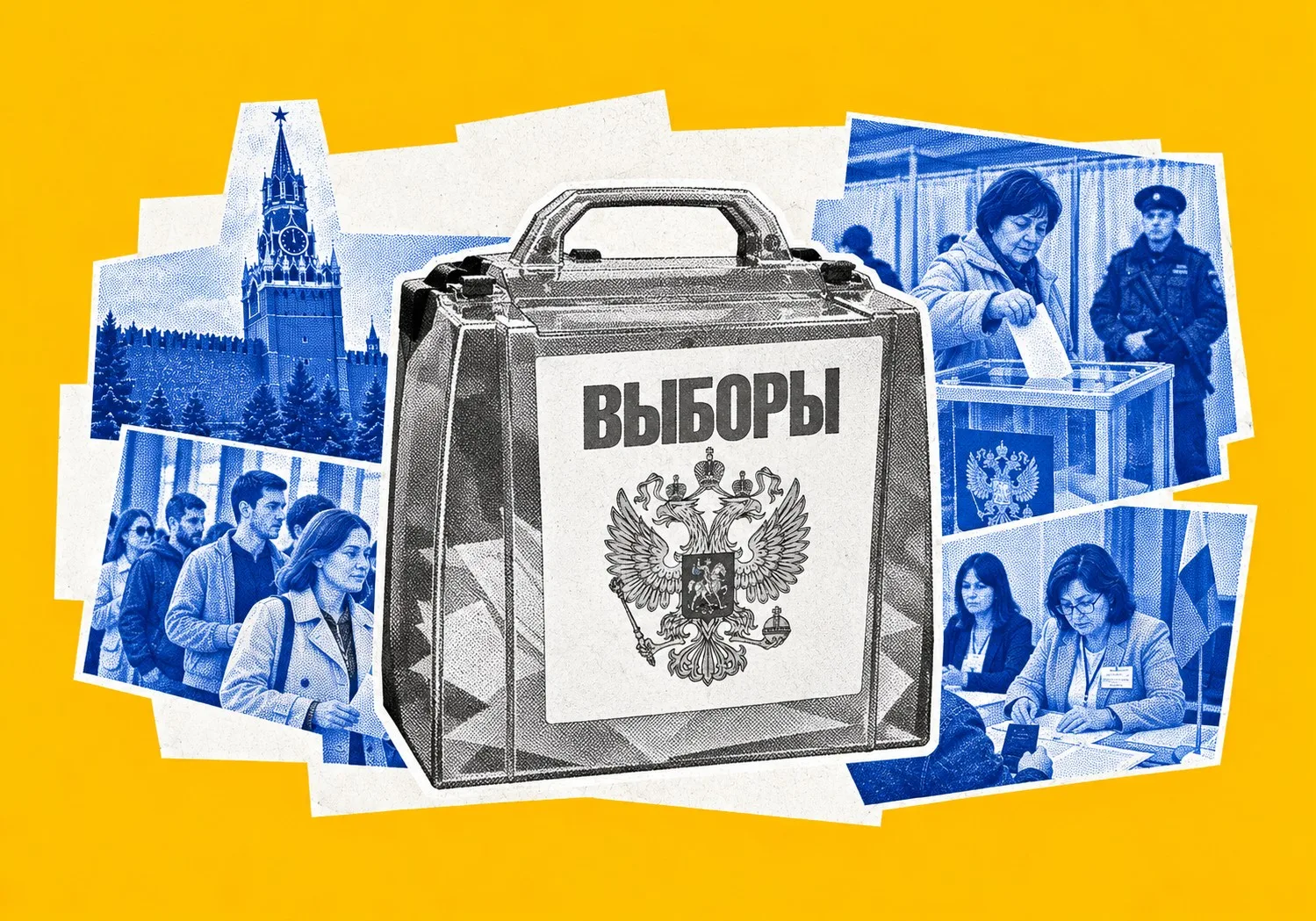
Preliminary tallies published by Moscow’s Central Election Commission on September 21, 2026, show United Russia retaining a firm legislative supermajority in the State Duma after three days of voting. The contest played out against a backdrop of military mobilization and sweeping domestic censorship, operating less as a traditional electoral race and more as a bureaucratic exercise in executive confirmation.
Official figures confirmed that the ruling apparatus faced zero institutional friction. Beyond the federal totals for United Russia, the returns mapped the careful containment of regional strongmen, occupied territories, and the few remaining opposition groups willing to test the boundaries.

Ramzan Kadyrov, the Kadyrovtsy, and the Ukraine War
In the North Caucasus republic of Chechnya, Kremlin-backed leader Ramzan Kadyrov claimed re-election with 99.85% of the vote, according to final precinct data from the TASS news agency.
Challengers from the Communist Party and A Just Russia picked up 0.05% each. Kadyrov has run Chechnya since 2007, trading local autonomy and heavy federal subsidies for unswerving loyalty and a steady supply of fighters deployed to Ukraine.
Armed formations under his direct control—known collectively as the Kadyrovtsy, including Rosgvardiya elements like OMON, SOBR, and the Sever and South battalions—have formed a high-visibility component of the Russian war effort.
Built on personal fealty to Grozny's leadership and slotted into federal command structures, these units operate as frontline shock troops and feature prominently in state military propaganda.

Senior figures such as State Duma deputy Adam Delimkhanov and Spetsnaz Akhmat commander Apti Alaudinov link their political clout directly to the maintenance and command of these forces in occupied Ukrainian territory.
This transactional alignment underpins Kadyrov’s domestic dominance, granting him near-unanimous ballot returns while cementing his status as an indispensable asset to the federal vertical.
The Mechanics of the Vote and Party Performance
With over 83% of precinct protocols processed by the evening of September 21, United Russia secured 57.82% of the party-list vote alongside wins across nearly all single-member districts.
Under the direction of Ella Pamfilova, the Central Election Commission enforced an electoral calendar that effectively barred independent civil society groups and unregistered critics through procedural roadblocks.
The resulting parliament is tailored to pass executive legislation instantly, bypassing any form of parliamentary debate.
Veteran Integration and Data Retraction
The ruling party hit a nerve over the practical integration of returning combatants into civilian lawmaking bodies.
During a post-election briefing, United Russia general council secretary Vladimir Yakushev announced that 86 participants of the war in Ukraine would take seats in the new State Duma.
Hours later, the state news agency RIA Novosti pulled the report at the party's explicit request, citing the need for data verification.
Central Election Commission officials later noted that roughly 186 war veterans had registered as candidates overall.
The abrupt retraction exposed internal anxieties regarding how the regime chooses to package and quantify returning soldiers inside civilian political structures.
Voting in Occupied Territories
The electoral machinery was pushed directly into Russian-occupied regions of Ukraine, covering Crimea, Sevastopol, and parts of the Donetsk, Luhansk, Kherson, and Zaporizhzhia oblasts.
Independent observers reported heavy administrative pressure on voters at polling stations.
In Donetsk, proxy authorities reported turnout figures topping 75%, claiming over a million residents cast ballots.
The exercise served to graft those frontline areas into the Russian federal legal framework.
Opposition Status and the Yabloko Breakthrough
Yabloko, the country's last surviving liberal party with an explicitly anti-war platform, faced systematic legal attrition before the vote.
The Supreme Court threw out its federal list following lawsuits over copyright issues and foreign funding.
In regional races, the party hit a wall of administrative bans, getting knocked off the ballot in 7 out of 8 target regions.
Local courts in Pskov, Smolensk, Chelyabinsk, Tomsk, Sverdlovsk, and Chuvashia systematically voided Yabloko lists and individual candidates.
Yet in the Novgorod region—the only place where the party managed to keep its list intact—Yabloko cleared the electoral hurdle.
With nearly 97% of local precincts reporting, the party secured 5.67% of the vote, earning seats in the regional assembly alongside United Russia, the Communists, LDPR, New People, A Just Russia, and the Party of Pensioners.
The Disappearance of Anti-War Candidate
Yulia Kuznetsova, a Greens party candidate running in Moscow’s Babushkinsky district on a peace platform, vanished right before voting began after a meeting with voters in Sokolniki.
Associates raised the alarm as local police gave conflicting accounts of her whereabouts.
She eventually surfaced in a scripted Telegram video, stating that a difficult personal conversation with her husband had required medical and psychological care, before confirming she was home and had voted.
She offered no further explanation, and no formal inquiry followed.
Structural Integration and Institutional Dynamics
The 2026 results highlight a political system relying on entrenched administrative muscle rather than public enthusiasm.
Power remains concentrated at the top, leaving parliament as an instrument for rubber-stamping policy rather than deliberating it.
Financial transfers and security arrangements keep regional elites aligned while preempting dissent.
Extending this apparatus into occupied regions reflects the broader expansion of the state's governance model.
Media Control and the Information Environment
The vote unfolded inside a heavily policed media ecosystem.
Independent outlets and digital channels faced web blocks, fines, and criminal charges for straying from official talking points.
Federal censors tightly managed coverage of the military, the economy, and the opposition.
This chokehold on information kept alternative views off the agenda, allowing the state to run the electoral cycle largely unopposed.
Strategic Implications
The election demonstrates the regime's capacity to manage political control through prolonged conflict and economic sanctions.
By combining administrative pressure, the legal exclusion of opponents, and curbs on public dissent, authorities kept friction to a minimum.
At the same time, the scramble over veteran metrics and the marginalization of anti-war voices point to underlying jitters regarding public fatigue.
How Moscow balances these pressures will shape its domestic stability as the new parliament settles in.