
Poland’s Tusk Denounces Russian ‘Provocation’ After Two Missiles Hit Polish Territory

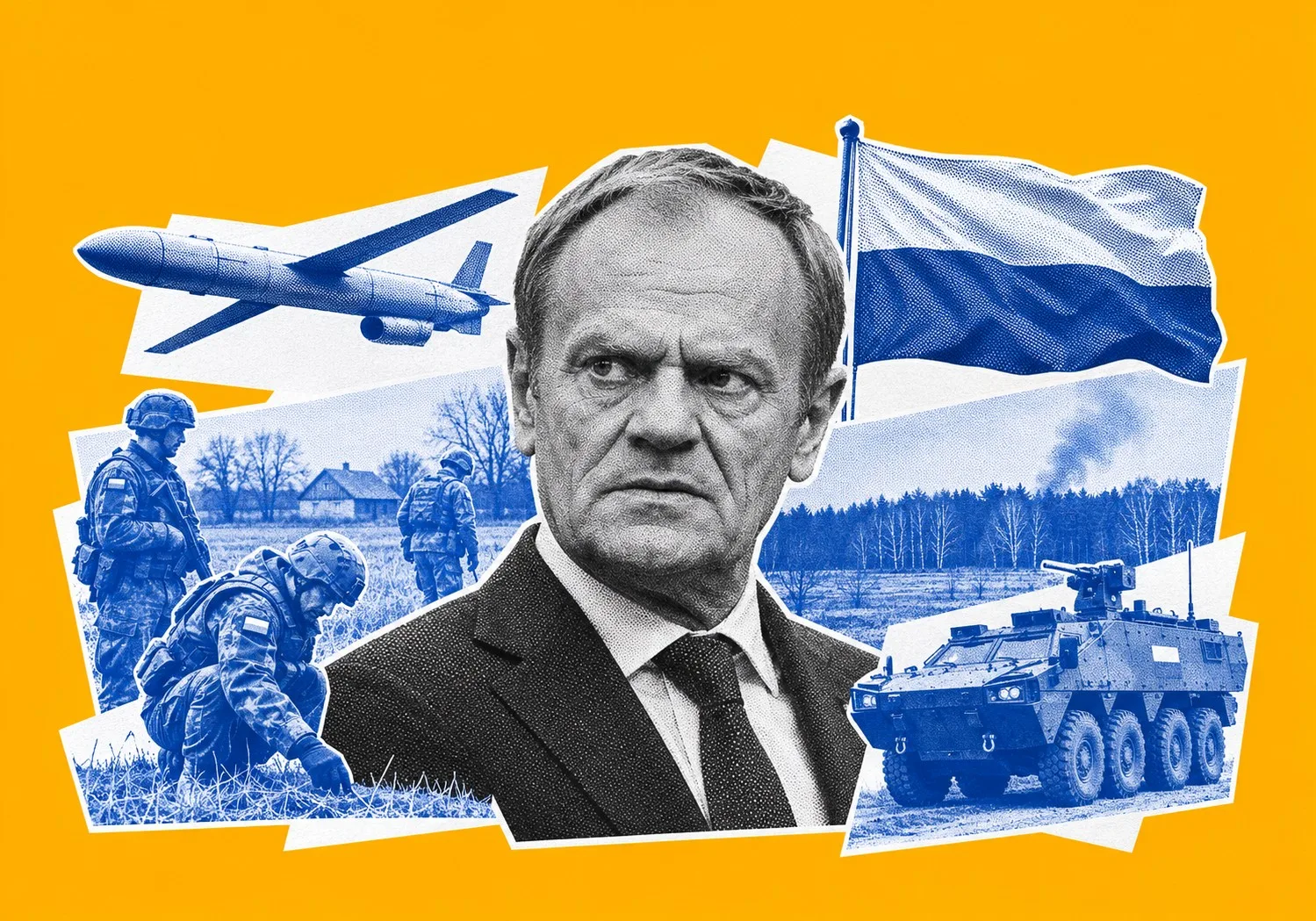
Two Russian missiles and a suspected jet-powered drone crashed in south-eastern Poland on Friday, Polish officials said, as residents reported explosions. Nobody was injured. Prime Minister Donald Tusk described the incursions, which came during a major Russian attack on Ukraine, as a deliberate provocation.Defence Minister Władysław Kosiniak-Kamysz identified one of the missiles as a Kh-101, a long-range weapon launched by Russian strategic bombers. Authorities were examining wreckage at three locations across the Lubelskie and Podkarpackie regions. No damage to critical infrastructure was reported.

The incidents on 20 November prompted an emergency security meeting in Warsaw and Polish plans to seek stronger Nato support. Russia had not commented on the airspace violations at the time of reporting.
Explosions in the South-East
The confirmed Kh-101 came down near Nowy Lipowiec, roughly 50–60km from the Ukrainian border, at about 06:30 local time, or 05:30 GMT. Local resident Natalie Szponar said she was getting her children ready for school when she heard a “whistle and a dull impact”.
Firefighters extinguished a blaze involving the fallen object, while police and military personnel secured the site. The early reports referred to an unidentified object; Kosiniak-Kamysz subsequently confirmed that it was a Russian cruise missile.
A second missile fell near Rudnik nad Sanem, west of Nowy Lipowiec, where residents reported a loud bang. Police received reports of a possible impact in a wooded area. Further south, near Mołodycz, fragments believed to be from a jet-powered drone were found scattered across farmland.
The defence minister distinguished between the confirmed Kh-101 identification and the preliminary assessment of the drone. His account established that the incident extended beyond the first crash site reported on Friday morning, with emergency services and investigators working in two neighbouring provinces.
Tusk convened ministers, military commanders and the heads of security services after receiving reports from the defence and interior ministries. He later said the immediate threat from the air had passed.
Work continued at the crash sites to recover and identify the objects.

Nato Scrambles Jets
Polish and allied aircraft were already operating during the overnight Russian bombardment. Poland’s defence ministry said F-16 fighters and Swedish Gripens had flown patrols, supported by a Dutch refuelling aircraft. A Polish airborne early-warning aircraft was also deployed over the south-east.
Ground-based defences were activated, including Patriot systems around Rzeszów-Jasionka airport and near Świdnik. Helicopters and territorial defence units were involved in the wider response. The ministry’s account described the forces mobilised but did not establish why the objects that entered Poland were not intercepted.
Nato Secretary General Mark Rutte condemned the “grave violations of Polish airspace” and said alliance jets had been scrambled. “This incident is clearly dangerous — a consequence of Russia’s ongoing war against Ukraine,” he said.
Kosiniak-Kamysz said Warsaw would seek additional forces and equipment for Nato’s Eastern Sentry operation, which supports the alliance’s eastern flank. The request concerned protection of Polish and allied territory as Russia’s attacks on neighbouring Ukraine continued.
The minister called the incursions another Russian provocation and linked their timing to the presence of allied forces taking part in exercises in Poland. Those drills were due to host senior military and political visitors on Friday.
Drills Near the Border
“It is no coincidence that these objects landed near the site where military manoeuvres by a ‘coalition of the willing’ supported by Polish troops are taking place in Nowa Dęba,” Tusk told reporters.
The cause of the incursions remains under investigation. Tusk’s assessment that they were deliberate has not been independently established, and the confirmed identification of a Russian weapon does not by itself establish its intended destination.
The British- and French-led exercise, Koalicja 26.2, runs from 9 to 22 November and involves forces from 11 countries. It is the first major exercise of the Multinational Force–Ukraine, the military arm of the Coalition of the Willing, which is preparing to support Ukraine after fighting ends.
The participating countries are Belgium, Estonia, France, Germany, Lithuania, the Netherlands, Poland, Spain, Sweden, Türkiye and the UK. Britain announced that 300 of its personnel would take part, alongside RAF Typhoon fighters and a Voyager refuelling aircraft.
Much of the activity concerns the practical work required to deploy and sustain troops. Forces arriving by sea, air and land move onwards by road and rail to Nowa Dęba, where units train together. Poland provides accommodation, fuel, medical assistance, maintenance and access to military and civilian infrastructure.
Friday’s programme included demonstrations of transport, equipment repairs and coordination between contingents.
Kosiniak-Kamysz said the exercise would continue despite the incursions. The planned activities also gave visiting ministers and commanders an opportunity to assess how the force would operate.
The British government says any deployment into Ukraine would take place only after fighting had ceased and at Kyiv’s request. Its tasks would include helping rebuild Ukrainian forces and supporting safer skies and maritime routes. It would not perform peacekeeping or ceasefire-monitoring duties.
A Wider Russian Assault
The incursions occurred during what Kosiniak-Kamysz described as one of Russia’s largest attacks on Ukraine since the full-scale invasion began in February 2022. At least eight people were reported killed across Ukraine, where Kyiv’s bridges over the Dnipro and a railway station in Lviv were among the reported targets.
Russian cruise missiles were reported approaching western Ukraine during the attack, bringing the bombardment close to Poland’s border. Ukrainian monitoring accounts described a substantial wave heading towards the Lviv region, although their early reports did not establish the routes of the weapons later recovered in Poland.
The assault followed Vladimir Putin’s threat of “painful” retaliation for repeated strikes on the bridge linking Russia with occupied Crimea across the Kerch Strait. The latest attacks on Ukraine’s transport infrastructure came against that backdrop.
Friday’s incidents also followed a Coalition of the Willing summit in Berlin on Thursday, where Ukraine’s partners pledged continued support. German Chancellor Friedrich Merz said peace talks with Russia should take place soon on neutral territory. The exercises in Poland had begun before that meeting.
A Difficult Target
The Kh-101 can travel thousands of kilometres at low altitude, using satellite navigation and terrain-matching systems to follow its route. Unlike a ballistic missile, which follows a high arc for much of its flight, a cruise missile travels through the atmosphere like a small, uncrewed aircraft.
Its low flight path makes detection difficult. Terrain and the curvature of the Earth can conceal an approaching missile from ground-based radar until it is relatively close. Routes can exploit valleys and other features that obstruct radar coverage, reducing the time available to respond.
Airborne surveillance can provide earlier warning, but detecting a missile and intercepting it are separate tasks. Defenders need a sufficiently precise track and a fighter or missile battery in the right position. They must identify the threat and complete an engagement before it passes beyond reach.
For that reason, protecting a long border requires more than placing missile batteries along it. Commanders have to combine surveillance aircraft, ground-based sensors, fighters and air-defence systems, concentrating protection around likely routes and important sites. None of those general constraints explains the outcome of Friday’s incidents without a reconstruction of what happened.
Poland experienced a similar incursion on 30 July, when a Kh-101 came down near Tarnawa-Kolonia. Two weeks later, General Ireneusz Nowak told TVN24 that he considered it about 80 per cent likely that the missile had not arrived there accidentally. That assessment concerned the July incident.
An older Russian Kh-55 cruise missile also entered Polish territory in 2022 and was subsequently recovered.
Sources: Polish Ministry of National Defence, Reuters, Onet.pl