
Poland’s Political Divisions Undermine Its Influence on the European Stage

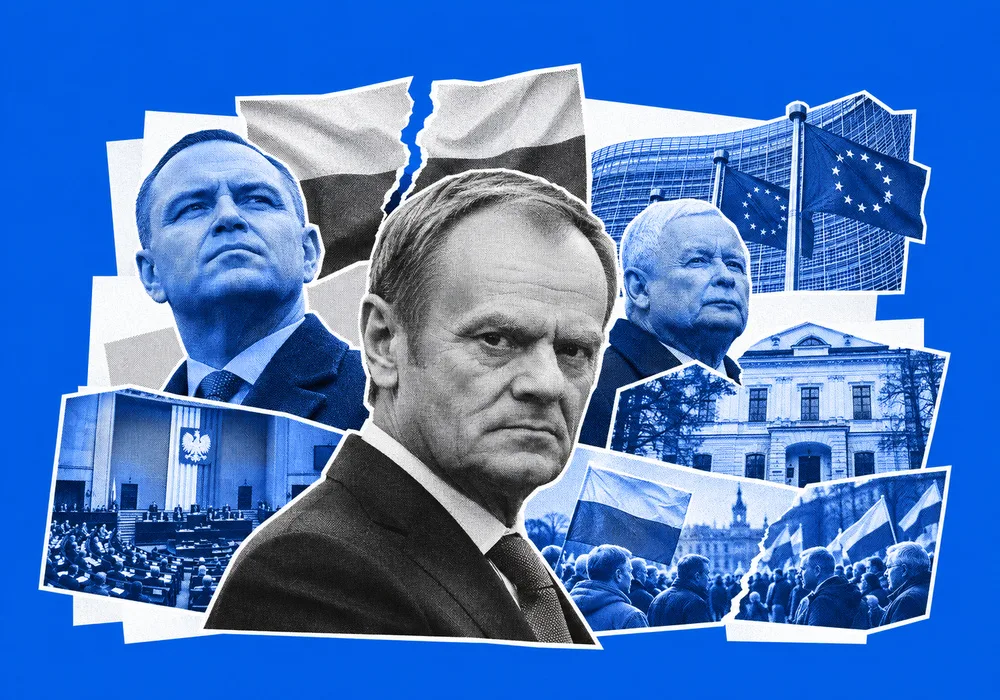
Poland’s economic strength, growing defence capabilities and strategic position on NATO’s eastern flank have made it one of Europe’s most important security actors. However, persistent political divisions between the government and the presidency are limiting Warsaw’s ability to translate these advantages into greater diplomatic influence, particularly over Ukraine and European security policy.
Poland has emerged as one of the most strategically important countries in Europe. Its strong economic performance, substantial defence expenditure and direct exposure to the Russian threat give Warsaw considerable political and military significance within NATO and the European Union. Yet the country has struggled to convert these advantages into a corresponding level of influence over international decision-making. Deep divisions within its political system have increasingly undermined its ability to act as a consistent and influential voice in European and transatlantic affairs.
The central problem lies in the confrontation between the government led by Prime Minister Donald Tusk and the presidency. Competing political priorities and institutional disagreements have made it difficult for Warsaw to establish a coherent foreign policy position. Rather than reinforcing one another, the country's main political institutions have frequently become competing centres of authority, complicating relations with European partners and Washington.
Government and Presidency at Odds
The political rivalry has broader implications than domestic governance. Poland's international credibility depends partly on its ability to maintain continuity in foreign policy, particularly on issues involving Russia, Ukraine and NATO's eastern flank. When the government and president communicate different priorities or pursue competing diplomatic approaches, international partners face uncertainty over which position represents Warsaw's longer-term strategy.
The confrontation also limits the government's capacity to build consensus around major domestic and international decisions. Disagreements over institutional powers, judicial reforms and the direction of the country have contributed to a prolonged political stalemate. This environment makes it more difficult for Poland to present itself as a unified regional leader, despite its growing strategic importance.
Ukraine and European Security at Stake
The consequences are particularly significant for Ukraine. Poland remains a critical logistical, political and security partner for Kyiv, providing an essential transit route for international assistance and playing a major role in strengthening NATO's eastern defences. Its geographical position and experience of Russian pressure give it a distinctive understanding of the security challenges facing Central and Eastern Europe.
However, political fragmentation risks reducing Warsaw's ability to shape discussions on Ukraine's future, European security guarantees and the long-term architecture of deterrence against Russia. Influence in these negotiations requires more than military spending or geographical importance. It also depends on diplomatic coordination, reliable commitments and the ability to build coalitions with other European capitals.
Poland's relationship with the United States is another area affected by domestic political competition. Different political channels and priorities can complicate Warsaw's engagement with the Trump administration, particularly when Washington's approach to European security and support for Ukraine remains a central concern for NATO members. A fragmented Polish leadership risks weakening the country's ability to negotiate from a position of strategic consistency.
Strategic Potential Without Political Unity
Poland's difficulties illustrate a broader challenge facing European security. The continent increasingly depends on countries along its eastern flank to strengthen defence capabilities, coordinate support for Ukraine and respond to Russian pressure. Poland has the economic resources, military ambitions and strategic position to become one of the leading powers shaping this agenda.
Nevertheless, these advantages cannot fully compensate for institutional confrontation at home. If the rivalry between the government and presidency continues, Warsaw risks losing opportunities to influence decisions that directly affect its own security interests. The country may remain an indispensable NATO ally and a major European military power, but its capacity to translate that position into diplomatic leadership will depend on whether its political institutions can establish a more coherent approach to foreign policy.
For the European Union and NATO, the issue extends beyond Poland's domestic political balance. A divided Warsaw means a less predictable partner at a time when European security requires sustained coordination, particularly over Ukraine and the future of the continent's eastern defences.
Sources: The Wall Street Journal, TVP Worldx