
Poland Foils Alleged Russian False-Flag Plot Near Kaliningrad to Blame Ukraine

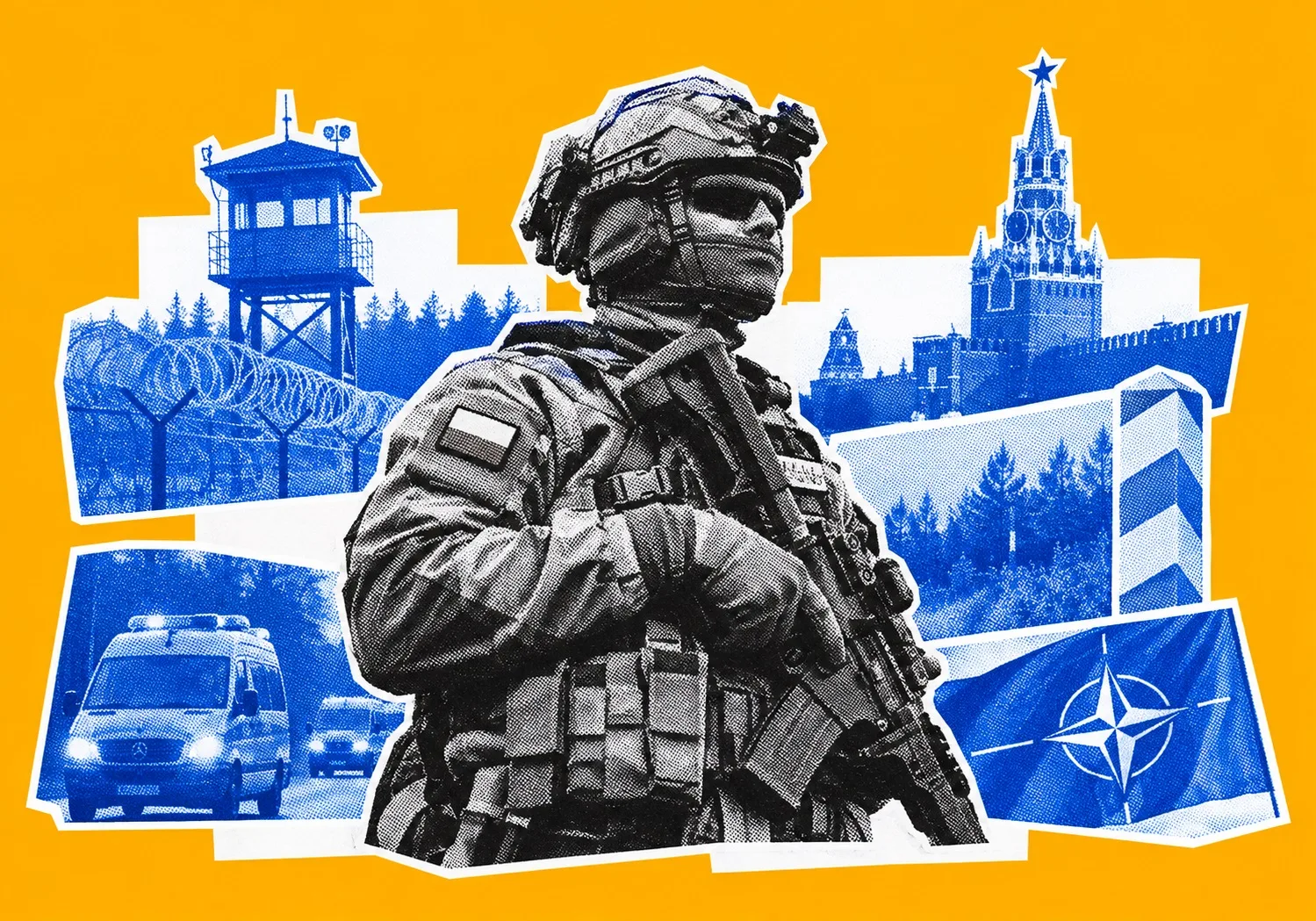
Polish security forces have disrupted a suspected Russian sabotage operation near the Kaliningrad border aimed at causing mass casualties and framing Kyiv, according to intelligence reports. Backed by allied warnings, Warsaw’s rapid military deployment sought to prevent a crisis designed to fracture Polish-Ukrainian ties and destabilise NATO’s eastern flank.
Russian intelligence services were allegedly preparing a major sabotage operation on Polish territory in late October or early November 2026, according to an investigation published by Polish newspaper Rzeczpospolita on 18 November.
The reported plan centred on Poland's northeastern border with Russia's Kaliningrad exclave. It could have involved crossing the international border and staging an attack on a facility inside Russian territory, creating the appearance of an assault originating from Poland.
Senior Polish security sources told the newspaper that Russian planners anticipated a substantial number of casualties.
One source said intelligence officers had identified specific potential targets, although their locations were not publicly disclosed.
A source familiar with the intelligence compared the proposed operation to the 1939 Gleiwitz incident, when Nazi Germany staged an attack on a German radio station and blamed Poland as part of its justification for invading the country.
In the alleged 2026 scenario, individuals crossing the border could have been killed or discovered carrying materials falsely identifying them as Ukrainians.
The intended political outcome, according to the source, was to force Poland to reconsider or suspend its assistance to Ukraine.
These details remain allegations attributed to unnamed security officials. Polish authorities have confirmed taking preventive measures against a credible threat but have not publicly authenticated the complete scenario described by Rzeczpospolita.
Poland deployed counterterrorism forces and military units
Poland's response involved intelligence agencies, police, border guards and military personnel operating in the northeastern part of the country.
In early November, the authorities established a special command structure at the National Police Headquarters to coordinate security operations in the Warmian-Masurian and Podlaskie voivodeships.
The deployment followed warnings from Polish and allied intelligence agencies about possible sabotage near the Kaliningrad border.
According to Polish media reports, approximately 180 additional police officers and counterterrorism personnel were sent to reinforce security in the region. Border Guard posts and police facilities received additional protection, while officers from Poland's Internal Security Agency (ABW) were deployed to support counterintelligence activities.
Poland's elite military units GROM, NIL and AGAT also conducted exercises in the Warmian-Masurian region, strengthening the military presence during the heightened security alert.
On 2 November, national police chief Marek Boroń publicly discussed the special security operation and warned of possible sabotage activities, including incidents involving armed groups crossing the border.
The following day, Prime Minister Donald Tusk acknowledged that border guards had observed suspicious activity near Kaliningrad during the night.
The incident reportedly involved people carrying flashlights close to the border. Polish authorities rapidly mobilised additional resources.
Tusk did not establish that the incident was an attempted Russian operation, but he emphasised that Warsaw had received credible intelligence about possible provocations.
The security measures continued into November, with Polish media reporting that the special police operation was extended until 15 November.
What Polish officials have confirmed
Tomasz Siemoniak, Poland's minister responsible for coordinating special services, confirmed that the authorities had taken security measures because intelligence indicated a genuine threat.
Speaking to Rzeczpospolita, he declined to disclose whether Polish services had identified a specific Russian plan to attack a location where large numbers of civilians might be present.
He explained that intelligence services do not publicly reveal all operational information, even when they possess it.

Siemoniak nevertheless maintained that the security measures were justified by the available threat assessment.
The distinction matters. Warsaw has acknowledged a credible security threat and a substantial preventive response, but the reported Russian intention to produce mass casualties and blame Ukraine is based primarily on information supplied to journalists by security sources.
Public reporting also does not establish that ABW detained individuals directly involved in this specific alleged plot. Images or reports of arrests in other Russian espionage investigations should not be treated as evidence of arrests connected to the Kaliningrad operation.
Poland's defence ministry confirms warnings from multiple sources
Further confirmation came on 18 November from Deputy Defence Minister Paweł Zalewski, who addressed the reported Russian provocation during an interview with Wirtualna Polska.
Zalewski said Polish authorities had received information about the threat from several sources. He confirmed that the government had responded with preventive and deterrent measures, including the mobilisation of security services and military forces.
His comments provide an important additional layer of official confirmation: the Polish response was not based solely on a single unverified intelligence report.
However, the deputy minister did not publicly disclose the complete operational intelligence, the precise intended targets or the identities of suspected organisers.
The reported deployment therefore represents a documented security response to a serious threat, rather than public proof of every element of the alleged Russian plan.
Why the Baltic states were also warned
The reported intelligence operation was not confined to Poland.
According to Rzeczpospolita, intelligence agencies in Lithuania, Latvia and Estonia received similar warnings about possible Russian provocations.
The geographical significance is substantial. Kaliningrad is a heavily militarised Russian exclave bordered by Poland and Lithuania, both NATO members.
The surrounding region also includes the Suwałki corridor, the strategically important territory connecting Poland with Lithuania and, through it, the other Baltic states.
A staged attack in this area could have created uncertainty over responsibility, the origin of an armed incursion and the appropriate NATO response.
If an incident had been falsely attributed to Ukraine, Moscow could have attempted to portray Kyiv as a security risk to its own allies.
Such a narrative might have complicated political discussions over military assistance, cross-border security and intelligence cooperation.
It could also have provided Russia with an opportunity to claim that NATO territory was being used to conduct attacks against the Russian Federation.
These are potential political consequences of the reported scenario, not evidence that any of them materialised.
A broader Russian campaign against European support for Ukraine
The Institute for the Study of War examined the alleged operation in its 18 November assessment of Russia's war against Ukraine.
ISW assessed that the reported plot fitted into Moscow's wider efforts to weaken European military and diplomatic support for Kyiv.
According to the institute, the operation could have served two overlapping purposes: presenting Ukraine as an unreliable security partner and portraying NATO countries as complicit in attacks against Russian territory.

The institute also suggested that the Polish deployment and public discussion of the threat may have deterred or disrupted the operation.
This distinction is important because the available evidence does not establish precisely why the alleged attack failed to take place.
It remains possible that the visible security response discouraged Russian planners, that intelligence activity disrupted preparations, or that several factors contributed to the outcome.
ISW also connected the incident to warnings issued by Prime Minister Tusk throughout 2026 about the possibility of increasingly serious Russian actions against Poland and other NATO members.
The assessment places the Kaliningrad episode within a wider security problem for Europe: hostile operations that remain below the threshold of conventional warfare but can nevertheless threaten civilians, critical infrastructure and political stability.
Ukrainian intelligence had warned of similar scenarios
The reported plot also bears similarities to threats outlined by Ukraine's Foreign Intelligence Service in an assessment published on 13 October.
The agency warned that Russia was pursuing a long-term campaign to weaken European unity and undermine confidence in the continent's security architecture.
It identified sabotage, cyberattacks, espionage, disinformation and drone incursions as instruments that Moscow could use to pressure European governments without immediately provoking a full-scale military confrontation with NATO.
The Ukrainian assessment specifically highlighted the possibility of a controlled regional crisis on NATO's eastern flank.
Such a crisis could force the Alliance to make decisions under conditions of uncertainty and limited time, potentially creating doubts about its ability to respond collectively.
The agency also warned that Russia was examining scenarios involving Poland and the Baltic region.
These earlier warnings do not independently verify the specific Kaliningrad plot. They do, however, provide context for why Polish and allied intelligence agencies treated the reported threat seriously.
The strategic implications for NATO and Europe
The alleged operation illustrates how an attack designed to produce physical casualties could also be used to manipulate political decisions across Europe.
For Poland, the immediate challenge was to protect its territory and population while preventing a border incident from escalating into a wider confrontation.
For Ukraine, the danger was reputational and strategic. A successful false-flag operation could have generated allegations that Kyiv was conducting unauthorised attacks from NATO territory, potentially undermining trust between partners.
For NATO, the central issue would have been determining responsibility quickly enough to prevent disinformation from shaping the political response before intelligence assessments could be completed.
The case also highlights the importance of cooperation between national intelligence services. According to the reporting, warnings from foreign partners contributed to Poland's preventive measures, while Polish agencies independently monitored suspicious activity.
As of 19 November, the full details of the alleged Russian plan remain classified or publicly unverified. The available reporting establishes that Polish authorities responded to a credible threat, while senior security sources describe a more extensive operation intended to produce casualties and falsely implicate Ukraine.
The incident demonstrates why intelligence sharing, rapid mobilisation and careful public attribution are increasingly important components of European security, particularly along NATO's eastern border.
Sources: [Rzeczpospolita,](https://www.rp.pl/konflikty-zbrojne/art45490041-prowokacja-z-duza-liczba-ofiar-i-zrzuceniem-winy-na-ukraine-ustalilismy-co-powstrzymalo-rosje ) [Militarnyi,](https://militarnyi.com/en/news/poland-launches-special-operation-on-kaliningrad-border-amid-sabotage-threat/ ) [Institute for the Study of War,](https://understandingwar.org/research/russia-ukraine/russian-offensive-campaign-assessment-november-18-2026/ ) [Foreign Intelligence Service of Ukraine ](https://szru.gov.ua/news-media/news/chym-naspravdi-rosiya-zahrozhuie-ievropi )